Monitorización remota: qué seguir y por qué
Ideas clave
- La monitorización remota ofrece GPS, datos operativos y alertas en tiempo real.
- El portal web es accesible desde el móvil.
- Disponible en TURCHI 260F y 300F.
Qué puede monitorizar
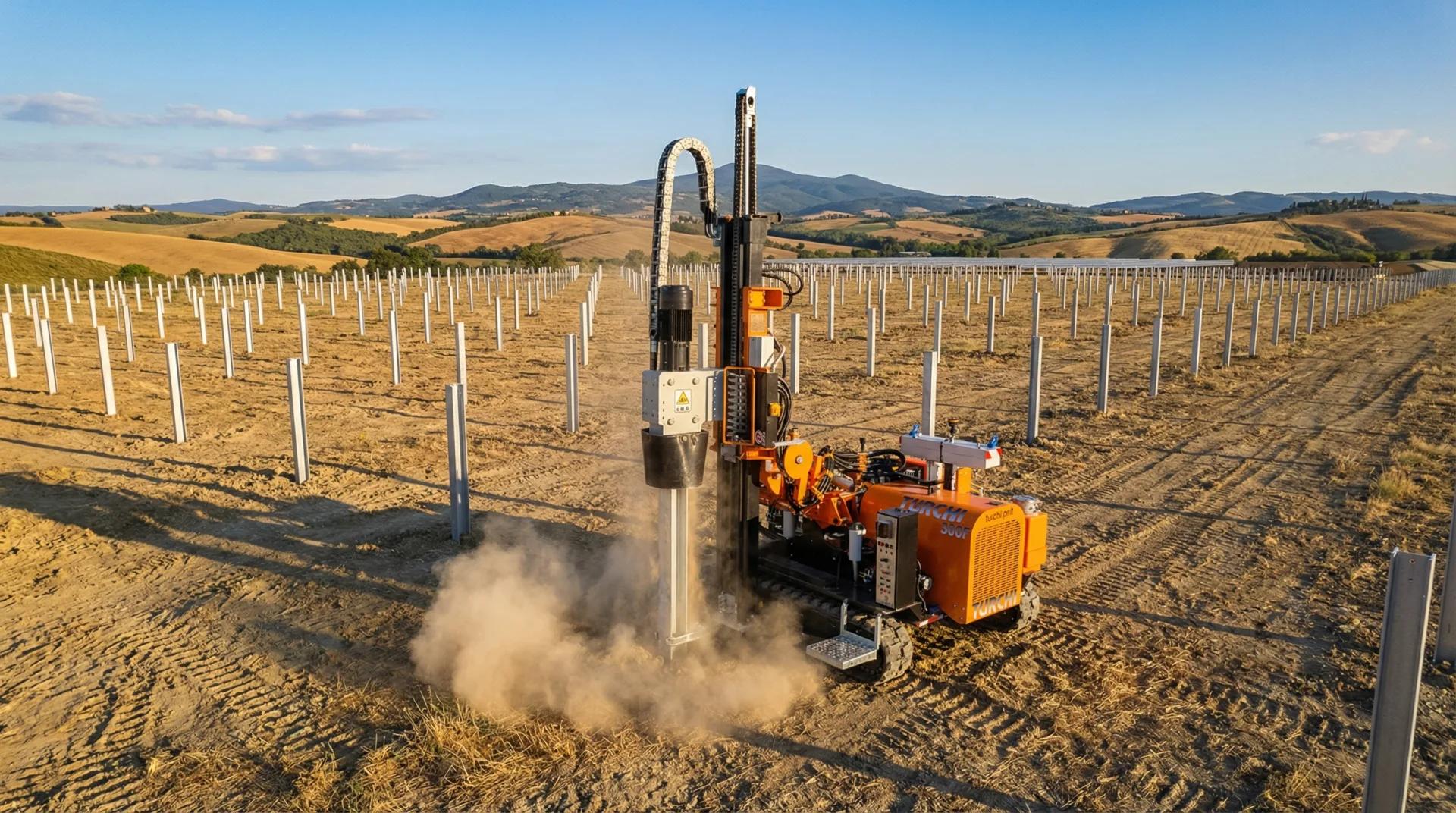
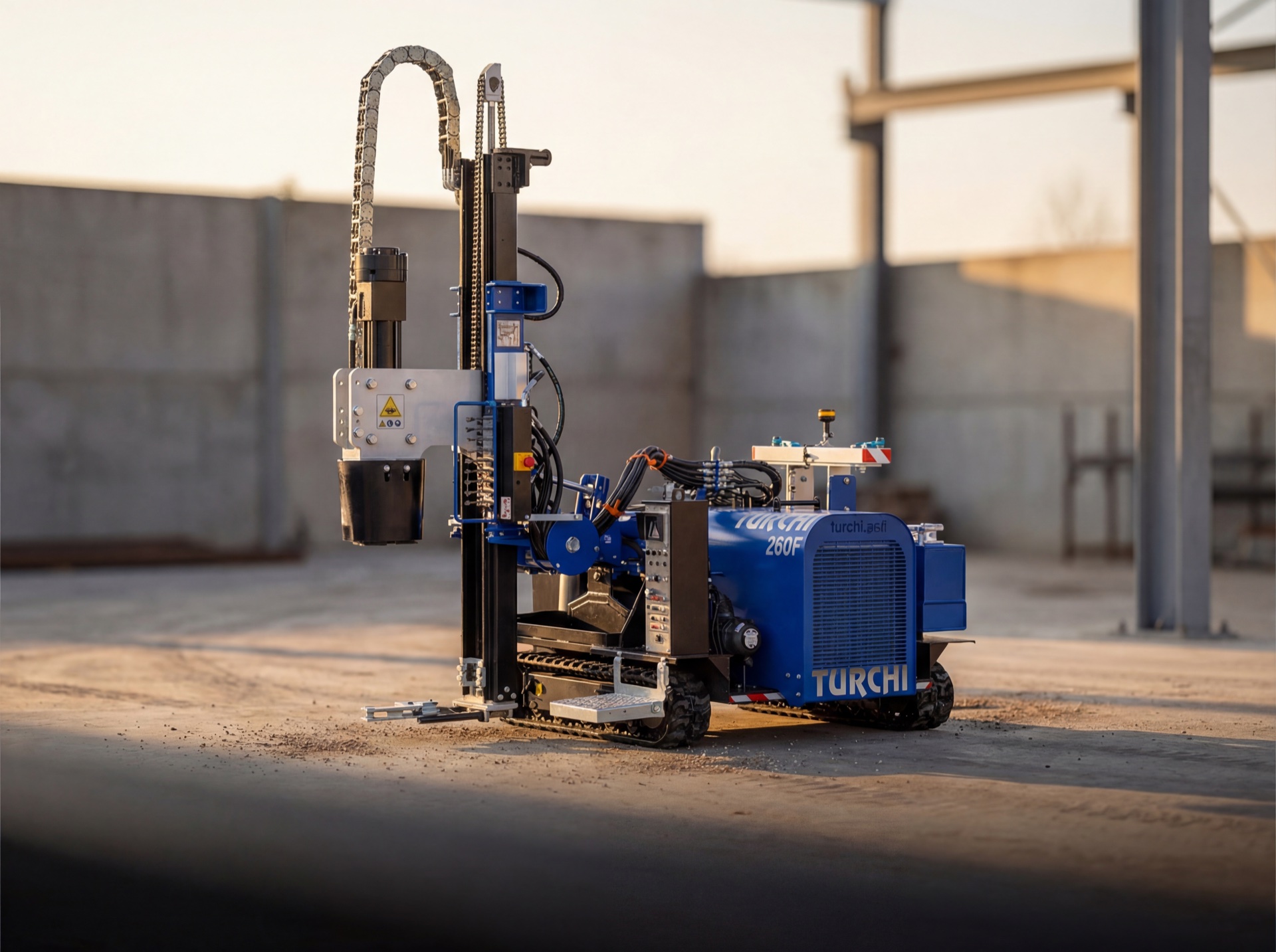
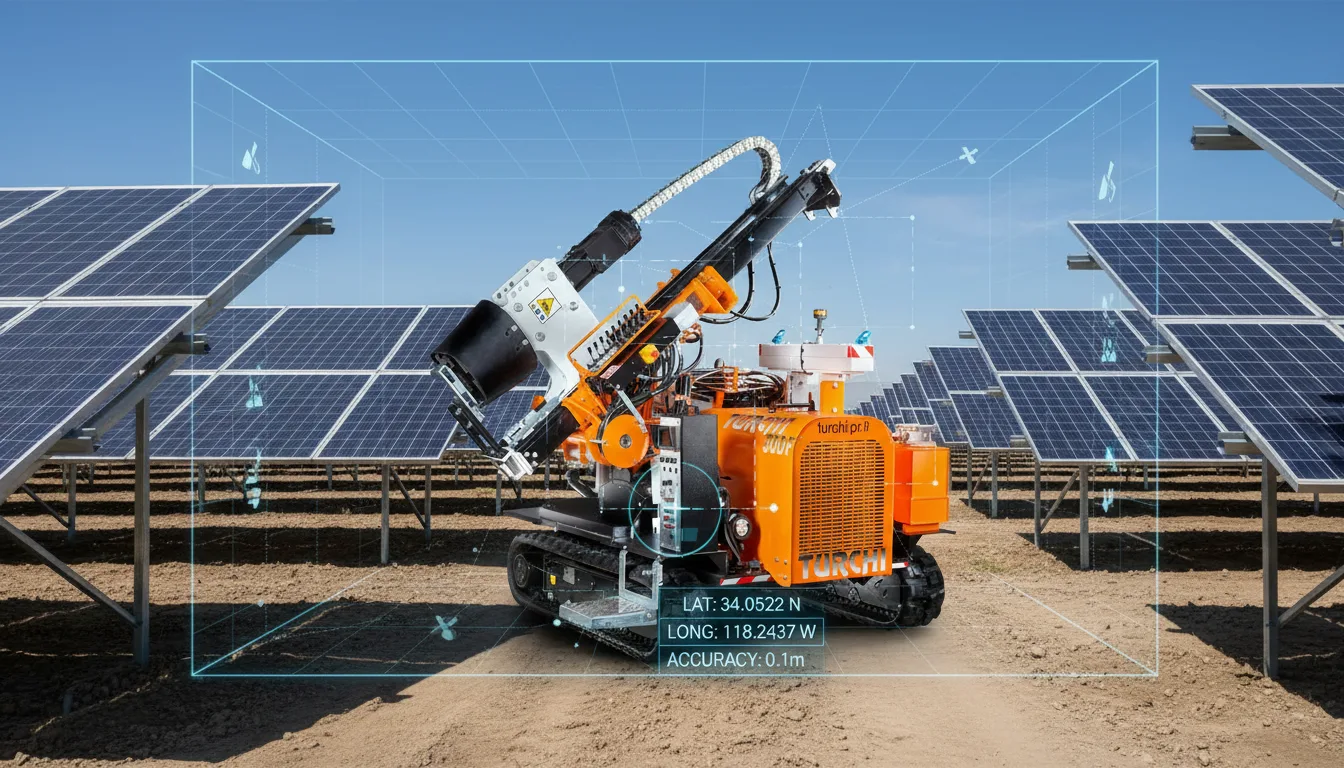
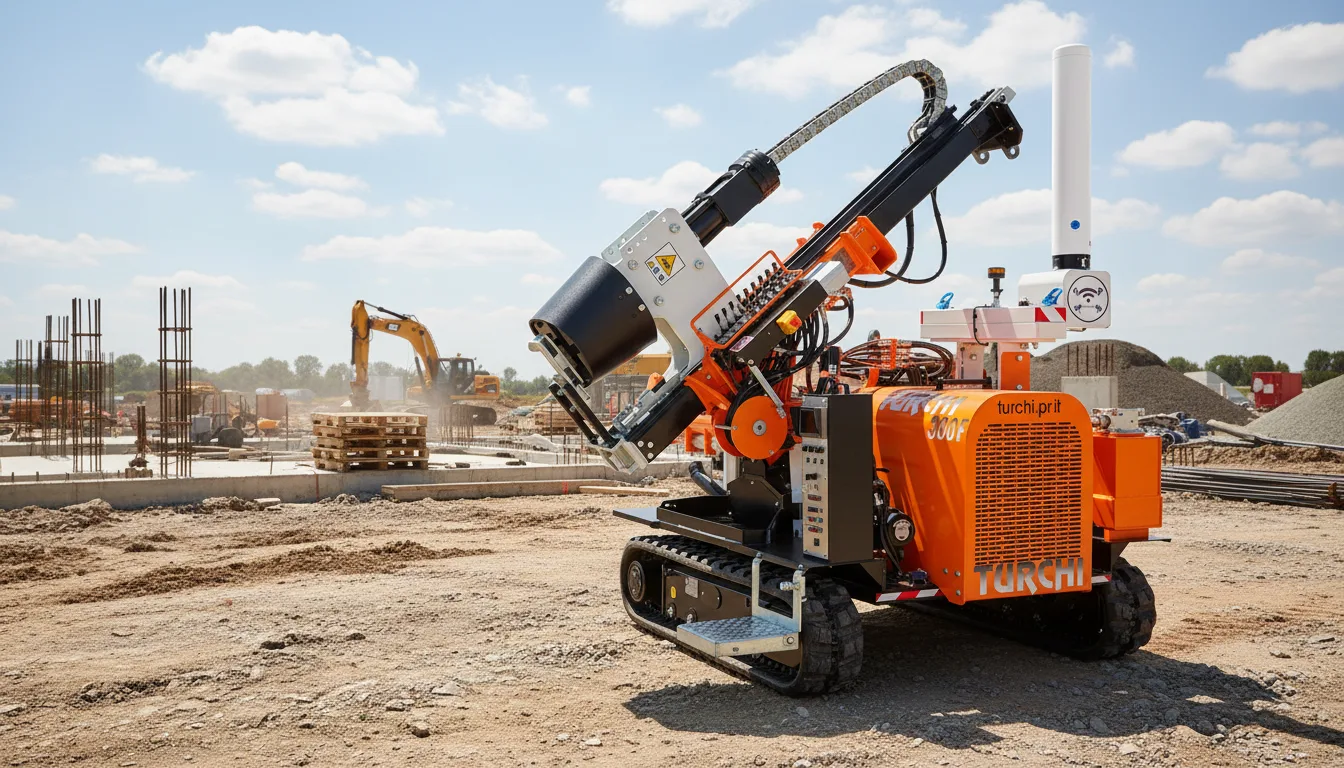
El sistema de monitorización remota del TURCHI 260F y del TURCHI 300F registra posición GPS/Glonass, horas de trabajo, datos operativos y estado de la máquina. Todo accesible desde un portal web adaptado a móvil.
Para qué sirve
Para responsables de flota y de obra, la monitorización remota permite decidir con datos reales. Geocercas, zonas de trabajo virtuales y alertas automáticas mejoran el control operativo.
Geofencing and virtual work areas
The system allows you to define virtual work areas (geofences) directly from the portal. When a machine enters or leaves a configured area, an automatic alert is generated. This lets you verify that each pile driver is operating in its assigned zone, monitor movements between jobsites, and receive immediate notifications in case of unauthorised movements. For those managing multiple machines across different sites, geofencing is an essential tool for maintaining control over the entire fleet.
Predictive maintenance and automatic alerts
One of the most tangible benefits of remote monitoring is predictive maintenance. The system analyses operational data and generates automatic notifications before a component reaches its wear limit. This means fewer unexpected machine downtimes and more efficient service planning. The portal tracks service intervals and component lifecycles, flagging when it's time to replace filters, hydraulic oil or wear components. The result is higher uptime and more predictable maintenance costs — particularly relevant for those working on solar jobsites with tight contractual deadlines.
¿Quiere elegir el modelo adecuado? Hable con nosotros.
Remote diagnostics: support without travel
In case of an anomaly, the TURCHI technical support team can access the machine's diagnostic data remotely, quickly identify the root cause and guide the operator through the fix — without having to send a technician to the jobsite. This drastically reduces downtime and travel costs. The system also includes jamming detection (anti-interference), which flags any attempts to disrupt the GPS signal.
Fleet management: the complete fleet picture
For companies operating multiple TURCHI pile drivers across different jobsites, the portal offers a unified view of the entire fleet. From a single dashboard you can view each machine's position, compare working hours, identify which pile driver is on which site, and consult the route history (track). This overview enables better resource allocation, workload balancing between machines, and more efficient rotation planning.
Industry 4.0: the pile driver becomes a connected tool
Remote monitoring transforms the pile driver from a purely mechanical machine into a connected, documentable tool. Together with semi-automatic GPS for centimetre-level pile positioning and PVEA assisted verticality for mast alignment, remote monitoring completes the technology ecosystem of latest-generation TURCHI pile drivers. Three systems that, working together, deliver precision, traceability and total control of jobsite operations — requirements increasingly demanded in the specifications of large solar and road infrastructure projects.