How many piles per day: real pile driver productivity compared
Key takeaways
- Solar: 100-150 piles/day (up to 200+ with TURCHI 300F).
- Guardrail: 80-120 piles/day with a dedicated pile driver.
- Terrain is the #1 factor determining productivity.
- The pile carrier cart increases output by approximately 40% by eliminating downtime.
"150 piles per day" — how realistic is it?
Browsing pile driver manufacturer brochures, you see impressive numbers: 200, 300, even 400 piles per day. But these figures, in most cases, refer to ideal lab conditions or tests on simple soil with short piles. Jobsite reality is different. In this article we analyze real pile driver productivity, based on machine technical specifications and the operational experience of our customers in Italy and Europe, distinguishing by sector, soil type and machine model. The goal is to give you reliable numbers to plan your projects with precision.
Productivity by sector: the real numbers
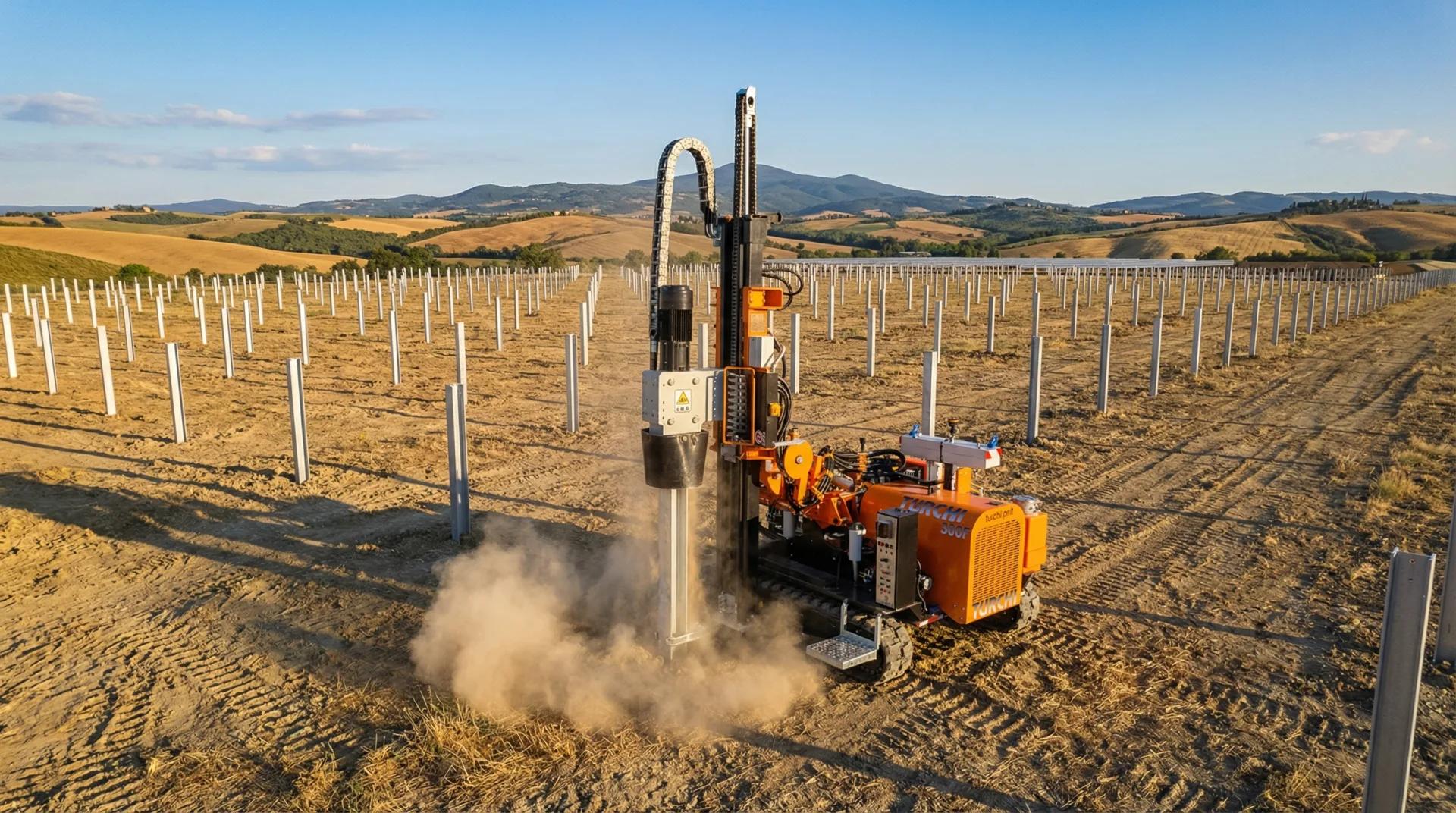
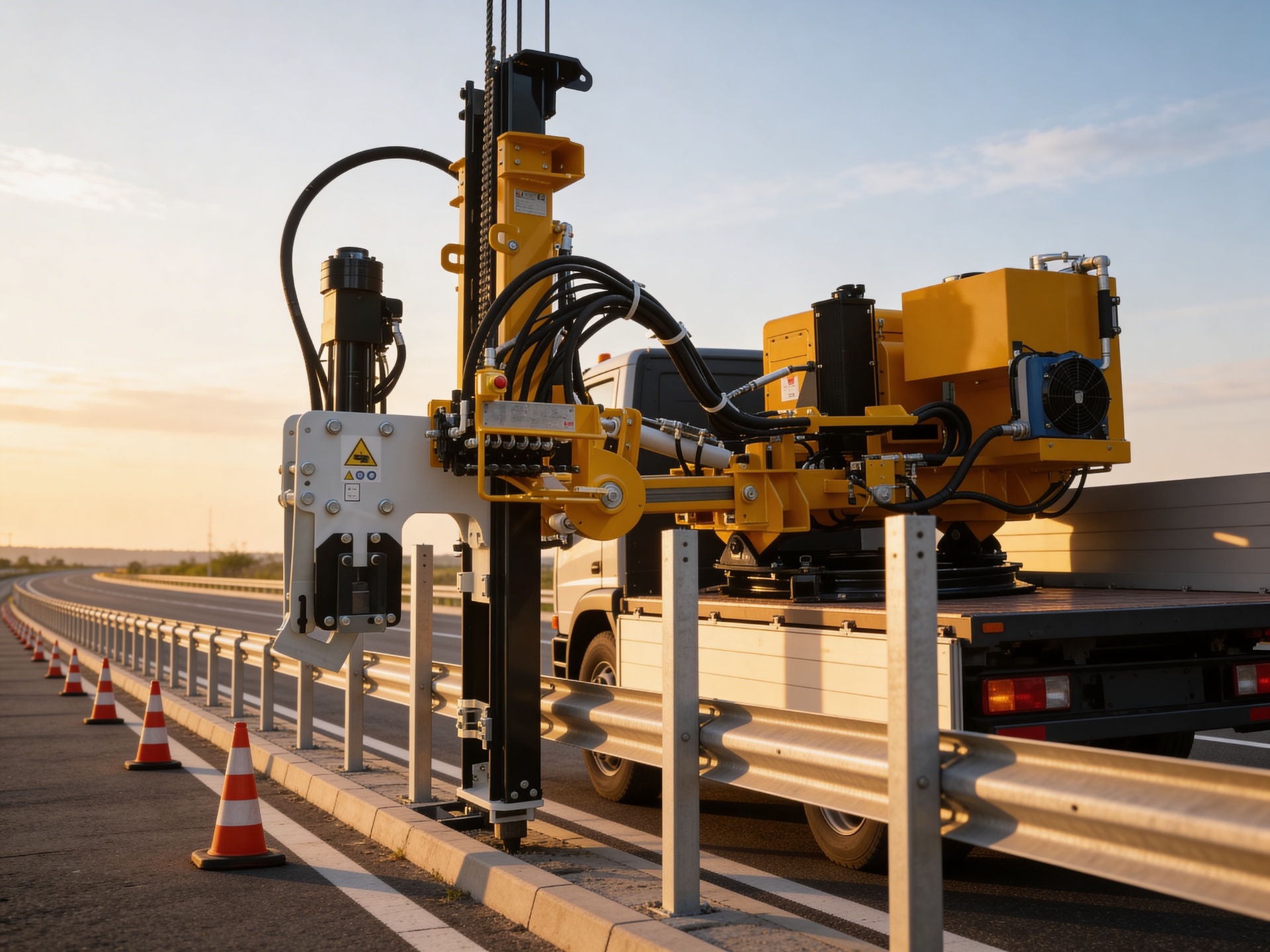
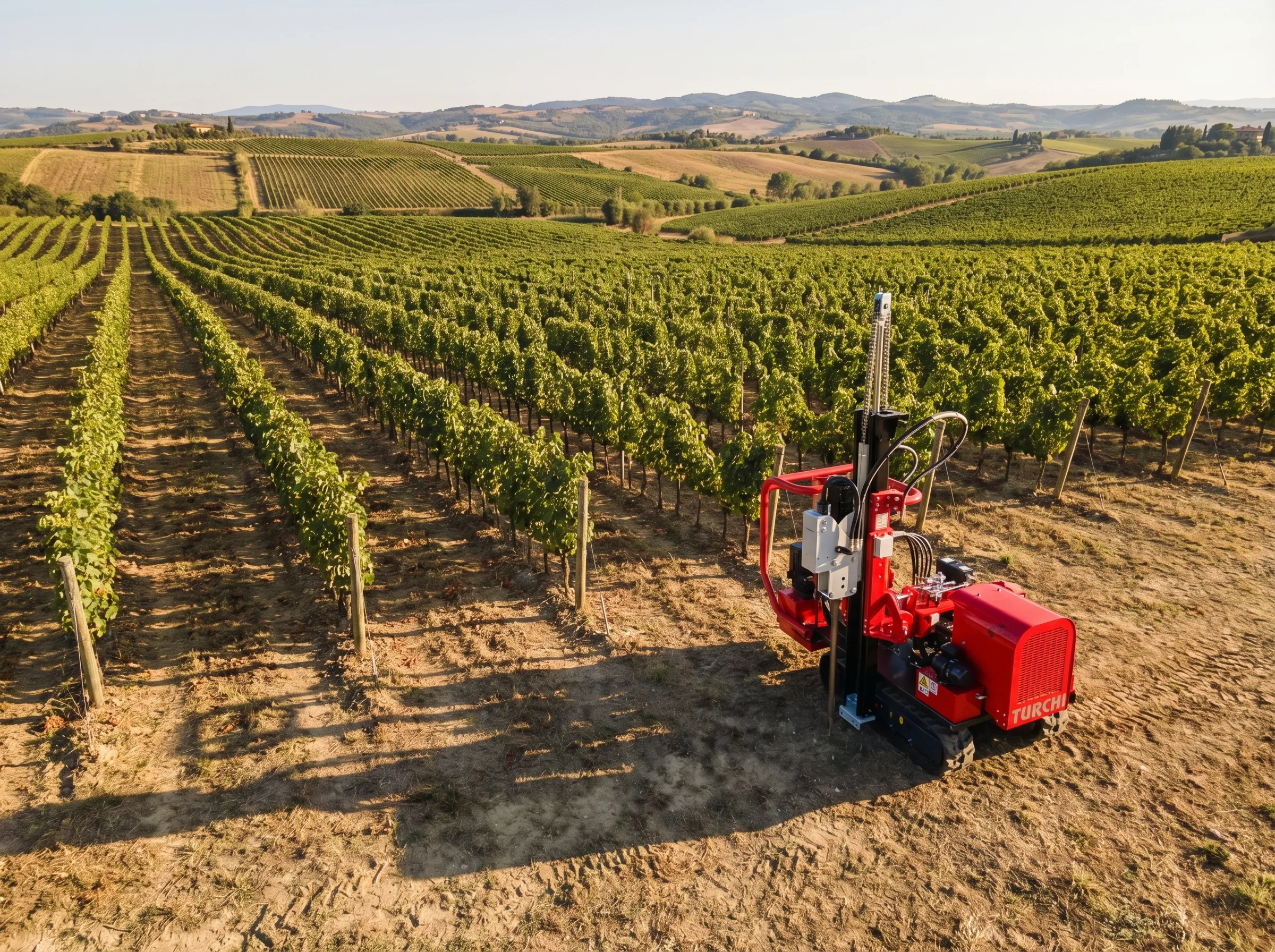
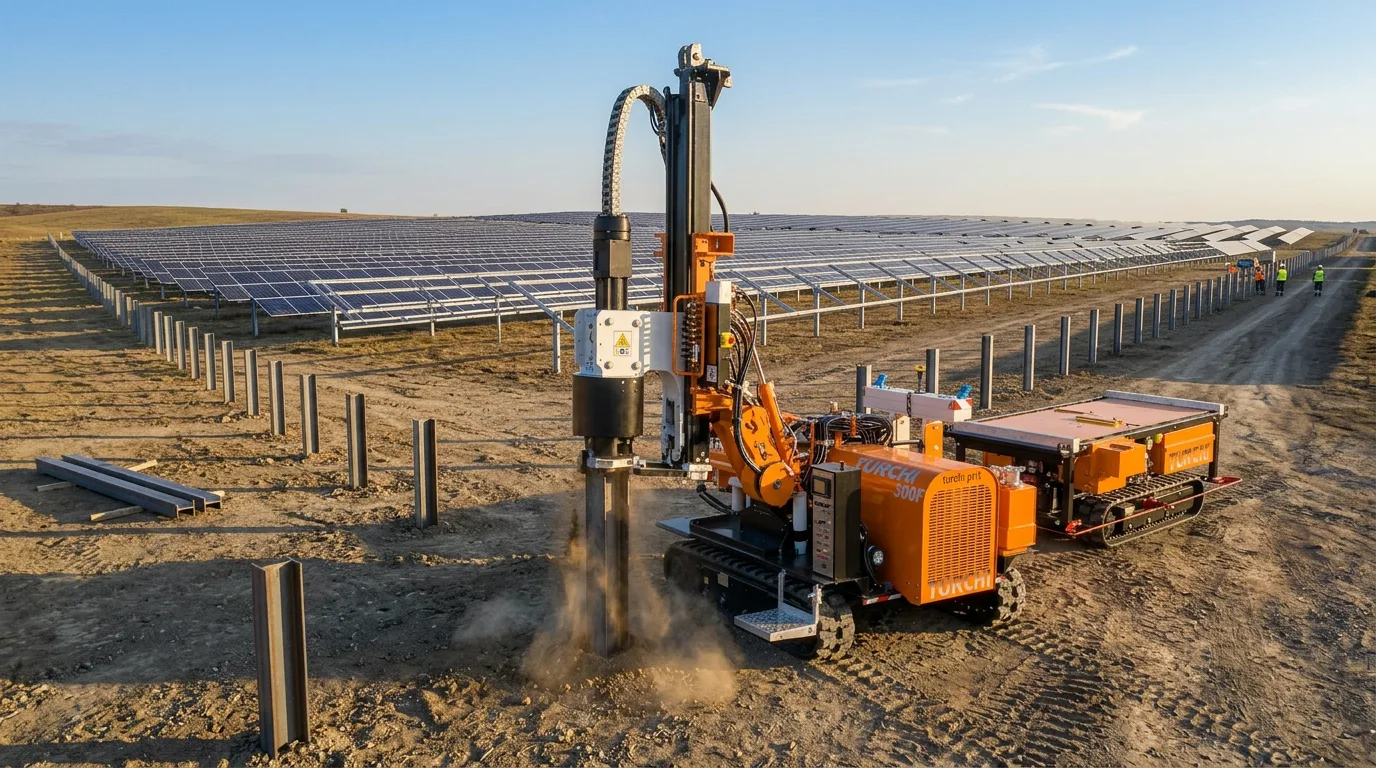
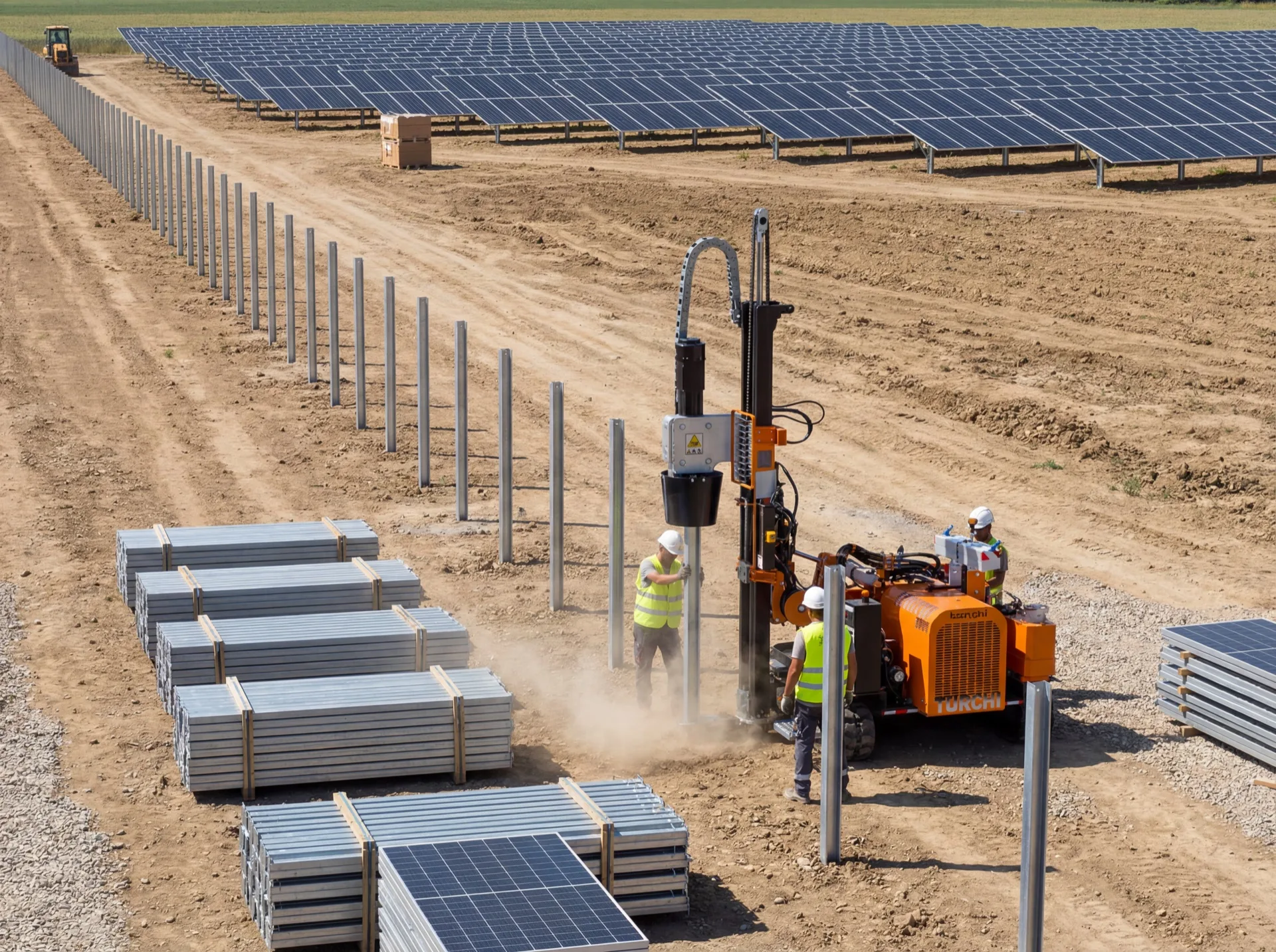
Productivity estimates based on TURCHI machine technical specifications and our customers' experience, under normal working conditions (8 effective hours, average soil, experienced operator). Solar with 2-3m H piles: 100-150 piles per day, with peaks of 200+ on sandy soil with TURCHI 300F. Guardrail with sigma piles: 80-120 piles per day, including positioning and verticality check. Agricultural fencing: 120-180 piles per day, lighter piles and shallower driving. Vineyard headland posts: 60-100 piles per day, precision is the priority over speed. These are operational estimates: every site is different and productivity can vary by ±20% based on the factors we analyze below. To learn more about solutions for the solar sector and the guardrail sector, visit the dedicated pages.
Pali infissi per giornata di lavoro
Terreno medio · operatore esperto · ±20% in base al terreno
The 5 factors that determine output
Pile driver productivity doesn't depend only on the machine. Five factors interact to determine the effective output of each working day.
Soil type
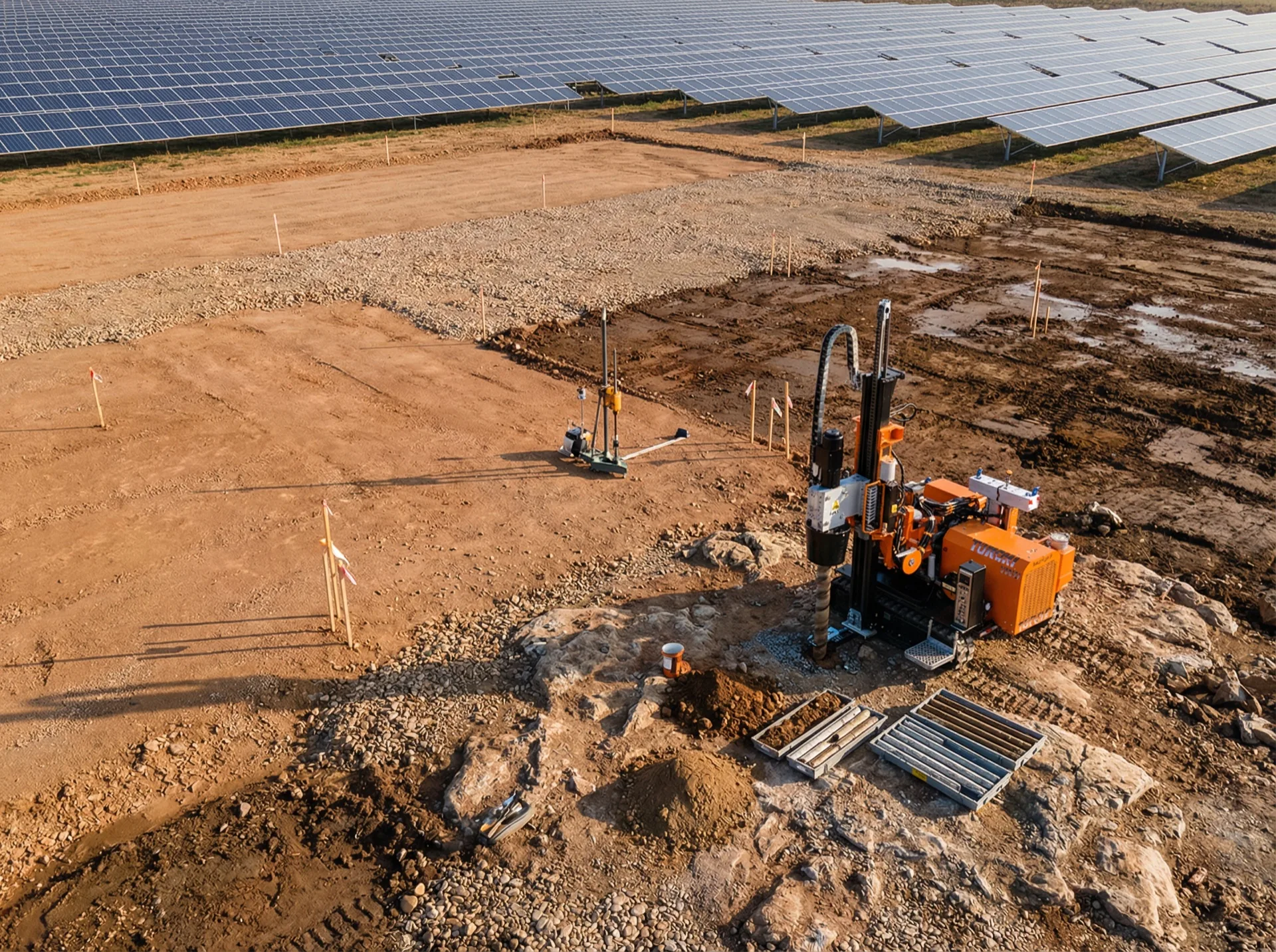
It is the most influential factor. On sandy soil a 2m pile drives in 15-20 seconds. On compact clay the same pile can take 40-60 seconds. On ground with rocky layers, direct driving may not be possible, requiring pre-drilling with down-the-hole drill. The difference between easy and difficult terrain can halve daily productivity.
Pile logistics: the hidden bottleneck
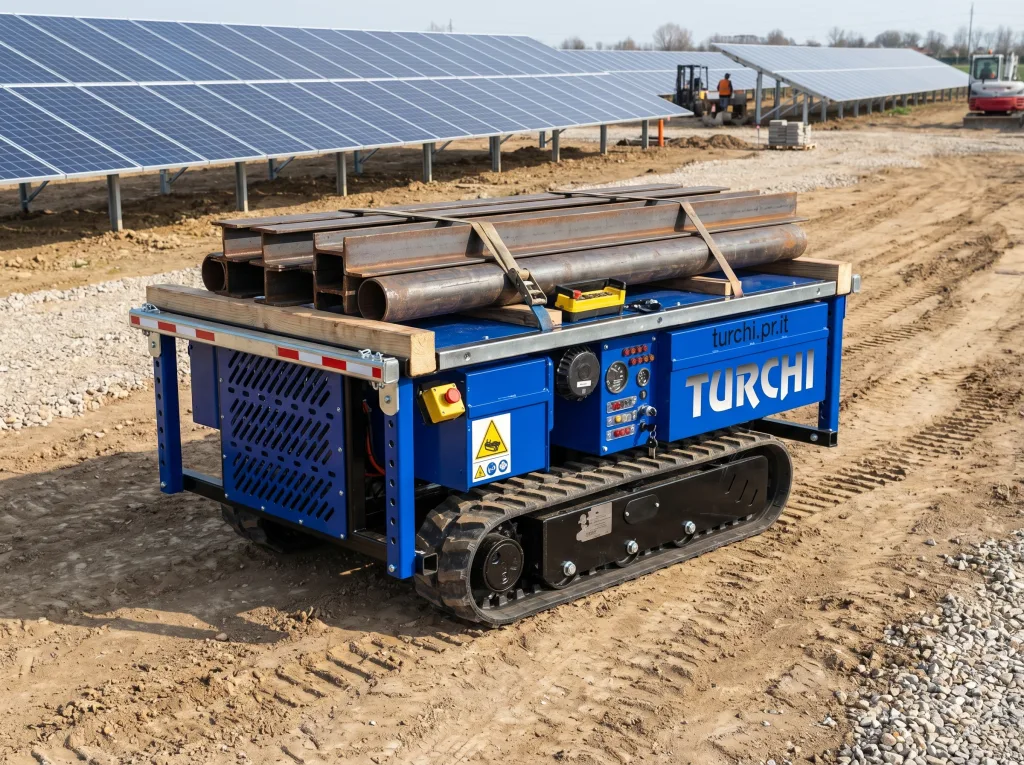
Driving time is only part of the cycle. The machine also needs to: reach the driving point, load the pile, position it and verify verticality. If piles are not available near the machine, downtime can exceed 50% of total time. This is where the tracked pile carrier cart makes the difference: it transports piles directly to the machine, eliminating wait times and increasing productivity by approximately 40%. Over an 8-hour workday, this means going from approximately 90-100 piles/day to approximately 130-150 piles/day — a net gain of 40-50 piles that translates to fewer site days and reduced operating costs.
Driving depth
The deeper the driving, the more time it takes. A 2m pile to refusal requires significantly less time than a 4m pile. Depth is determined by structural design and soil type, so it is not a parameter you can change. However, it is essential to consider it in productivity estimates.
Operator experience
An experienced operator is up to 30% more productive than a beginner. The difference lies in work cycle fluidity, ability to read the terrain and path optimization. TURCHI machines are designed to minimize the learning curve with intuitive controls and verticality assistance (optional), but experience remains an important factor.
Weather conditions
Rain, strong wind and extreme temperatures affect productivity. Rain makes terrain harder to traverse (advantage for tracks over wheels), strong wind can make positioning long piles dangerous, and extreme heat reduces operator efficiency. Planning projects considering seasonal conditions is essential for realistic estimates.
How the pile carrier cart changes everything
Our customers' experience on numerous solar sites in Italy shows that the TURCHI tracked pile carrier cart reduces handling time by 40%, with a direct impact on daily productivity: going from approximately 90-100 piles/day without the cart to approximately 130-150 piles/day with the cart. The reason is simple: the cart eliminates the logistics bottleneck. While the machine drives, the cart moves to load the next piles. There is never any waiting. The cycle is continuous. Take a 1 MW plant (~350 piles). Without the cart, you need approximately 3-4 working days. With the cart, it drops to approximately 2-3 days — 1 fewer site day per MW. For 5-10 MW plants the savings multiply significantly.
TURCHI model comparison
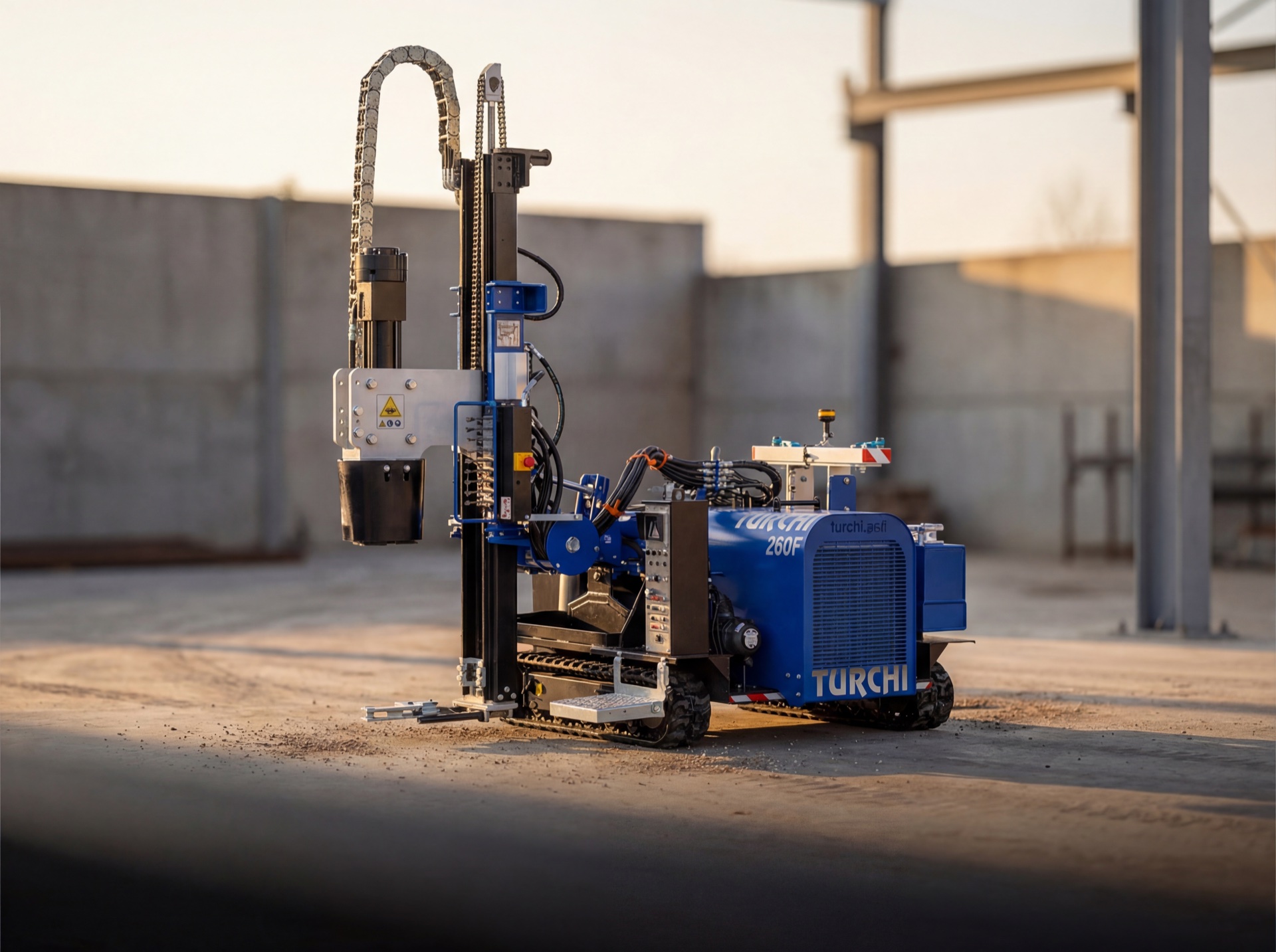
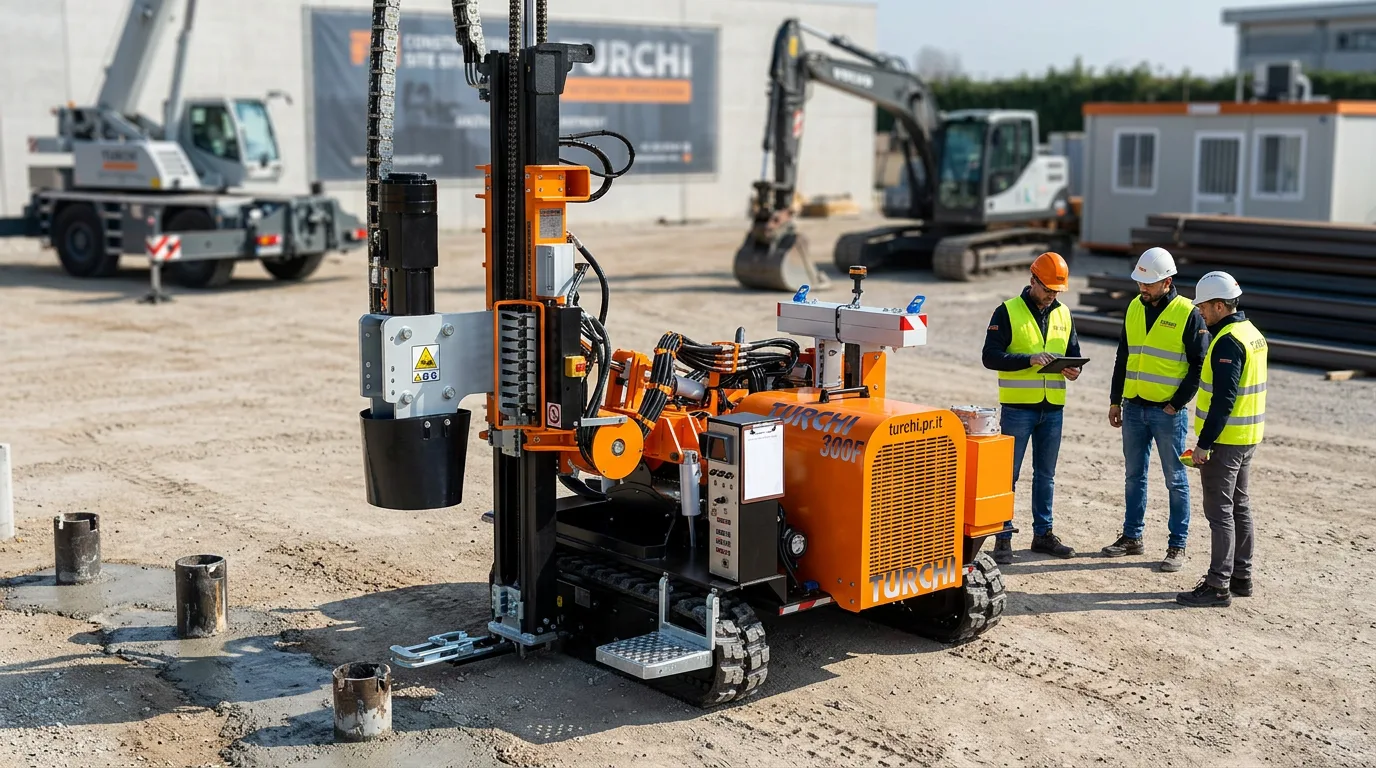
Here is the estimated average productivity per TURCHI model, broken down by application sector. TURCHI BACCO: specialized for vineyards, orchards and agricultural fencing. Productivity: 100-150 piles/day. Dual function: driving and screwing with the same machine. Operating weight 4,400 kg with rubber tracks that respect the ground. TURCHI 260F: compact and versatile for guardrail and small-scale solar, 80-130 piles/day. Dual function: driving + screwing. Weight 3,500 kg. TURCHI 300F: top of range for utility-scale solar, 150+ H piles/day (peaks 200+). From 4,400 kg. For a detailed comparison between all models, visit the comparison page or start the configurator to find the ideal machine for your site.