How to choose the ground for a solar plant: geotechnical assessment guide
Key takeaways
- Geotechnical assessment is the first step for a successful solar installation.
- Soil type determines the foundation system, machine and costs.
- SPT tests and penetrometer tests are the main diagnostic tools.
- Rocky soils don't rule out driven piles: the down-the-hole drill is the solution.
- Italian regulatory constraints (protected areas, DOP/IGP zones) can limit suitable sites.
Before driving the first pile
The success of a ground-mounted solar installation begins long before the pile driver arrives on site. It begins with assessing the ground on which the plant will be built. This phase, often underestimated for time and budget reasons, is actually the foundation on which the entire project is based. Inadequately characterized ground can generate costly surprises: piles that don't reach the necessary depth, unstable foundations requiring corrective interventions, delays that blow schedules and contractual penalties. In this guide we explain how to assess the ground, what tests to perform and how soil characteristics influence the choice of driving system and the most suitable machine.
5 essential ground requirements
Before proceeding with detailed geotechnical analysis, verify these five macro requirements that determine project feasibility.
Slope
The maximum acceptable slope for a ground-mounted solar plant with driven piles is generally 10-15%, depending on the structural technology chosen. Beyond this threshold, leveling work significantly increases costs. Single-axis trackers require flatter terrain (max 5-8% north-south slope).
Absence of landscape and environmental constraints
Always check for landscape constraints (D.Lgs. 42/2004), protected areas (SCI, SPA, parks), hydrogeological constraints and flood or landslide risk zones (PAI). These checks are mandatory and constrained land can make the project unfeasible or require much longer and costlier authorization procedures.
Proximity to the electrical grid
Grid connection is an often underestimated cost. Every meter of cable between the plant and the connection point has a significant cost. Land near MT/HV primary substations or existing lines is preferable. Check local grid capacity availability with the operator (e-distribuzione or Terna).
Vehicle accessibility
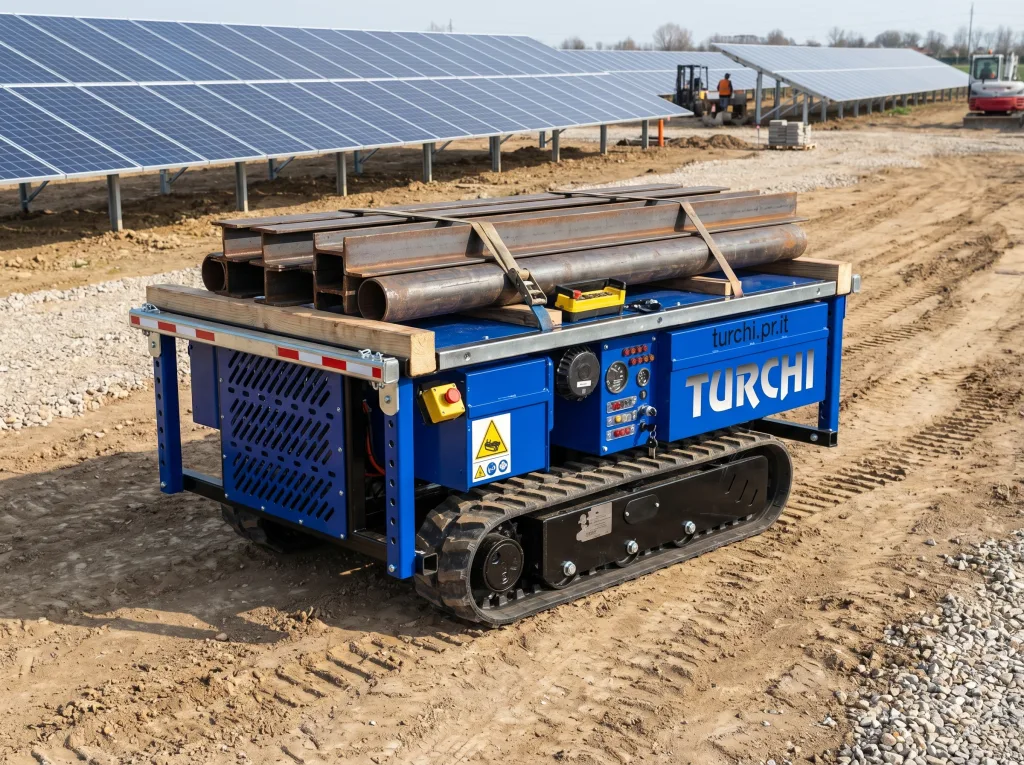
The pile driver, pile carrier cart, material delivery trucks and cranes for structure assembly must be able to access the site. Check: access road width (minimum 3.5m), load capacity of bridges and underpasses along the route, maneuverability within the site, and ground conditions for vehicle transit (especially in rain).
Absence of surface rock
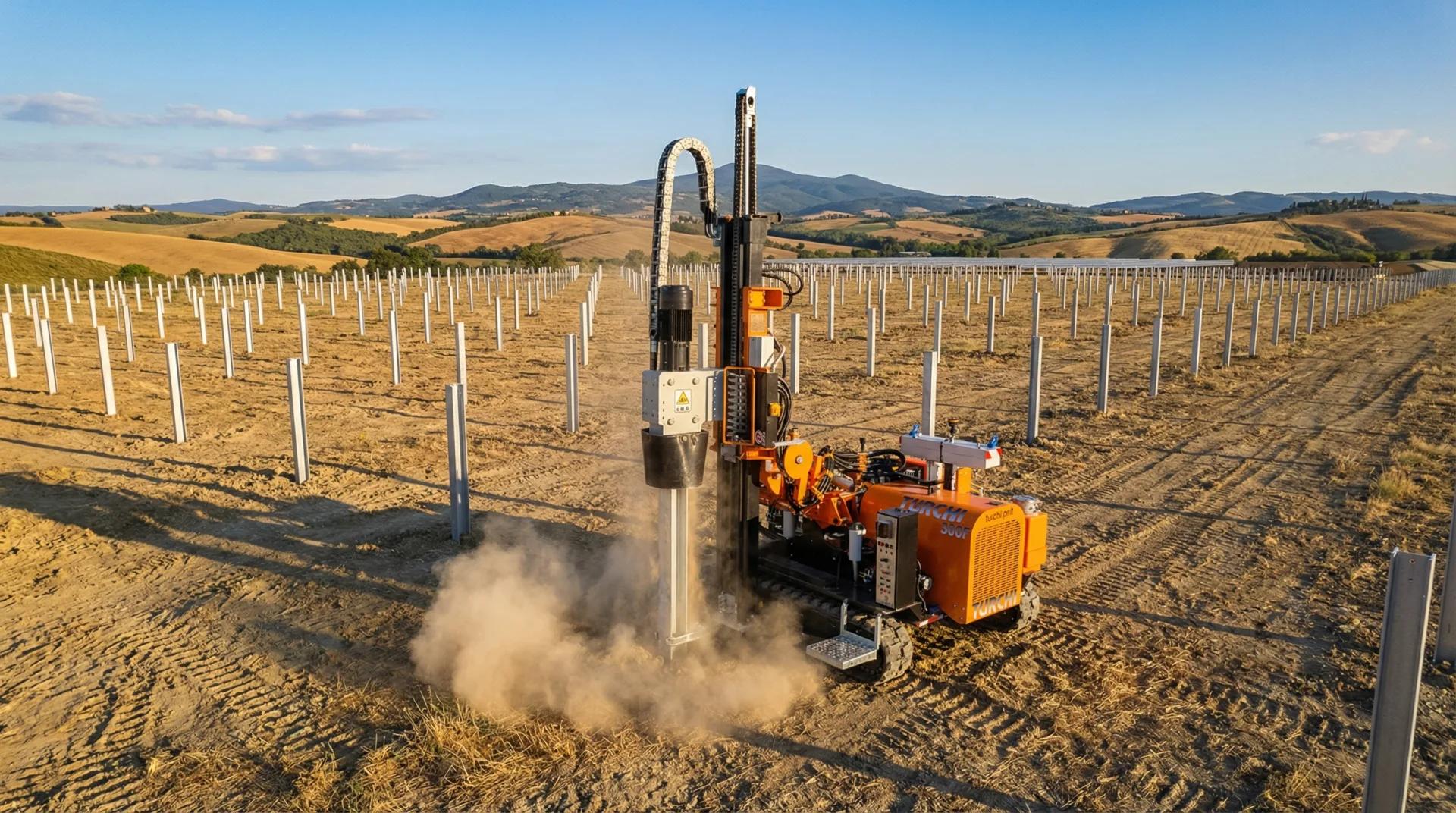
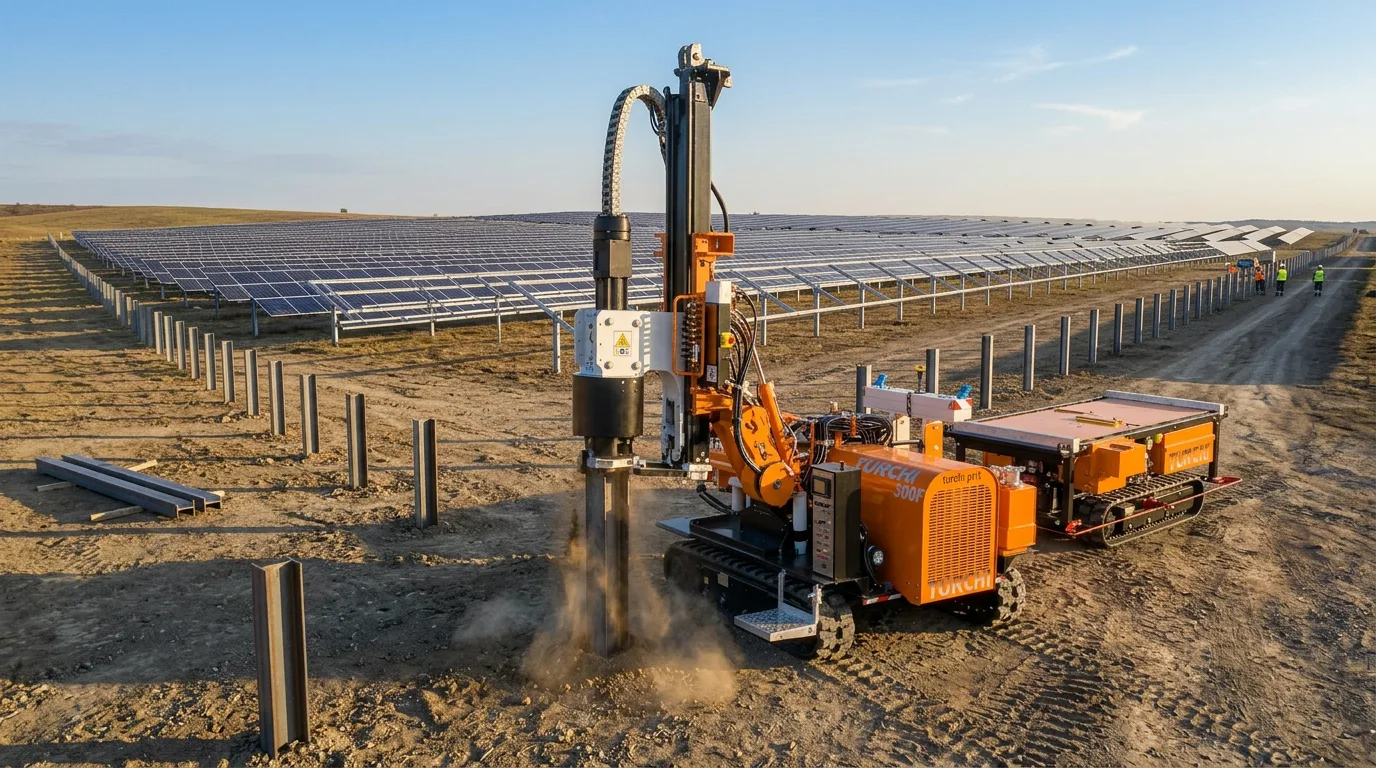
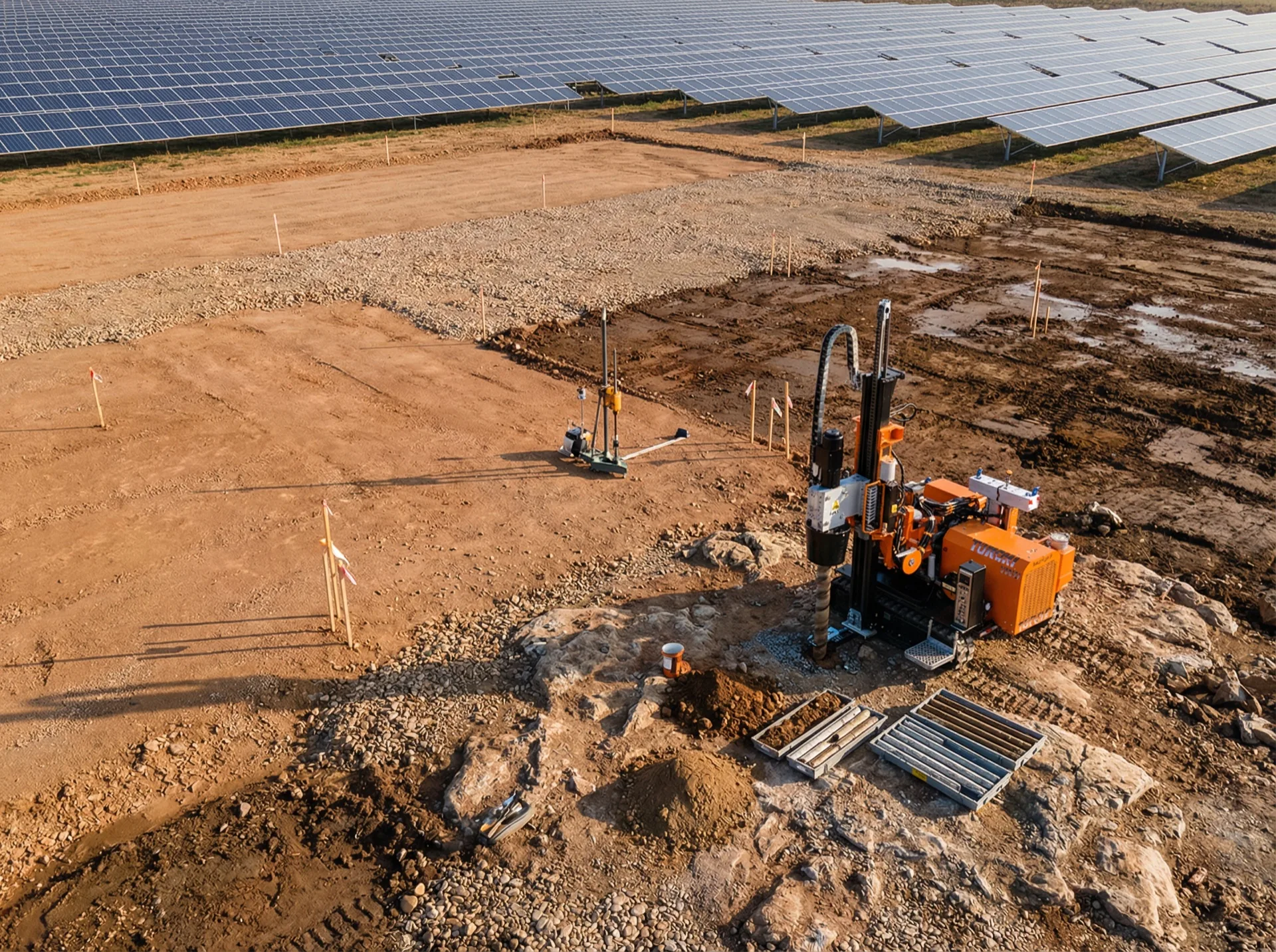
The presence of rock at less than 1.5-2m from the surface is the most common geotechnical problem for solar. It doesn't make driven piles impossible, but requires using a down-the-hole drill for pre-drilling, increasing time and costs. TURCHI machines can be equipped with a pneumatic down-the-hole drill mounted directly on the machine as an integrated accessory to handle these situations without needing a second machine.
Soil types and impact on driving
Soil type is the most determining factor for choosing the driving system and machine. Here is how the main soil types influence the process.
Sand and gravel
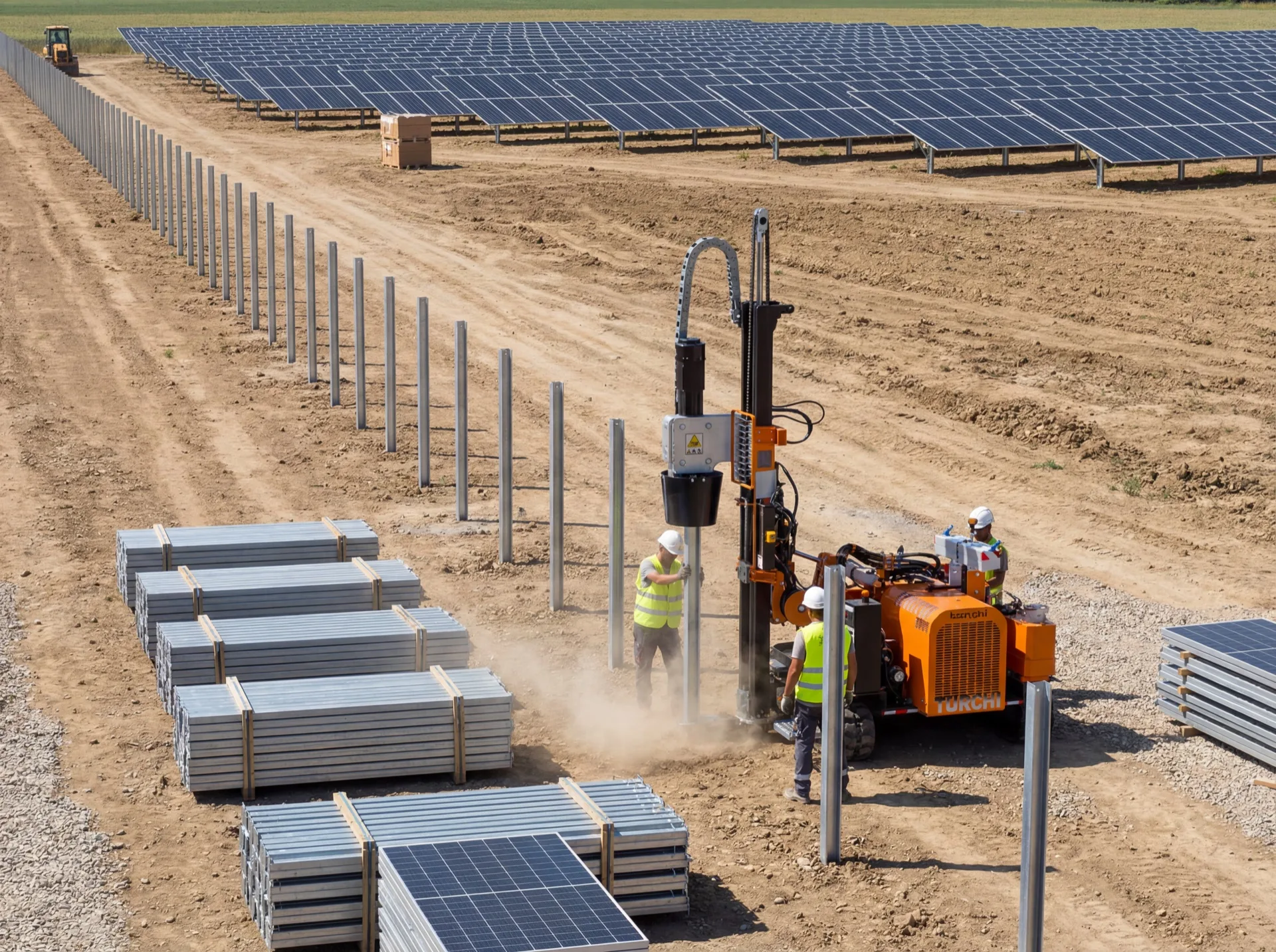
Sandy and gravelly soils are the most favorable for direct driving. The pile penetrates quickly with low resistance, ensuring maximum productivity (150+ piles/day). The only concern is pile lateral holding capacity: in very fine or unconsolidated sands, greater depth may be needed to ensure structural stability. Pull-out tests are recommended to verify bearing capacity.
Clay
Clay presents variable driving resistance, strongly dependent on water content. Dry, compact clay requires high impact energy (1,000+ Joules). Wet clay is easier to penetrate but can cause machine instability — the wide tracks of a self-propelled unit are a significant advantage. Set-up phenomenon: clay can "grip" the pile after driving, increasing holding capacity over time but making any extraction difficult. Expected productivity: 60-100 piles/day, significantly lower than sandy soils.
Rock
When surveys detect rock layers within the design depth (typically 1.5-3m), direct driving is not possible. The solution is pre-drilling with a down-the-hole (DTH) drill, which creates a pilot hole in the rock into which the pile is then inserted and cemented or driven. TURCHI machines can mount the pneumatic down-the-hole drill directly on the machine as an integrated accessory, avoiding the need for a second dedicated machine. Productivity on rock is estimated at approximately 30-60 piles/day, depending on rock hardness and pre-drill diameter. Learn more about solutions for the solar sector.
Mixed soil
Mixed soil is the most common and most treacherous situation. Alternating layers of sand, clay, gravel and occasionally rock make productivity variable and unpredictable. The key to managing mixed soil is: an accurate geotechnical assessment with surveys at multiple site points, a pile driver with sufficient energy reserve for the most resistant layers, DTH drill availability for any rock layers, and an experienced operator capable of adapting technique as the terrain varies.
Required geotechnical tests
To adequately characterize the ground of a solar site, several geotechnical tests are available. The Standard Penetration Test (SPT) is the most common: a sampler is driven into the ground with standardized blows, and the number of blows needed to penetrate 30cm (NSPT value) indicates soil consistency. NSPT values below 10 indicate soft soils (easy driving), 10 to 30 medium soils, 30 to 50 hard soils, above 50 refusal or rock. These values are standard geotechnical references. For classification of your specific ground, always rely on a geologist or geotechnical engineer. Cone Penetration Tests (CPT) provide a continuous profile of soil resistance and are more detailed than SPT. Core sampling allows physical soil specimens to be collected for laboratory analysis and is necessary when rock layers or problematic soils are suspected.
Want to pick the right model for your site? Talk to us.
From ground to solution: the decision table
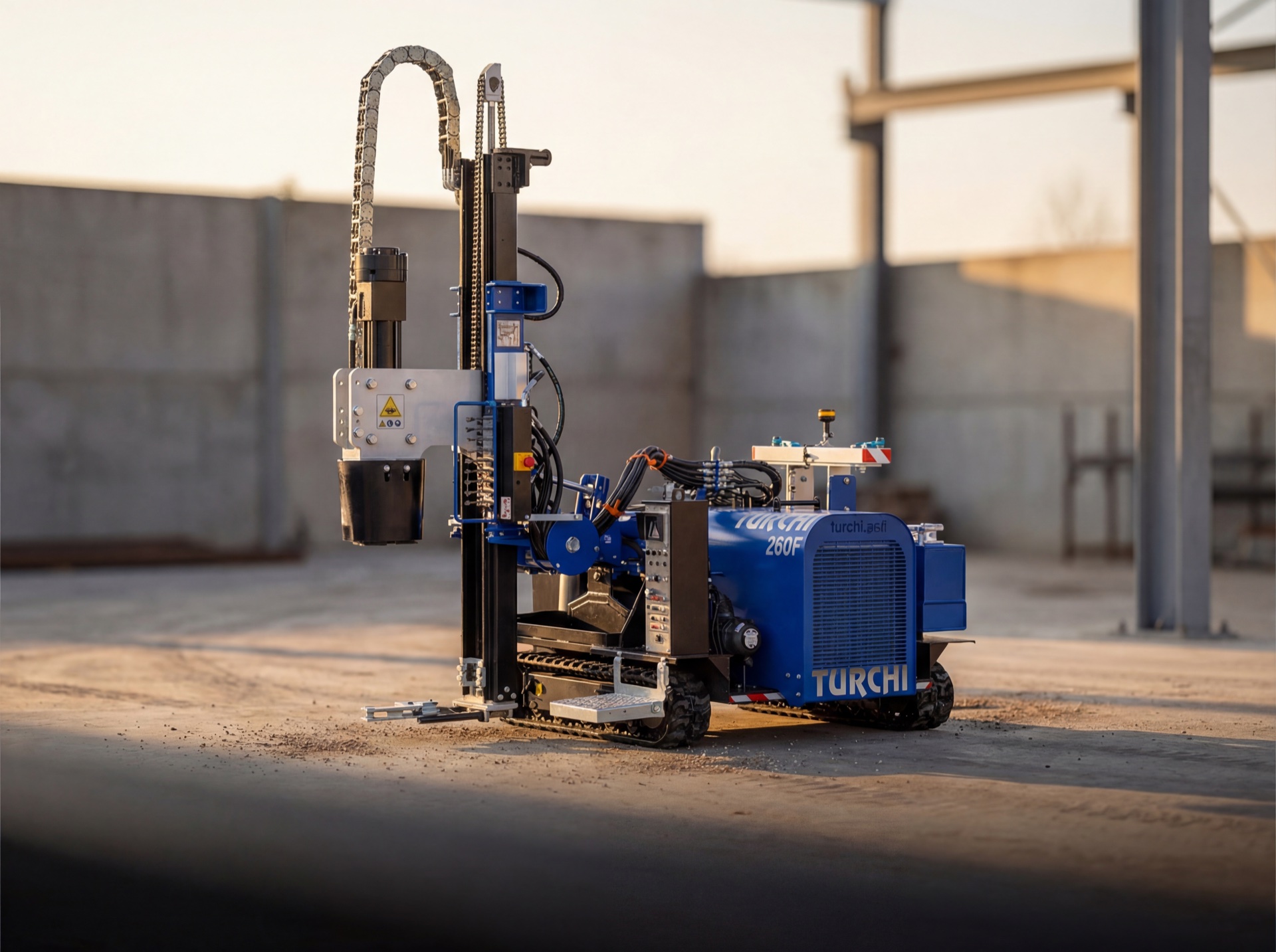
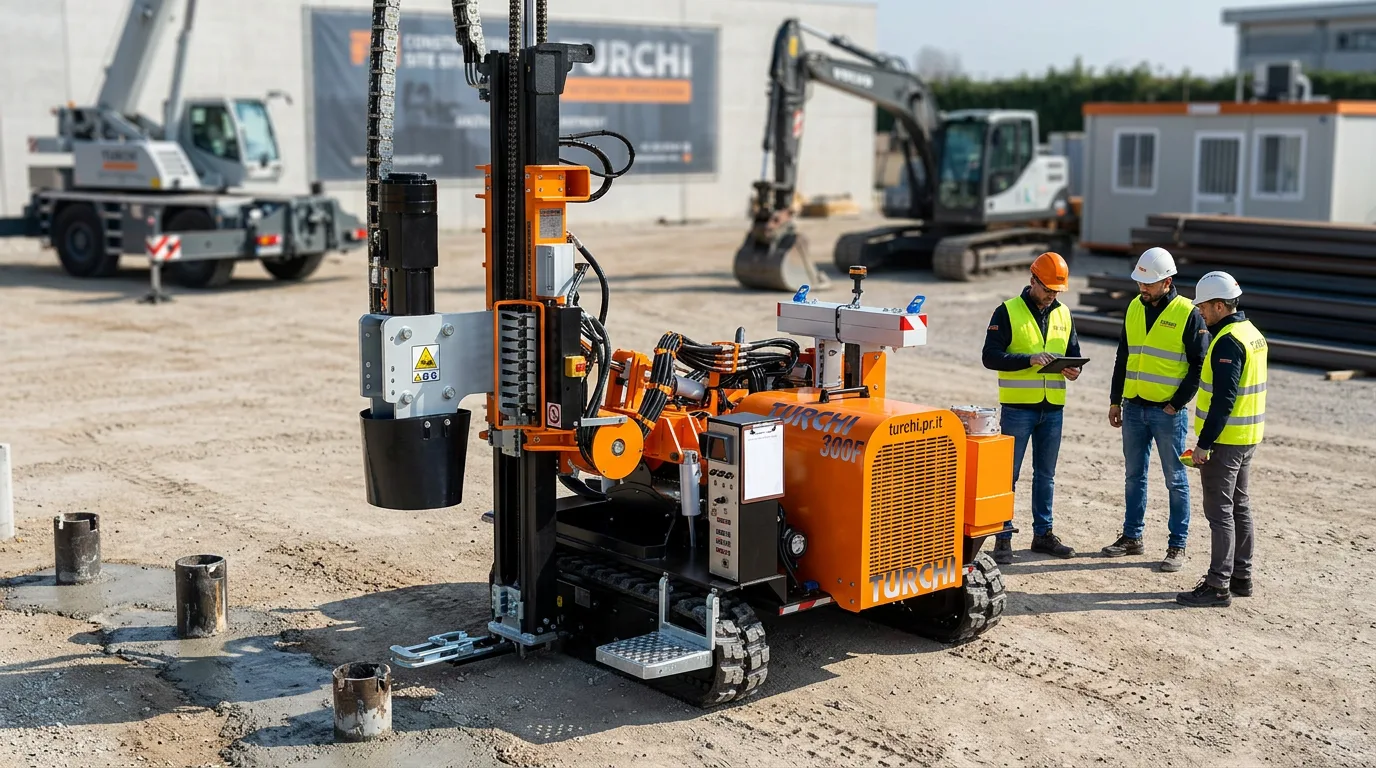
Here is a quick guide to link soil type to the most suitable TURCHI solution. Sand and gravel (NSPT < 15): direct driving with any TURCHI model, no special accessories needed. Medium clay (NSPT 15-30): direct driving with TURCHI 260F or 300F, minimum 1,000 Joule energy recommended. Hard clay (NSPT 30-50): TURCHI 300F with 1,200 Joule energy, possible partial pre-drilling. Rock (NSPT > 50): TURCHI 300F with integrated DTH drill, pre-drilling mandatory. Mixed soil: TURCHI 300F with DTH drill available, maximum flexibility. For a personalized configuration based on your ground characteristics, start the online configurator or contact us for a technical consultation.
Regulatory constraints in Italy
Beyond geotechnical characteristics, land for a solar plant in Italy must comply with several regulatory constraints. Protected areas (national and regional parks, reserves, Natura 2000 sites) are generally excluded or require specific environmental assessments (EIA, Appropriate Assessment). DOP and IGP zones may have land use restrictions that limit or prevent solar installation. Minimum distances from urban centers, roads, railways, power lines and waterways vary by region and municipality. The local urban plan and technical implementation rules define permitted land uses. The Suitable Areas Decree (D.M. 2024) introduced national criteria for identifying areas suitable for renewable energy installations, which each region is transposing through its own resolutions.