Assisted verticality: why it makes the difference in pile driving quality
Key takeaways
- The PVEA system uses electronic sensors to assist vertical mast alignment.
- Tilt cylinders allow ±9.5° side and +10°/-51° front on the 260F and 300F.
- Reduces rework and improves structural quality, especially on irregular terrain.
- Available as an option on TURCHI 260F and TURCHI 300F; integrates with GPS and remote monitoring.
The problem: an off-axis pile compromises everything
An off-axis pile is not just a cosmetic defect: it compromises the load-bearing capacity of the structure, whether a ground-mounted solar array or a road guardrail barrier. On irregular, clay-rich or sloped terrain, maintaining verticality is a constant challenge. Without electronic assistance, the operator must compensate manually with every stroke, slowing work rate and increasing the risk of errors. The consequences show up at project end: piles to extract and reinstall, misaligned structures, delays and extra costs.
How the PVEA system works
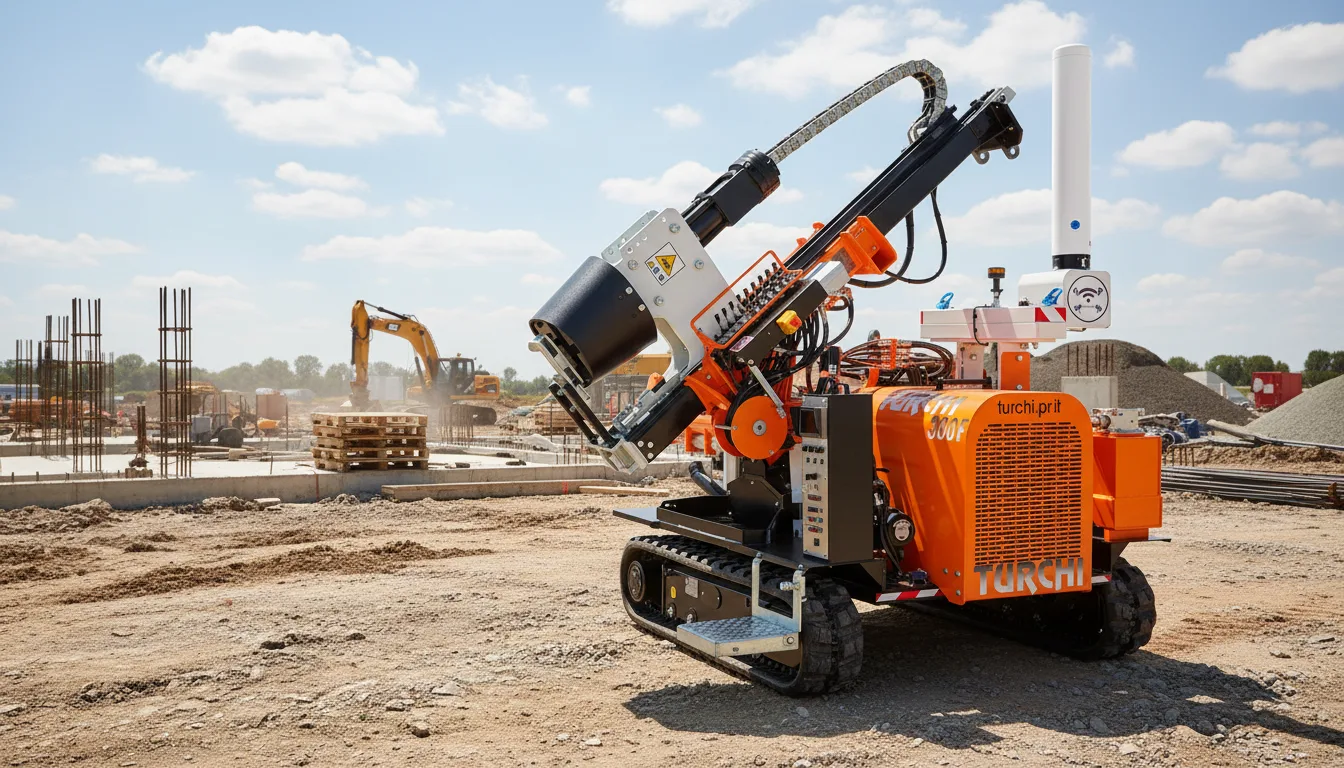
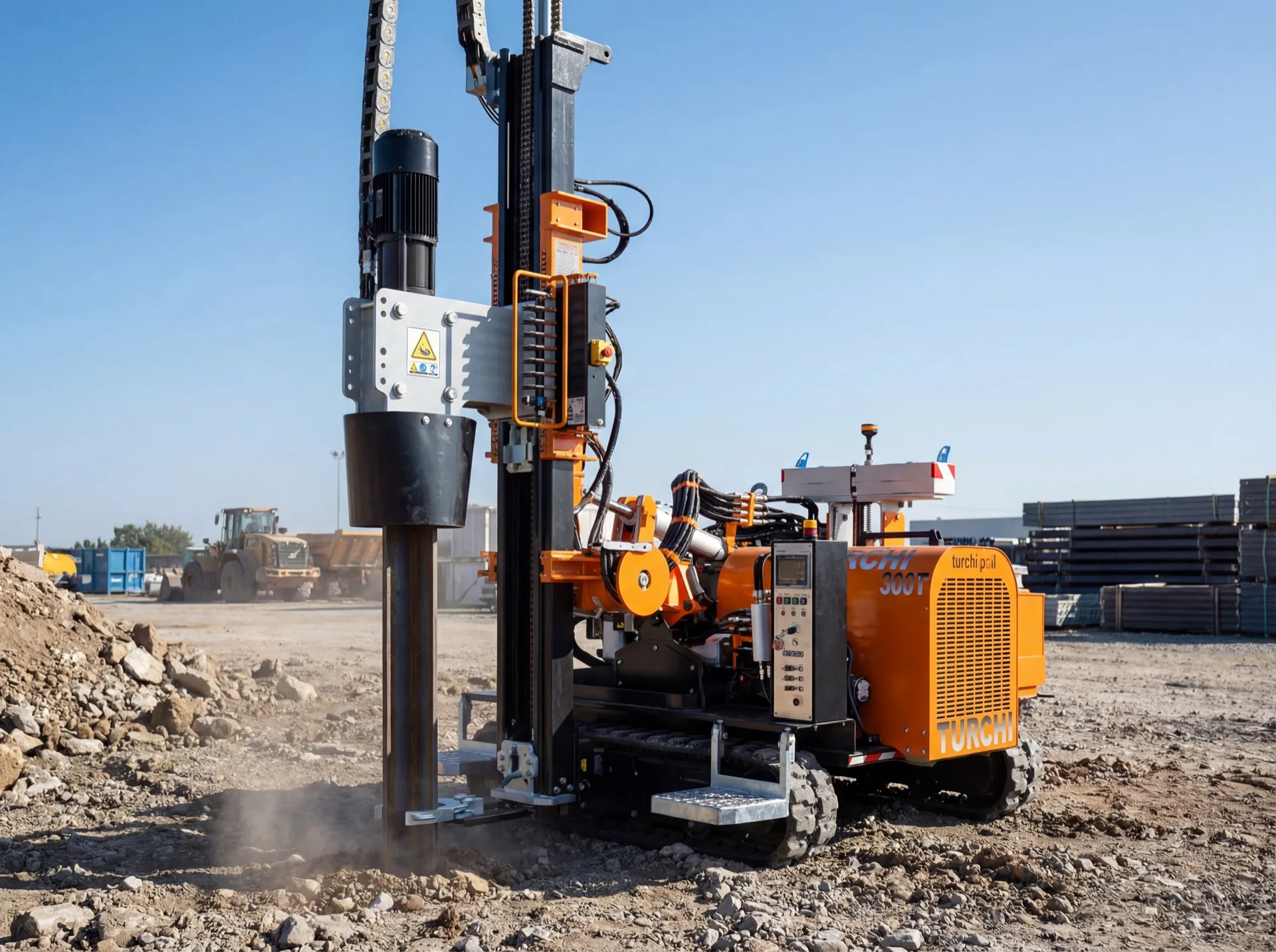
The TURCHI assisted verticality system is an electronic/software system that uses PVEA elements (angular position sensors) to assist vertical alignment of the pile driver mast. The sensors detect the mast angle relative to vertical in real time and provide the operator with immediate feedback, enabling quick corrections before and during driving. The system works together with hydraulic tilt cylinders, which adjust the mast angle with smooth, jolt-free stroke. On the TURCHI 260F and TURCHI 300F, tilt range reaches ±9.5° side and +10°/-51° front, covering virtually every site condition.
Tilt cylinders: the mechanical foundation
At the foundation of assisted verticality are the hydraulic tilt cylinders, one of the key technologies in TURCHI pile drivers. These cylinders adjust the mast angle for both vertical and inclined driving, with a smooth, jolt-free hydraulic stroke. Adjustable tilt is essential for tracking solar configurations, where piles must be driven at precise angles, and for containment work on slopes. Without this mechanical foundation, no electronic system could effectively correct alignment.
Where it makes the biggest difference: solar and road
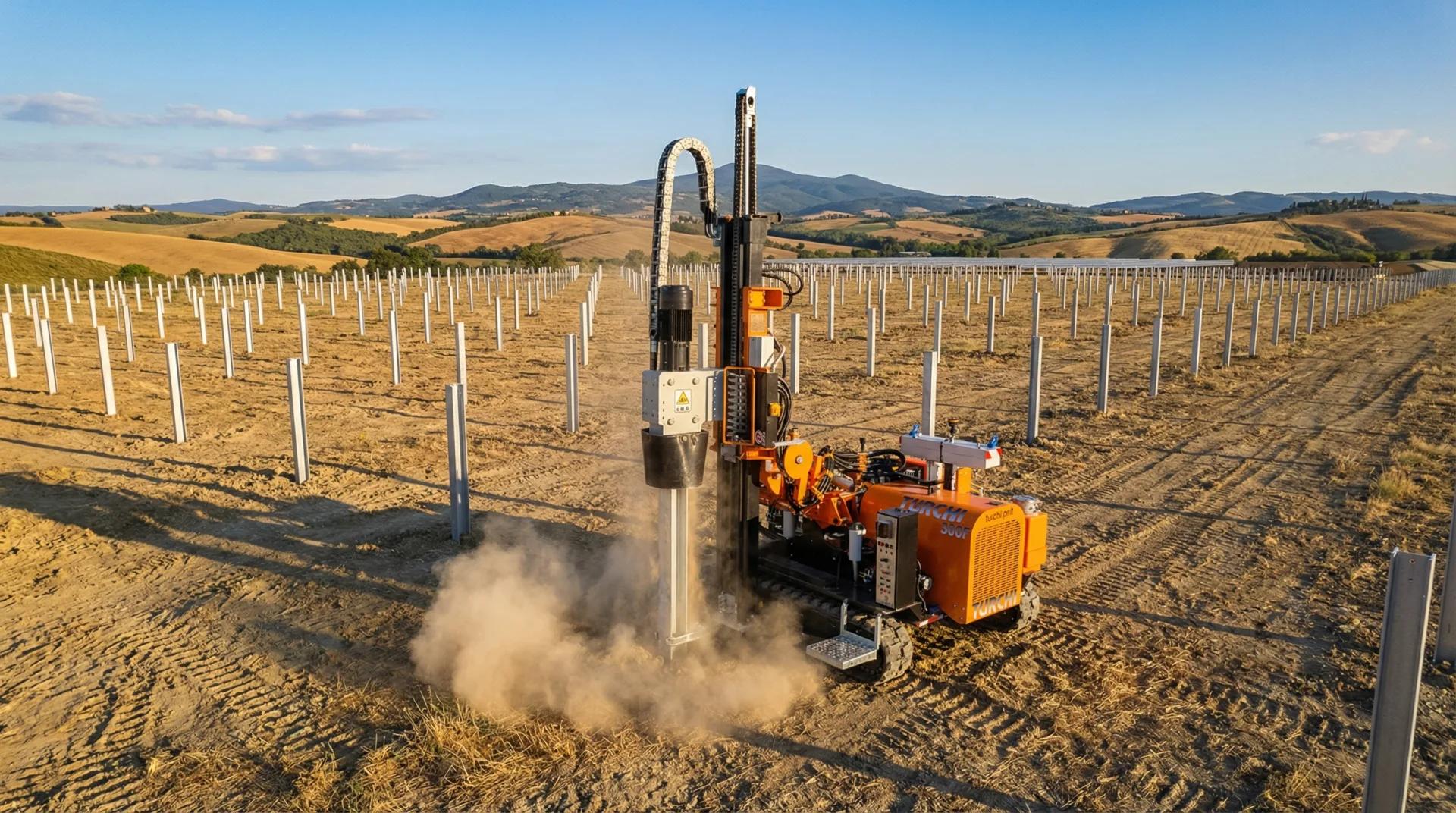
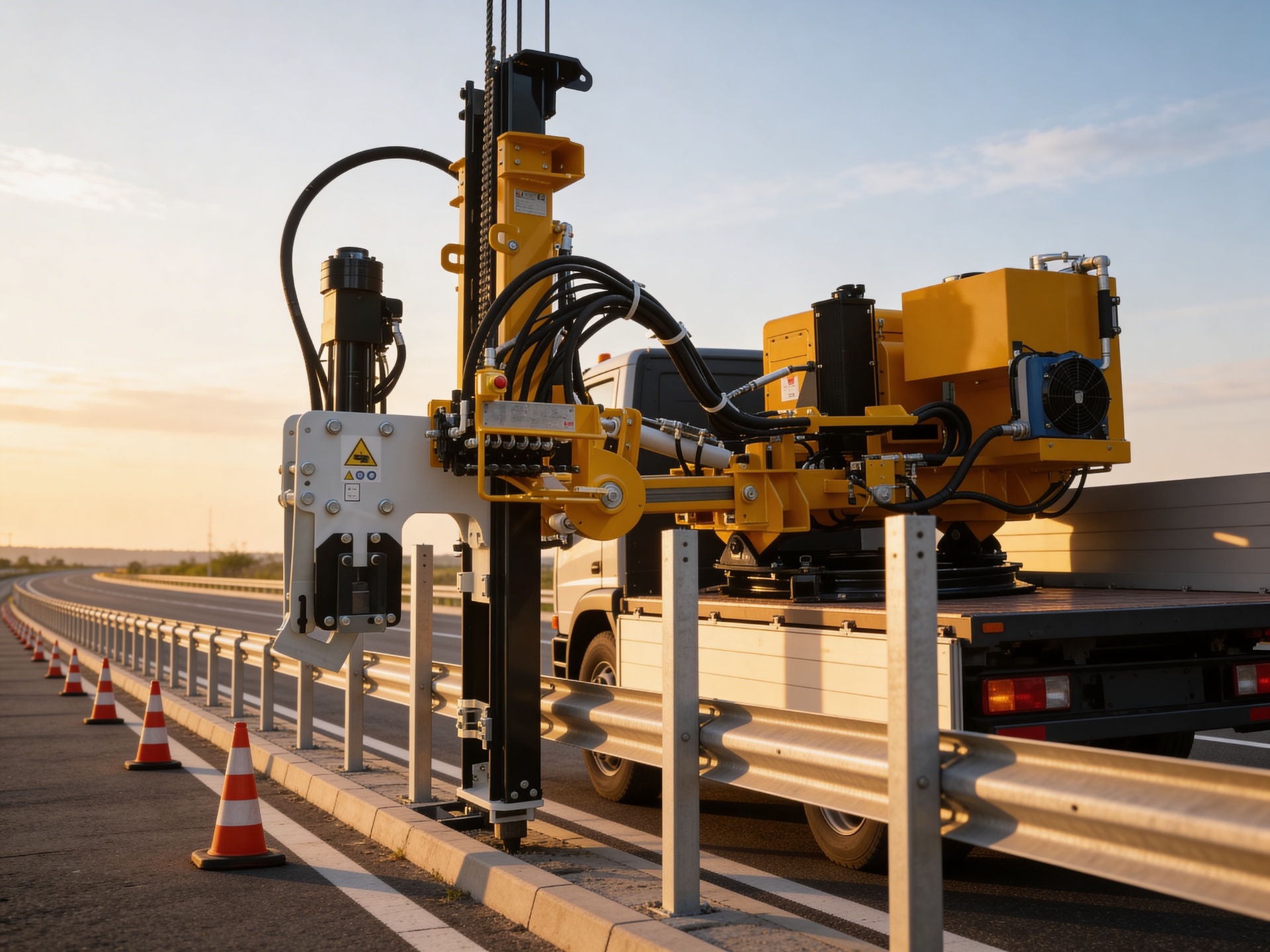
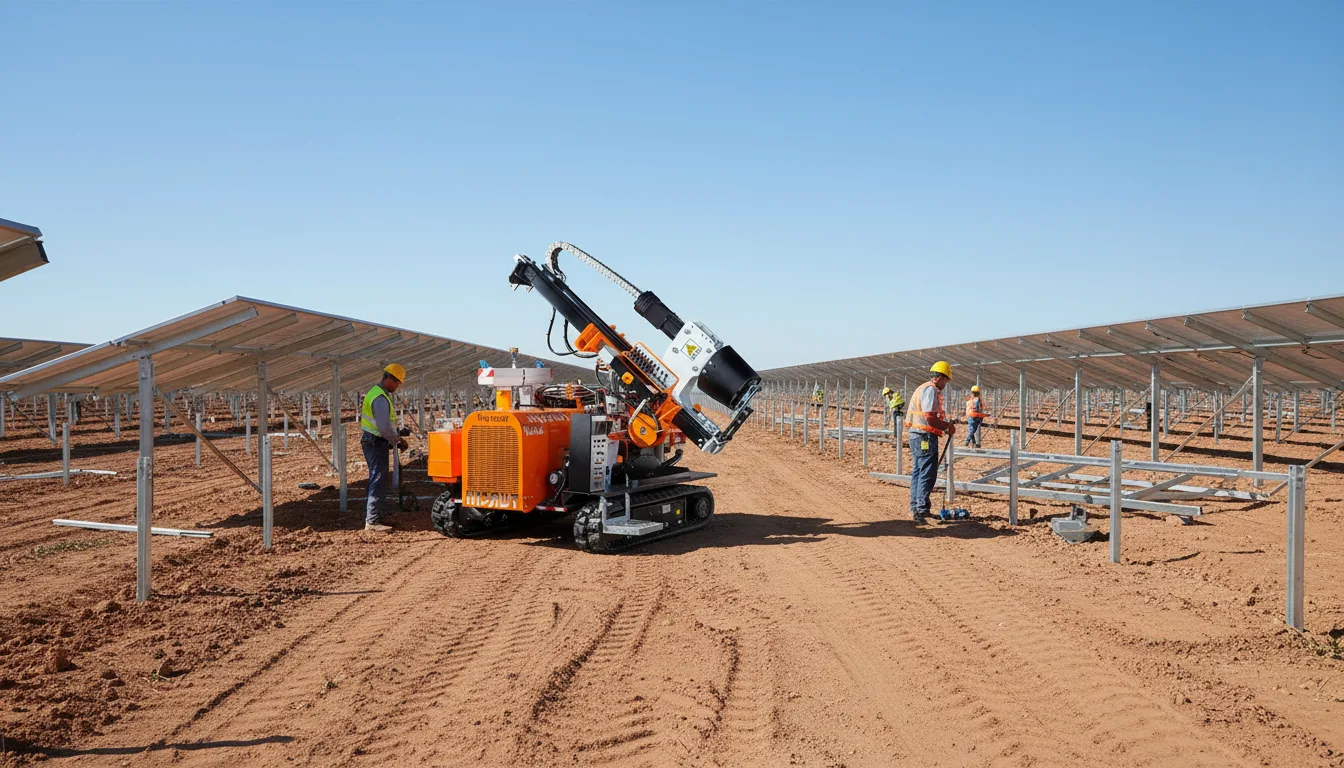
In solar, where a single plant can require thousands of piles, even a small deviation multiplies. The PVEA system maintains constant precision throughout the working day, even as operator fatigue increases. With the TURCHI 300F driving up to 150 piles per day at depths up to 6 metres, assisted verticality ensures every pile is correctly positioned on the first attempt. In the road sector, the TURCHI 260F installs sigma posts and guardrails on urban sites where space is tight and precision is mandatory. Side tilt up to ±9.5° and front tilt up to +10°/-51° enable perfect placement even on roads with cross or longitudinal slopes.
Want to pick the right model for your site? Talk to us.
Integration with GPS and remote monitoring
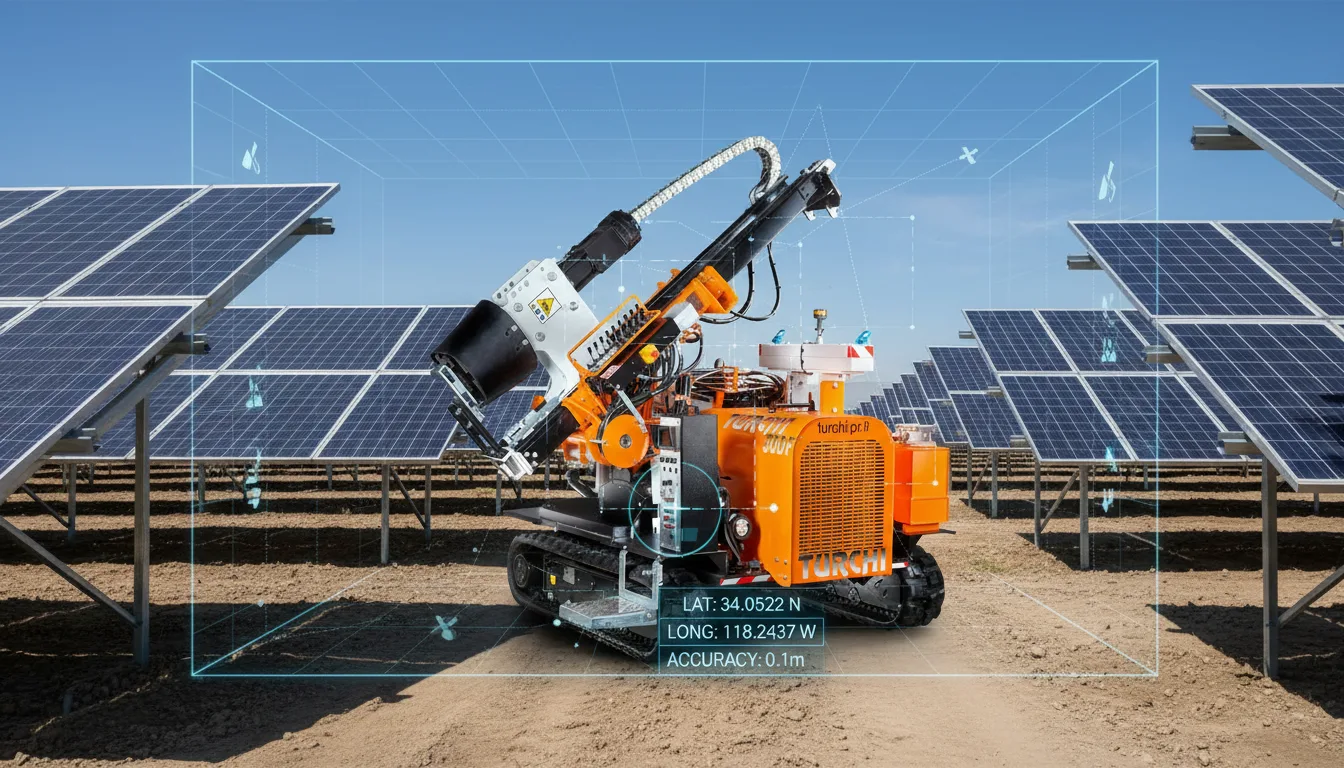
Assisted verticality performs at its best when combined with the other optional TURCHI systems. Semi-automatic GPS provides centimetre-level pile positioning on the field, PVEA ensures vertical mast alignment, and remote monitoring records all operational data — including GPS/Glonass position and working hours — on a mobile-friendly web portal. Together, these three systems transform the pile driver from a purely mechanical machine into a controlled, documentable precision tool.
Which models offer it
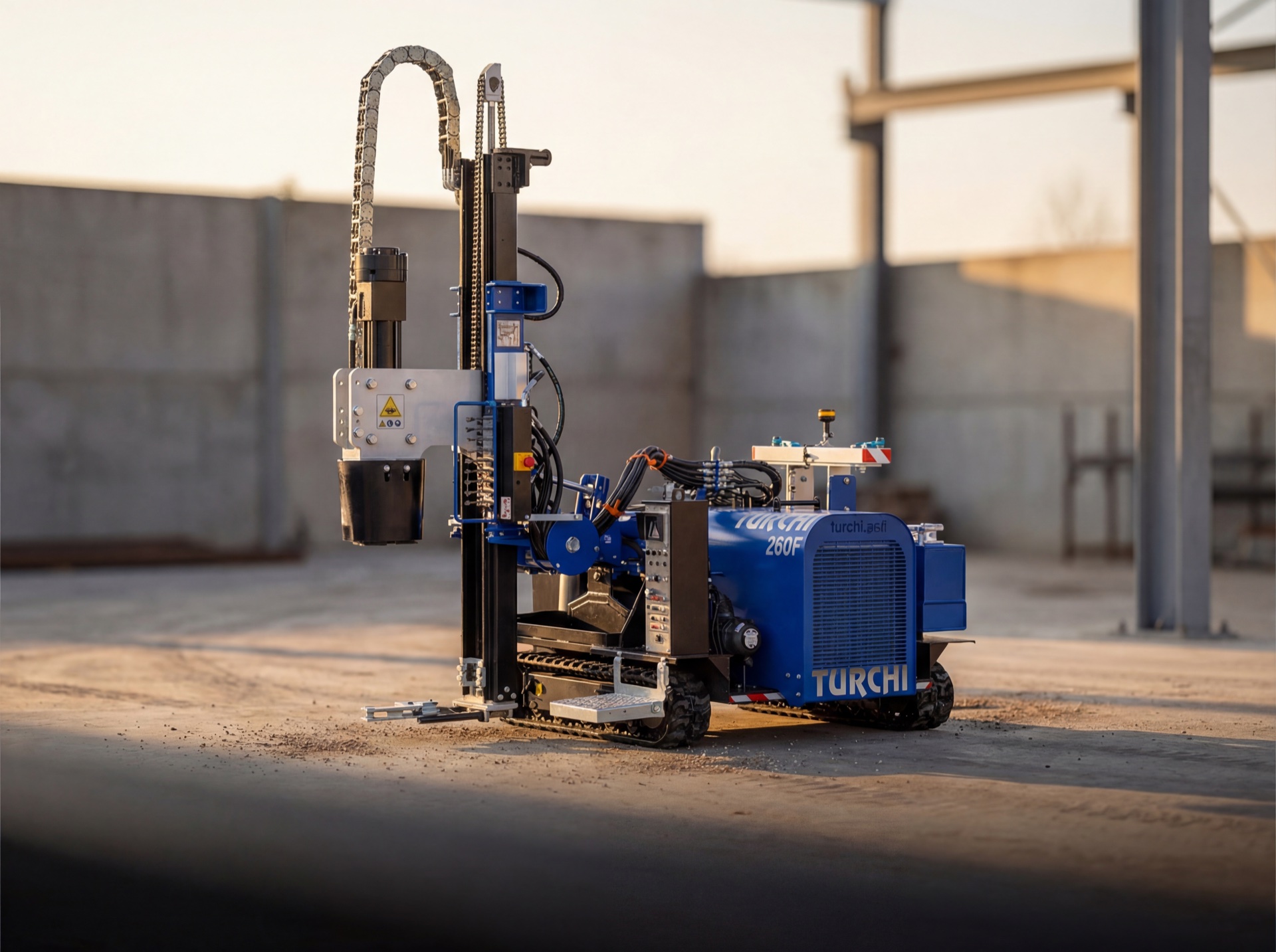
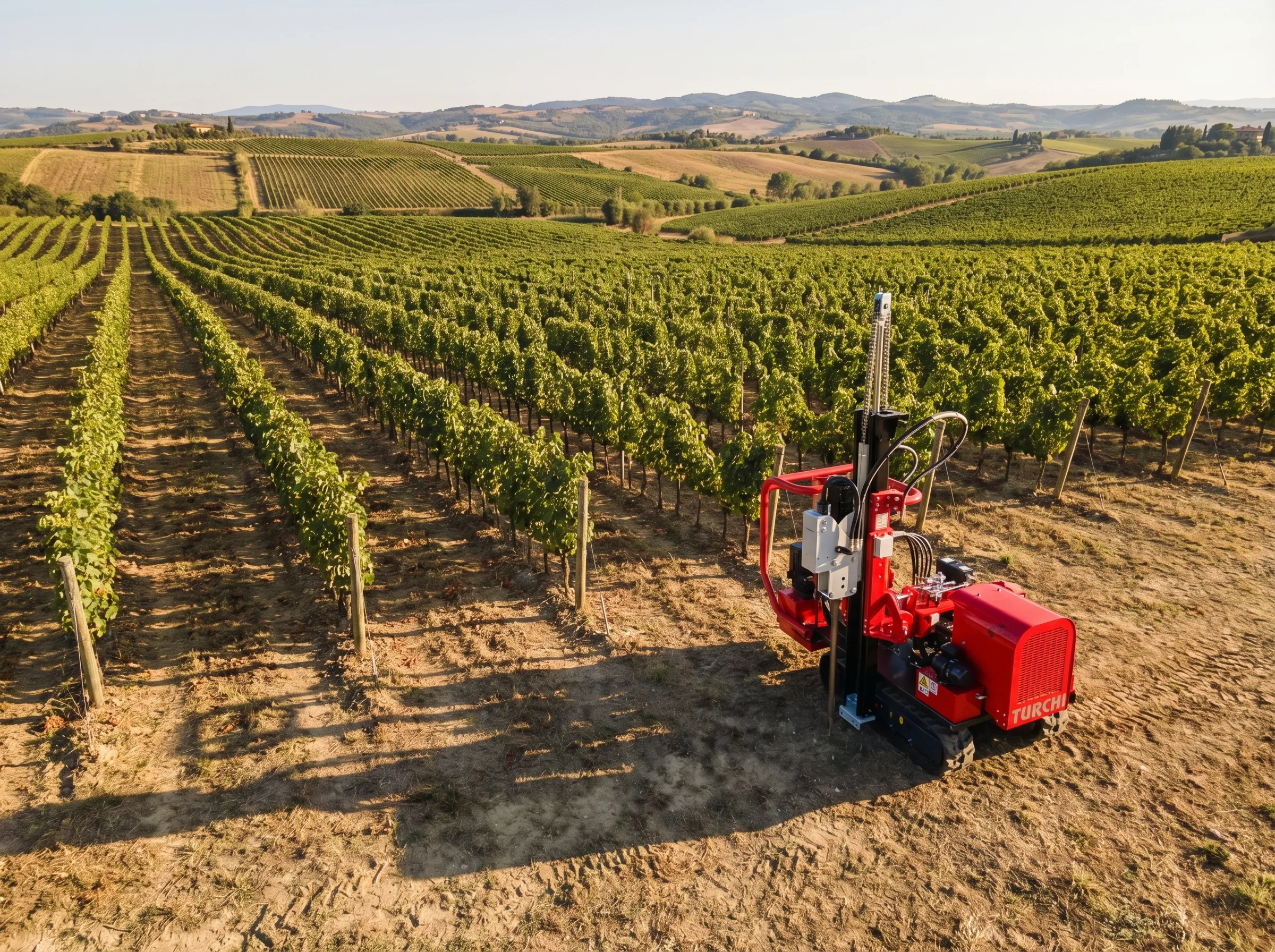
PVEA assisted verticality is available as an option on request for the TURCHI 260F and the TURCHI 300F. Both models share the same tilt range (±9.5° side, +10°/-51° front) and the same hydraulic cylinder architecture. The choice between them depends on site requirements: the 260F is the compact 3,500 kg machine ideal for guardrails and medium-scale solar, while the 300F is the flagship 4,400 kg model for utility-scale solar sites and foundations up to 6 metres deep. For agriculture, the TURCHI BACCO offers ±10° lateral tilt with a 600 mm sliding guide.