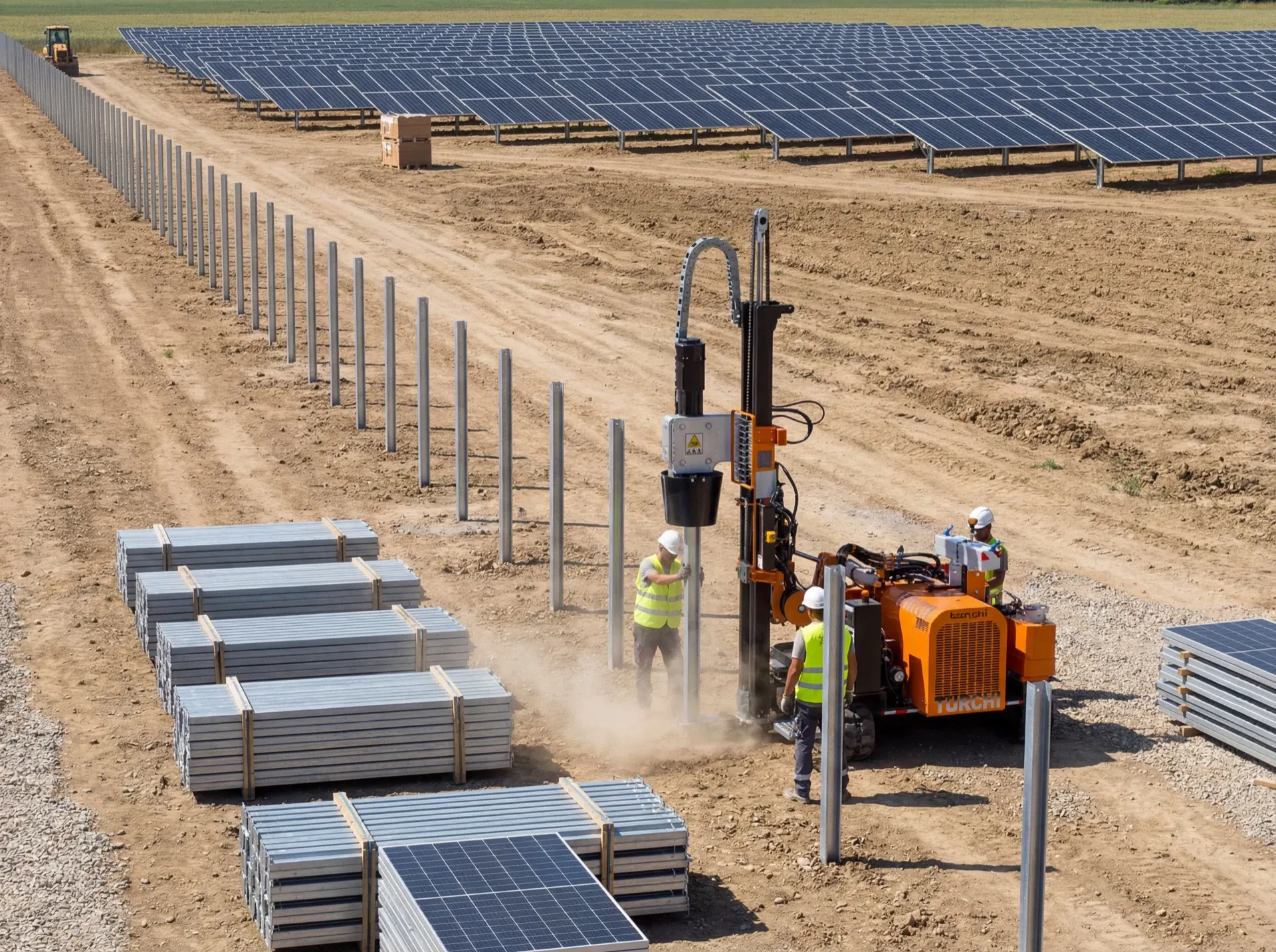
Piles per day: pile driver productivity
How many piles per day can a pile driver install? Output depends on ground, logistics, depth, operator and weather, not only on the machine.
The average with short piles and the effect of handling distinguish the real cycle from an output promise for every site.
Piles per day by sector
Manufacturer brochures promise 200, 300 and even 400 piles per day. Almost always, these are laboratory numbers on easy ground with short piles.
The operating estimates distinguish sector, ground and model. They draw on technical specifications and TURCHI customer experience in Italy and Europe.
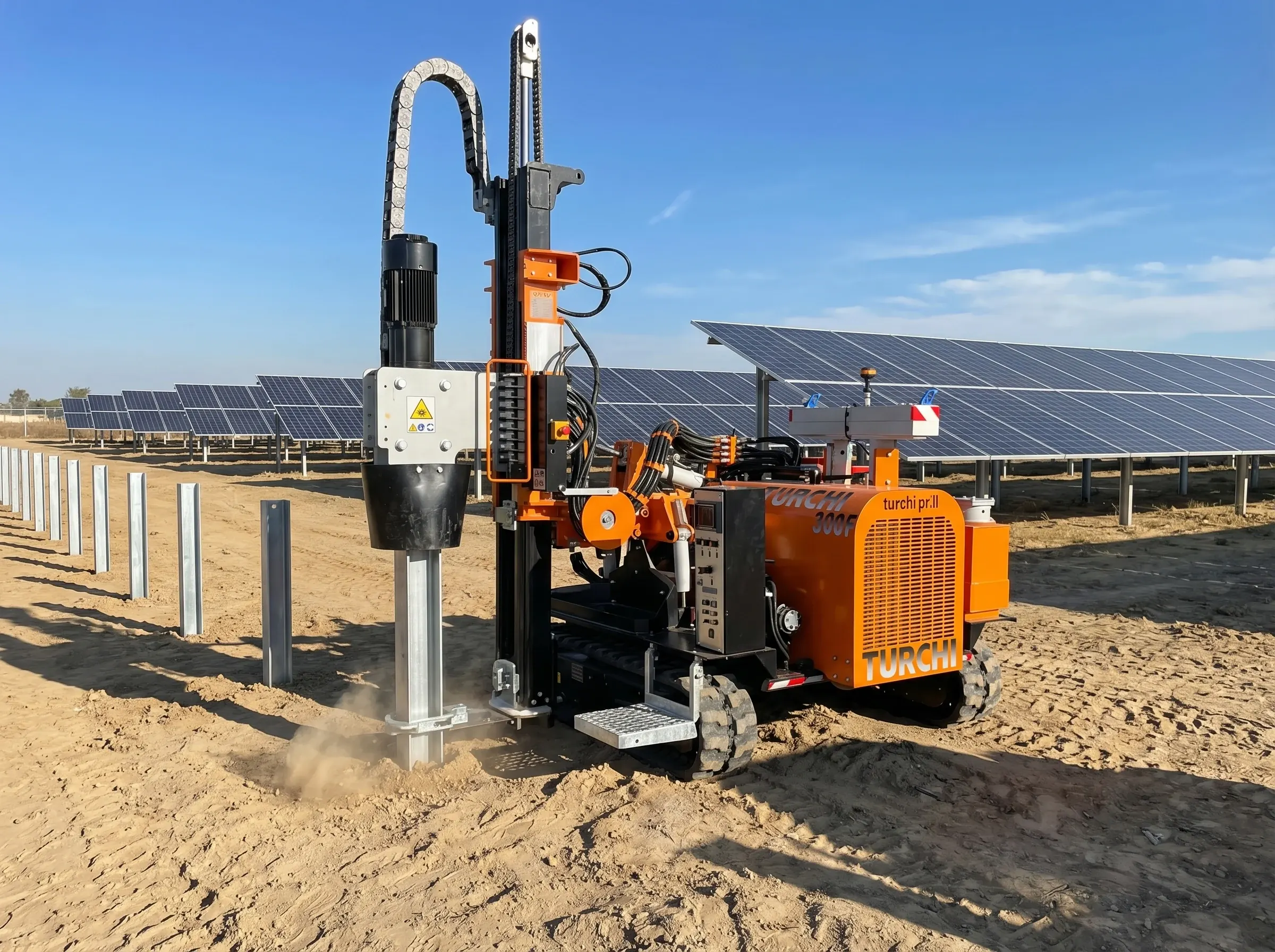
For the TURCHI 300F and 260F, with short piles and ordinary conditions, 150 piles per day is an indicative average, not a minimum or maximum. In optimal conditions, 200-300 piles per day are possible. These are not three guaranteed performance thresholds: long piles, difficult ground or slow handling reduce output.
| Job | What to check before estimating piles per day |
|---|---|
| Solar | Pile height and quantity, ground, pre-drilling and team availability |
| Guardrails | Profile, spacing, access to the road shoulder and working windows |
| Agricultural fencing | Distance between posts, field access and handling |
| Vineyards | Space between rows, post type and soil conditions |
The five productivity factors
Daily output depends on five factors that combine on every site.
Ground
Ground affects driving time, but it is not always the dominant factor over the day. On sandy ground, a 2 m pile drives in 15-20 seconds. In compact clay, the same pile can take 40-60 seconds.
With rock layers, direct driving may not be possible, and pre-drilling with a pneumatic DTH hammer is required. Daily productivity can halve between easy and difficult ground.
Pile logistics
Driving time is only part of the cycle. The machine must reach the point, load the pile, position it and check verticality. If piles are not close to the machine, downtime can exceed 50% of the total.
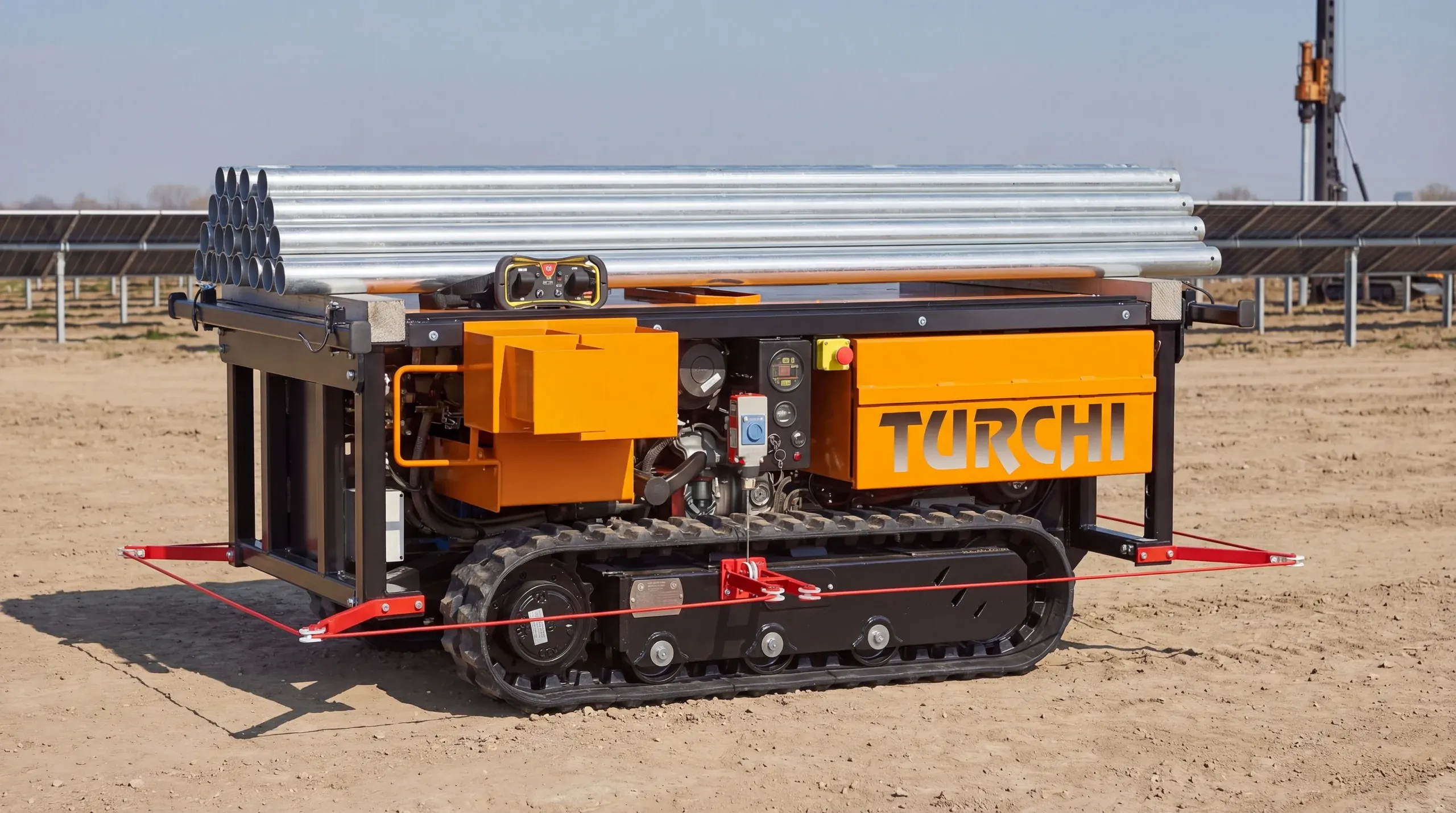
The tracked carrier brings piles from storage to the machine. If handling is the bottleneck, it can reduce waiting between drives; it does not guarantee a fixed percentage increase. Transport distance, pile height and team organisation determine the benefit.
Driving depth
The deeper the drive, the more time it takes. A 2 m pile to refusal takes much less time than a 4 m pile. The project and ground determine depth. It is not a parameter to change freely, but it must always be included in the estimate.
Operator experience
An experienced operator can be up to 30% more productive than a beginner, with a smoother cycle, better ground reading and optimised routes. TURCHI machines shorten the learning curve with intuitive controls and optional verticality assistance, but experience remains important.
Weather conditions
Rain, strong wind and extreme temperatures reduce output. Rain makes ground harder to cross, giving tracks an advantage over wheels. Strong wind makes positioning long piles risky, while extreme heat reduces operator efficiency.
Seasonal planning is needed for realistic estimates.
When a pile carrier helps
The Carretto Portapali brings piles from storage to the driving point while the team prepares the next loads. It is useful when the pile driver stands idle waiting for piles; if piles are already close to the machine, the benefit may be smaller.
Using the carrier alone does not imply a fixed reduction in working days per MW. To estimate its effect, measure transport and waiting times on your site alongside the team’s output.
TURCHI model productivity
The table compares the main application of the two models. The same indicative average with short piles does not replace a site-specific estimate.
| Model | Main application | Piles/day with short piles | Operating weight |
|---|---|---|---|
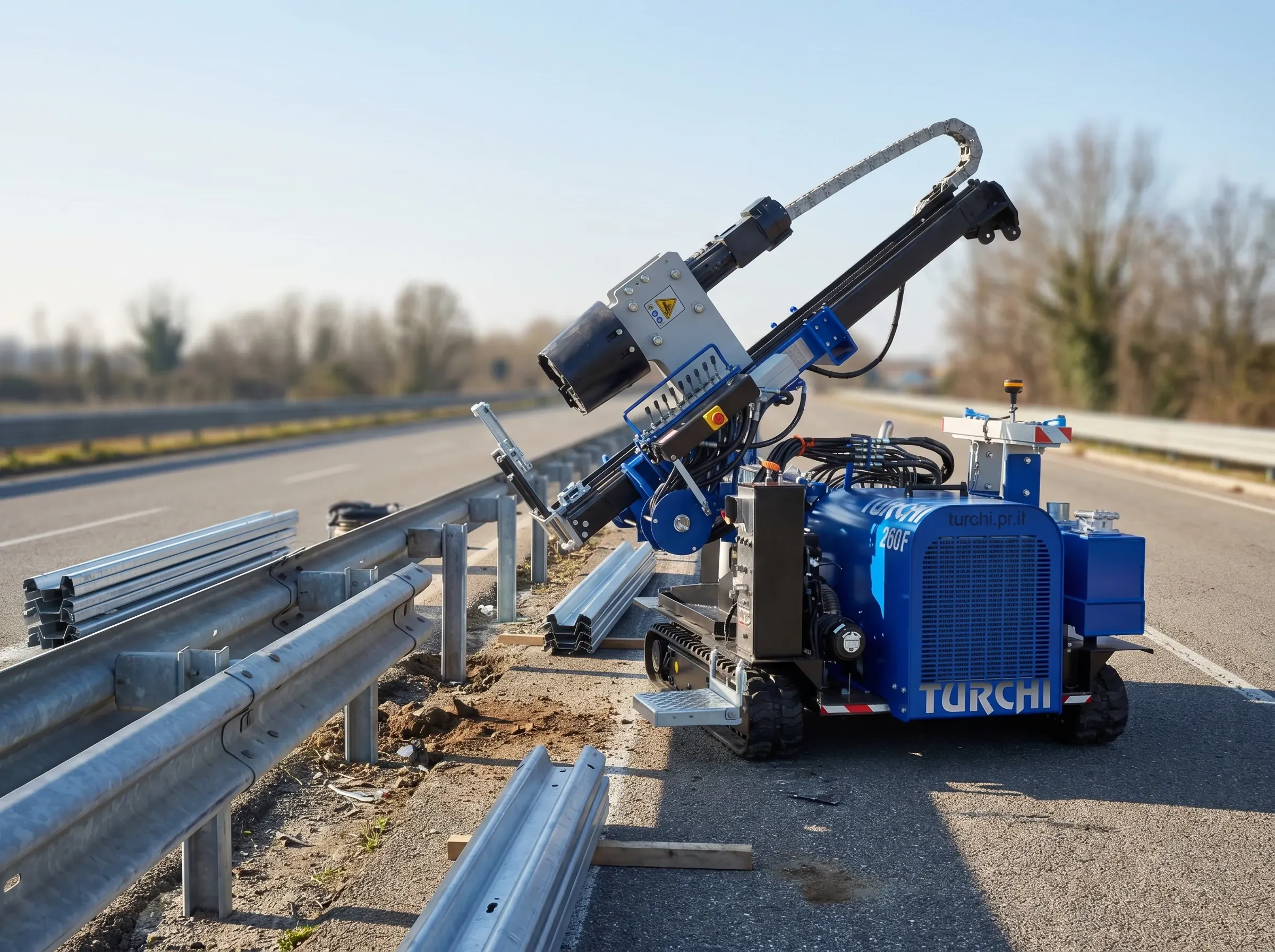
| TURCHI 260F | Guardrails and narrow access | 150, indicative average | 3,500 kg |
| TURCHI 300F | Solar and taller piles | 150, indicative average | 4,400 kg |
For the 260F too, 150 piles per day with short piles is an indicative average; 200-300 are possible only in optimal conditions. The chart distinguishes the average from favourable scenarios, not a promised output for your site.
The TURCHI 300F is the top model for utility-scale volumes.
To turn these figures into site days, read how to choose a pile driver for a 1 or 20 MW field, then use the 7-step configurator to choose the right machine.
Frequently asked questions
Can't find what you're looking for? Browse the full FAQ list. Reach out via a support request or email us at [email protected].
With short piles, 150 piles per day with the TURCHI 300F is an indicative average, not a minimum or maximum. In optimal conditions, 200-300 piles are possible; long piles, difficult ground or slow logistics reduce output. A site-specific estimate needs the pile height, ground conditions and team organisation.
The carrier can reduce waiting for pile supplies if handling is the bottleneck. The increase is not a fixed percentage: it depends on the distance between storage and the driving point, pile length and the team.
No single factor dominates every job. Ground and depth determine driving time; pile height and handling, site access and the number of operators determine the time between piles. An output estimate must consider the entire cycle.