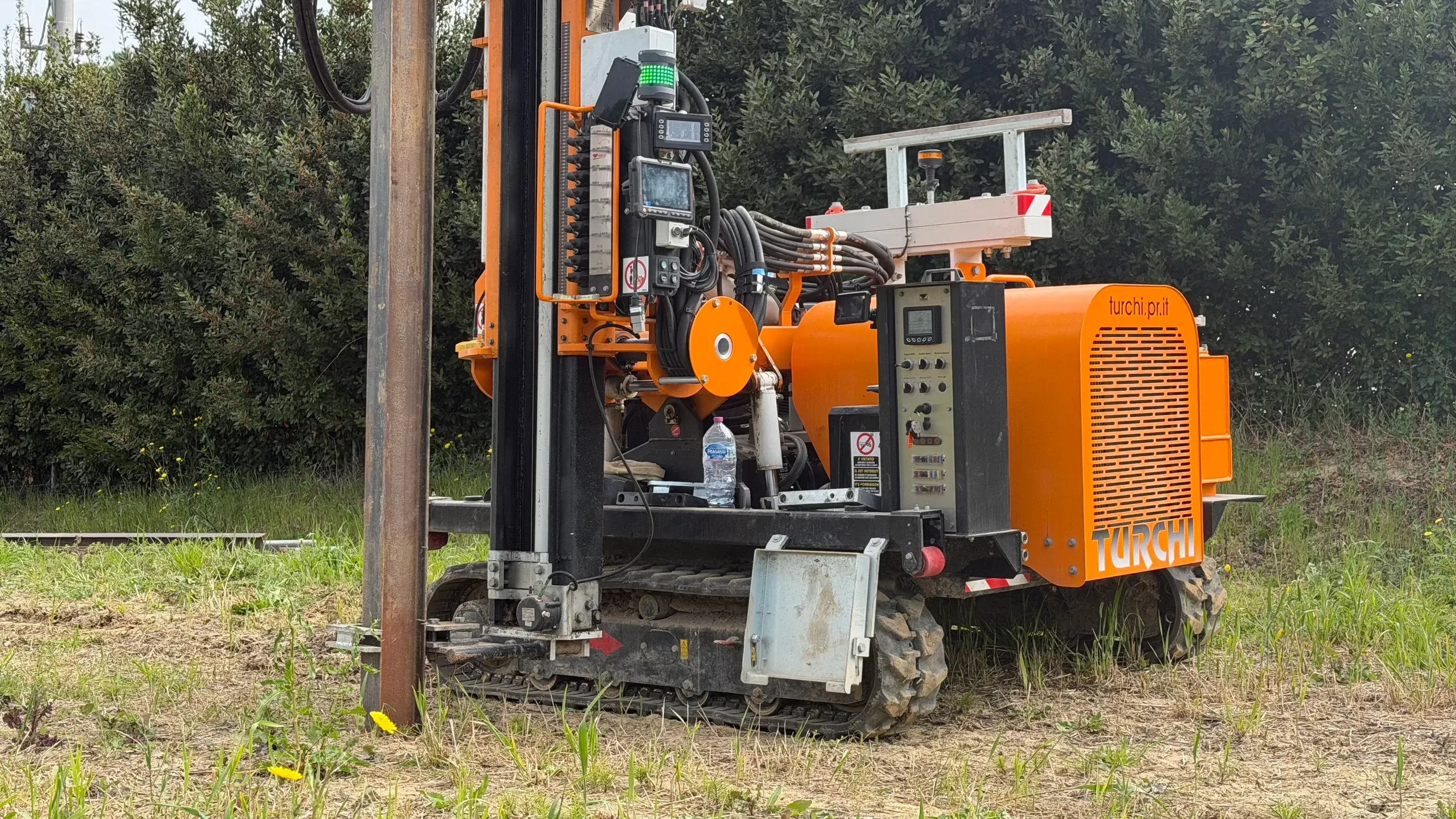
TURCHI 300F vs 260F: which pile driver to choose
The TURCHI 260F and 300F are self-propelled pile drivers from the same range for different jobsites. One operator runs both, and each drives over 150 posts per day in suitable conditions.
Choose by post height, transport weight and hydraulic reserve. This comparison identifies the right model.
TURCHI 300F vs 260F: the main differences
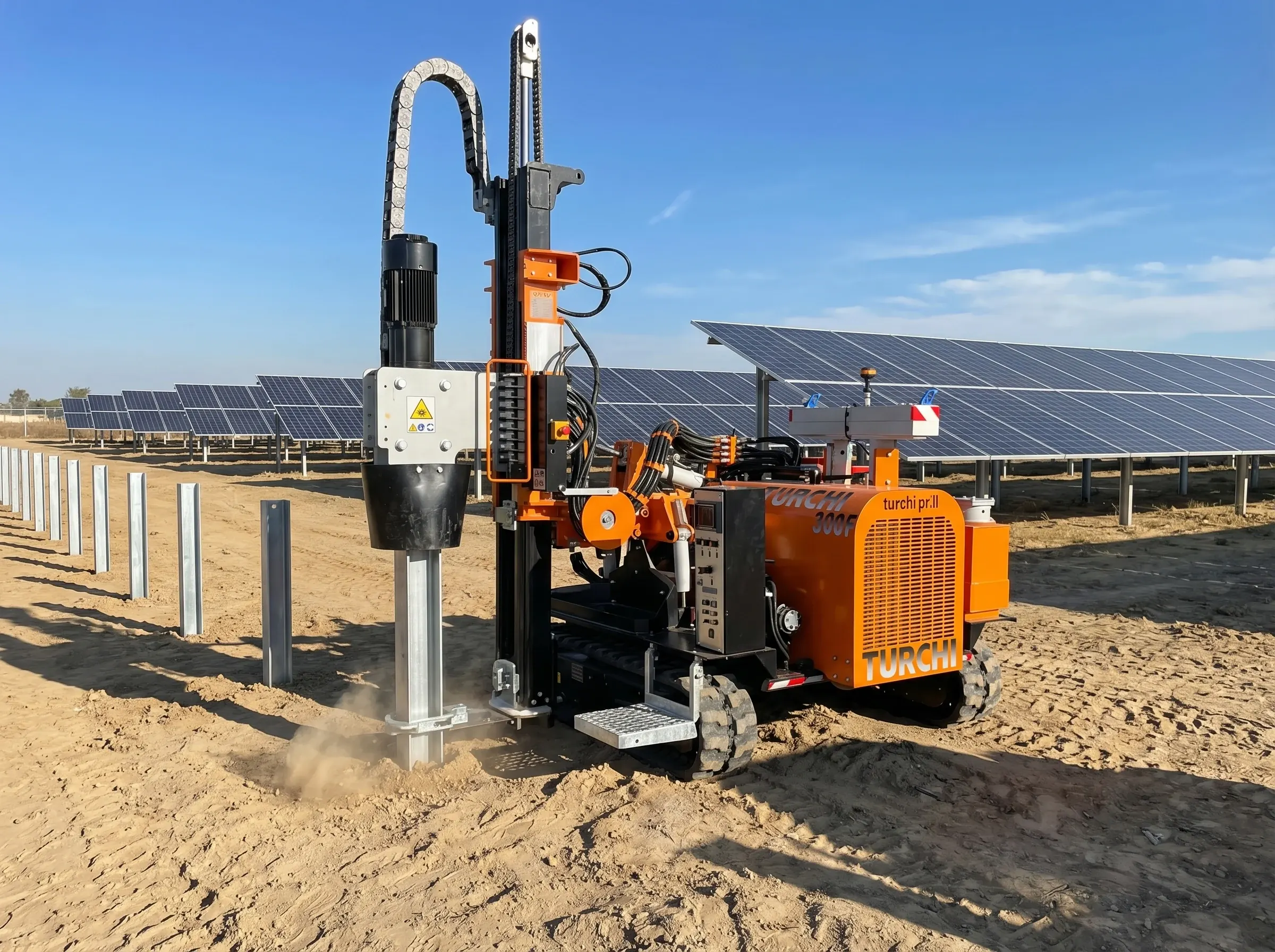
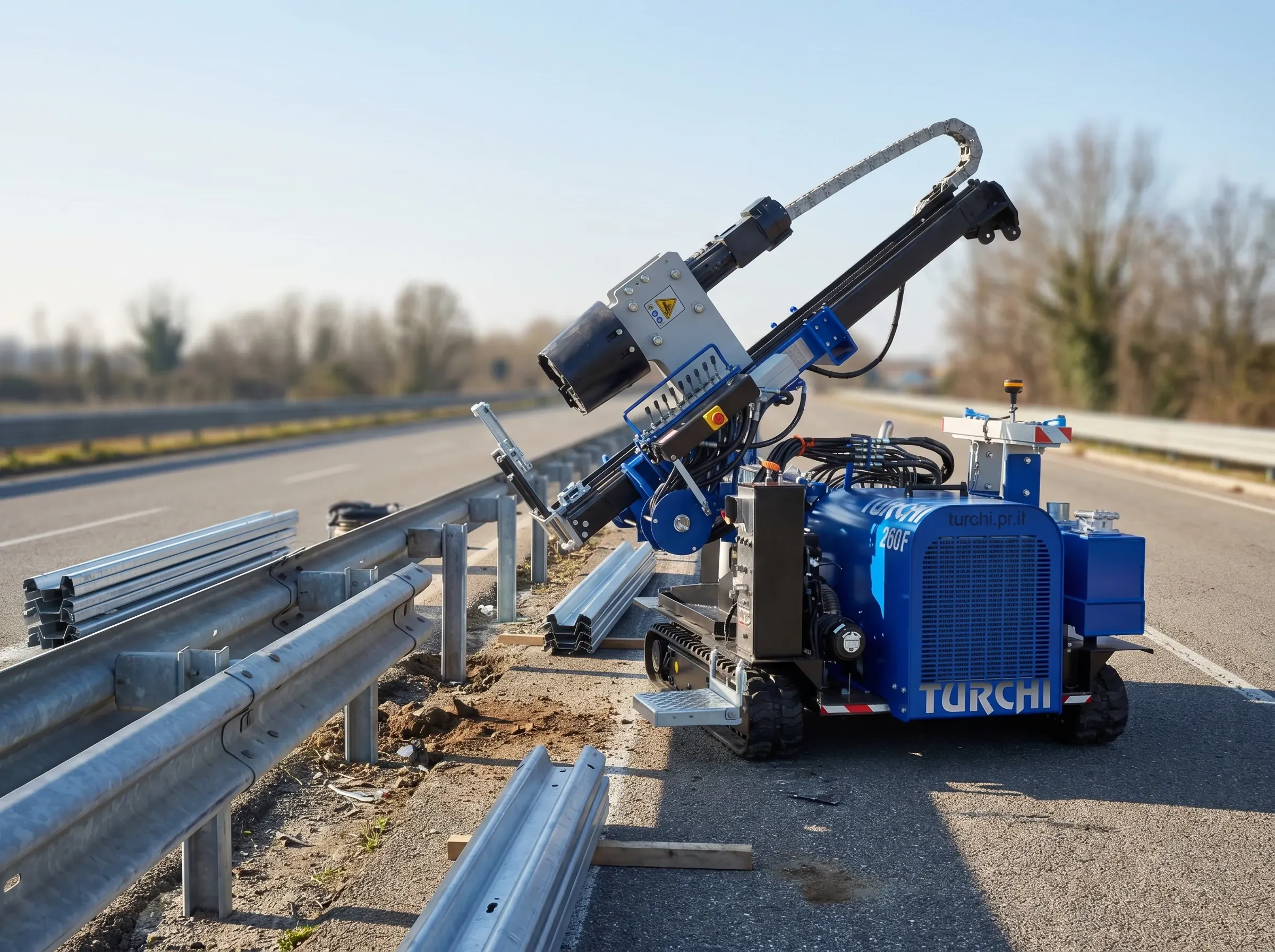
The TURCHI 260F weighs 3,500 kg and works up to 3.5 m. The TURCHI 300F weighs 4,400 kg and reaches 6 m with its longest mast extension.
The 260F takes 10 minutes to set up, compared with 15 minutes for the 300F. Its system works at 170 bar, with an oil flow of 60 to 90 L/min and a 120 L tank. The 300F reaches 180 bar, increases maximum flow to 100 L/min and has a 140 L tank. This additional hydraulic reserve gives more margin during long cycles and combined driving and drilling work.
What the TURCHI 300F and 260F have in common
Both models share the same operating setup:
- Self-propelled tracked drive: rubber tracks let the machine move around the jobsite without a support vehicle.
- Operator: centralised controls let one person run the machine. With short piles, 150 piles per day is an indicative average for both models, not a minimum; an assistant may be needed to handle long piles.
- Tilting mast: both adjust the mast laterally up to ±10°. The frontal −51° is a transport position, not a working slope: stability and ground must be assessed separately.
- Engine: both use a 34.4 kW (46 HP) engine.
- Accessories: semi-automatic GPS, automatic verticality, extractor, hydraulic core drill and 3, 4 and 5 inch DTH hammers are available for both models.
The indicative average for short piles does not separate the two machines. The difference is working height, logistics and hydraulic reserve.
When to choose the TURCHI 260F
The 260F weighs 3,500 kg and uses a 3 or 4 cylinder diesel engine, with 1,800 or 2,190 cm³ displacement. Operating pressure is 170 bar, oil flow is 60 to 90 L/min and the tank holds 120 L.
Choose the 260F when:
- You move the machine often: it weighs 900 kg less than the 300F, reducing the load for every transfer.
- Posts stay below 3.5 m: it suits fencing, guardrails and solar plants with low-profile structures.
- You reposition frequently: the 10 minute setup limits lost time between one position and the next.
When to choose the TURCHI 300F
The 300F weighs 4,400 kg and uses a 4 cylinder diesel engine with 2,190 cm³ displacement. Working height starts at 4.40 m and reaches 6 m, depending on the mast extension installed: 4.4 m, 5.0 m, 5.2 m or 6.0 m.
Choose the 300F when:
- Posts are taller: industrial structures, raised solar fields and agrivoltaic plants require heights the 260F cannot reach.
- The ground is hard or rocky: DTH down-the-hole hammers pre-drill rock without a second machine. The 6 inch DTH is available on request for both models; the choice depends on the borehole and ground.
- You combine driving and drilling: 180 bar, up to 100 L/min and a 140 L tank provide more reserve through the working day.
Technical comparison of the TURCHI 300F and 260F
| Specification | TURCHI 260F | TURCHI 300F |
|---|---|---|
| Operating weight | 3,500 kg | 4,400 kg |
| Working height | up to 3.5 m | from 4.40 m to 6 m |
| Hydraulic pressure | 170 bar | 180 bar |
| Oil flow | 60-90 L/min | 60-100 L/min |
| Oil tank | 120 L | 140 L |
| Setup time | 10 min | 15 min |
| Engine | 3 or 4 cylinder diesel, 1,800 / 2,190 cm³ | 4 cylinder diesel, 2,190 cm³ |
| Power | 34.4 kW (46 HP) | 34.4 kW (46 HP) |
| Lateral mast adjustment | ±10° (frontal −51°: transport) | ±10° (frontal −51°: transport) |
| Short-pile productivity | 150 piles/day, indicative average | 150 piles/day, indicative average |
The full model comparison covers all four machines, including hammers and frequencies.
How to choose between the TURCHI 300F and 260F
Start with post height. If posts exceed 3.5 m, the 260F cannot reach the required height. The right choice is the 300F with the suitable mast extension.
For posts up to 3.5 m, consider transport and ground conditions. If you change jobsites often and work on standard ground, the 260F can simplify logistics thanks to its lower weight and smaller dimensions; actual output always depends on the work. If the ground is compact or rocky and you alternate driving and drilling, the 300F offers more hydraulic reserve for the working cycle.
For solar projects, plant size also matters. The solar pile-driver buying guide explains which work ranges the two models cover.
To match the model, mast height and accessories to your jobsite, use the 7-step configurator.
Frequently asked questions
Can't find what you're looking for? Browse the full FAQ list. Reach out via a support request or email us at [email protected].
The 260F is lighter and more compact: it can be more practical where access is narrow. Transport costs and setup times depend on the configuration, vehicle and site; check the payload before choosing a trailer.
The 260F reaches 3.5 m. The 300F starts at 4.40 m and reaches 6 m with the appropriate mast extension.
Both can use options such as semi-automatic GPS, assisted verticality and drilling or extraction equipment, depending on configuration. The 6 inch DTH hammer is available on request for both the 300F and 260F, not standard: borehole and ground data are needed to choose the tool and diameter.
For both, 150 piles per day with short piles is an indicative average, not a minimum: 200-300 piles can be reached in optimal conditions, but long piles and complex logistics reduce output. Lateral mast adjustment is ±10°; the frontal −51° refers to the transport position, not work on slopes.