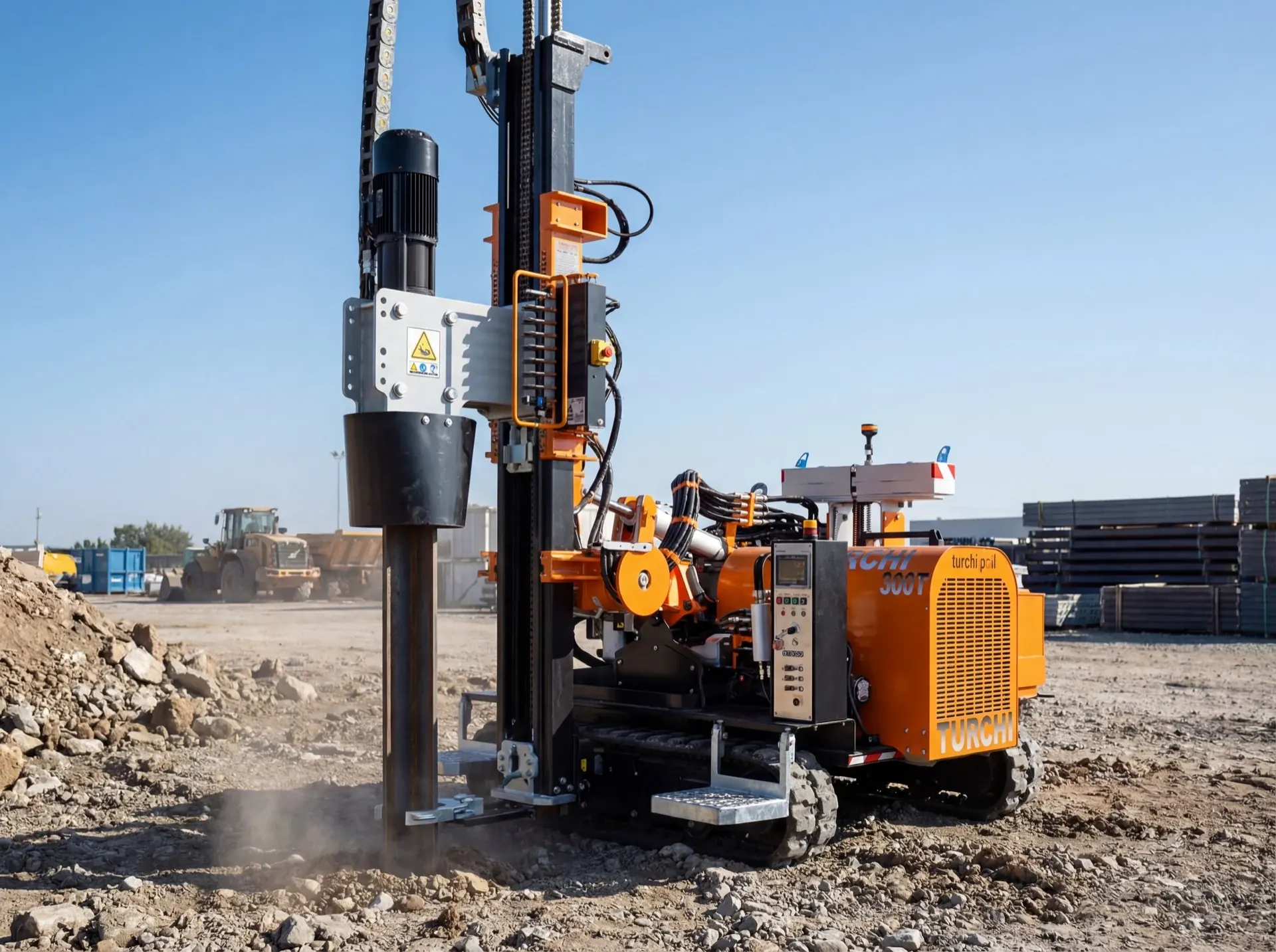
PVEA assisted verticality: precise pile driving
An out-of-alignment pile creates rework, delays and extra cost at the end of the site work.
PVEA assisted verticality keeps the column aligned during driving and reduces the risk of extracting and reinstalling the pile.
Why PVEA assisted verticality matters
An out-of-alignment pile can reduce structural load capacity in a ground-mounted solar plant or a guardrail. On irregular, clay or sloping ground, the operator must correct the column after every blow. The pace drops and the risk of extraction, misalignment and extra cost increases.
How PVEA works
The TURCHI assisted-verticality system combines electronics and software. PVEA elements, or angular-position sensors, measure the column angle against vertical in real time and provide immediate feedback.
Corrections happen before and during driving. Hydraulic tilt cylinders adjust the angle smoothly. On TURCHI 260F and 300F, lateral column adjustment is ±10°. The frontal −51° indicates the transport position, not a working slope.
Tilt cylinders as the mechanical base
Hydraulic cylinders provide the mechanical base for assisted verticality. They set the column angle for vertical and inclined driving, including tracker solar layouts and containment work on slopes.
Without this mechanical adjustment, the electronic system could not correct alignment effectively.
Solar and road applications
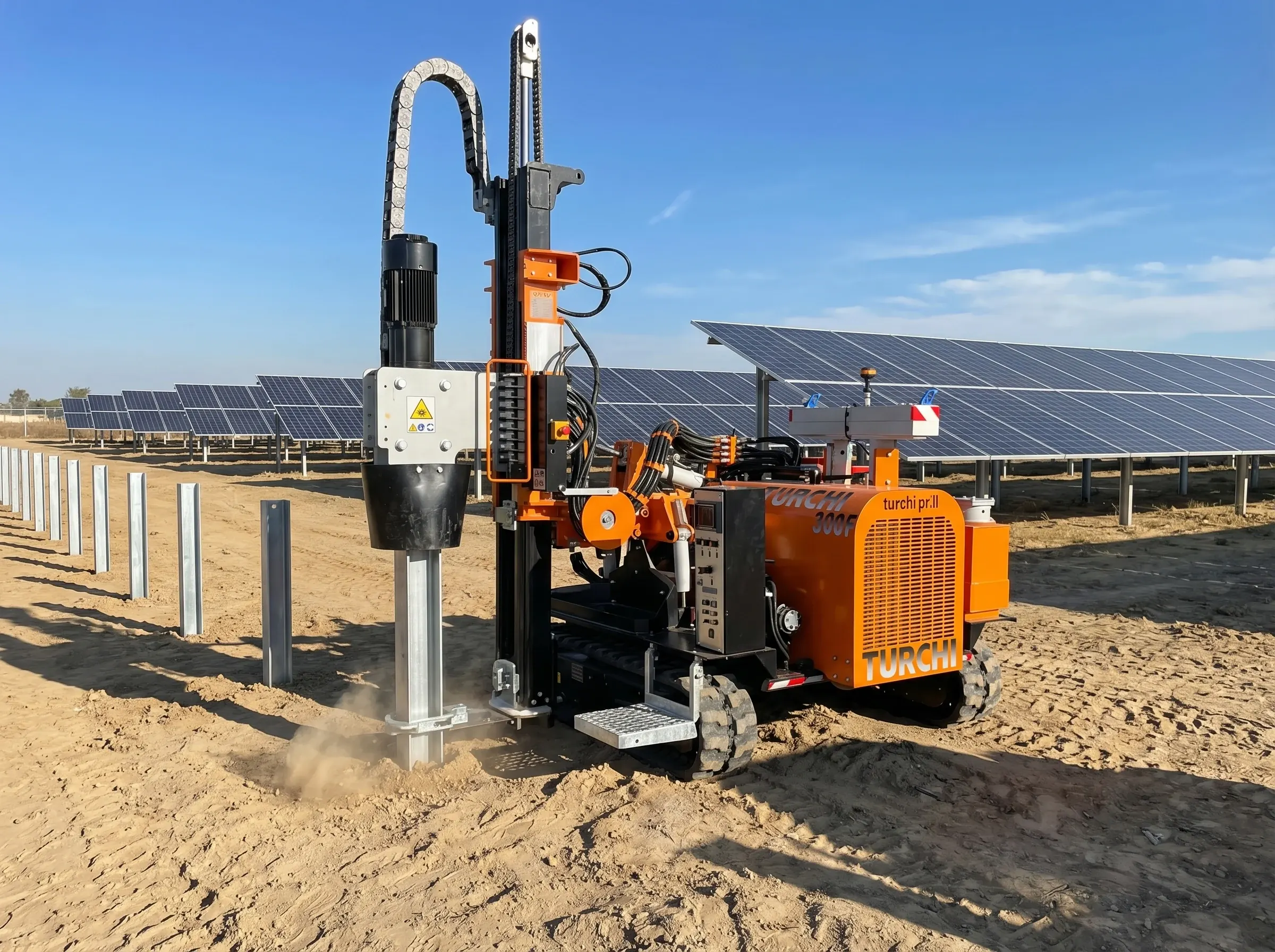
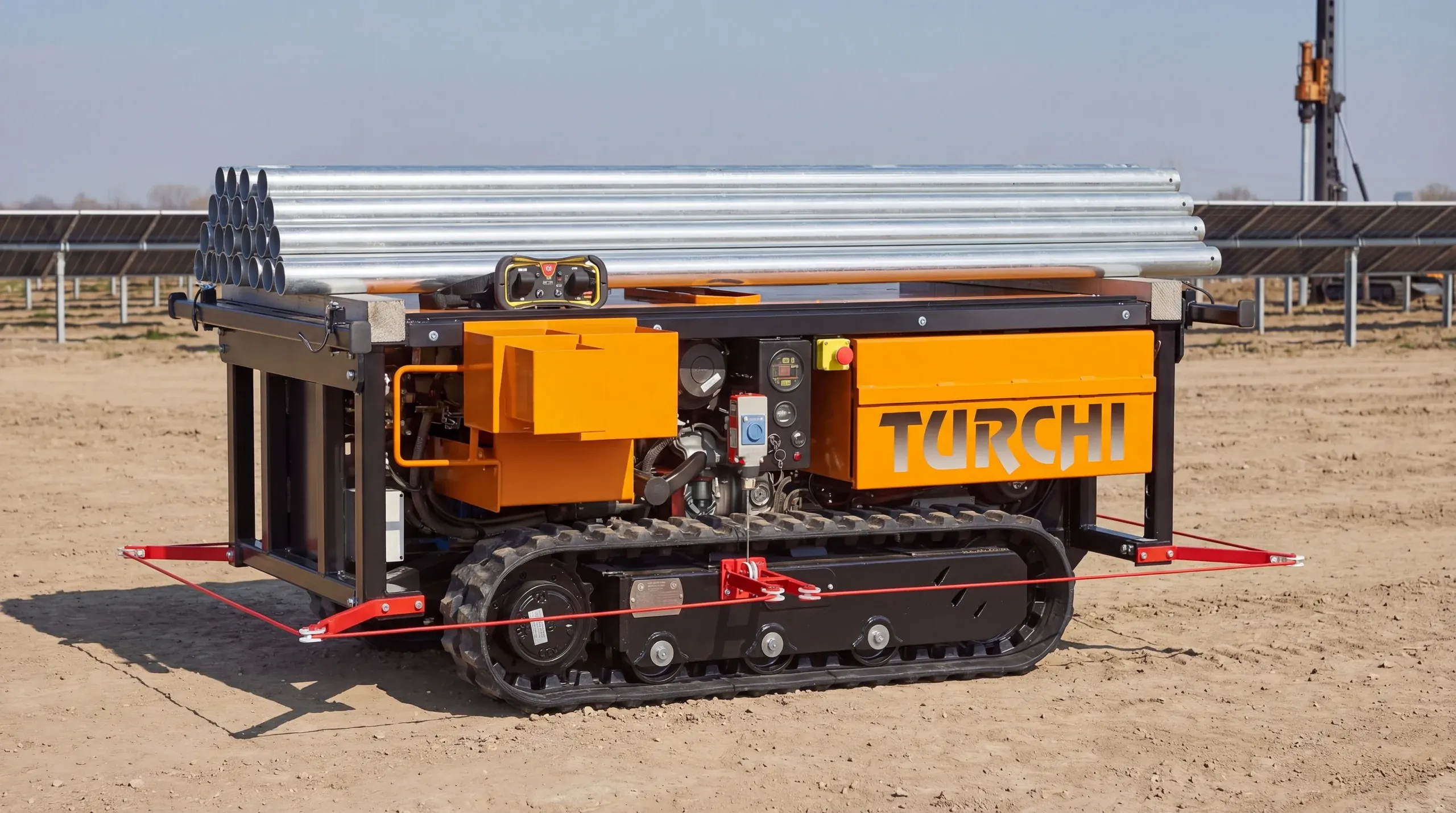
A solar plant can require thousands of piles, so even a small deviation repeats through the workday. With short piles, 150 piles per day is an indicative average for the TURCHI 300F, not a maximum; under optimal conditions, 200–300 are possible. Working height reaches 6 m with the appropriate mast. Assisted verticality helps maintain precision through the shift, even when the operator is tired.
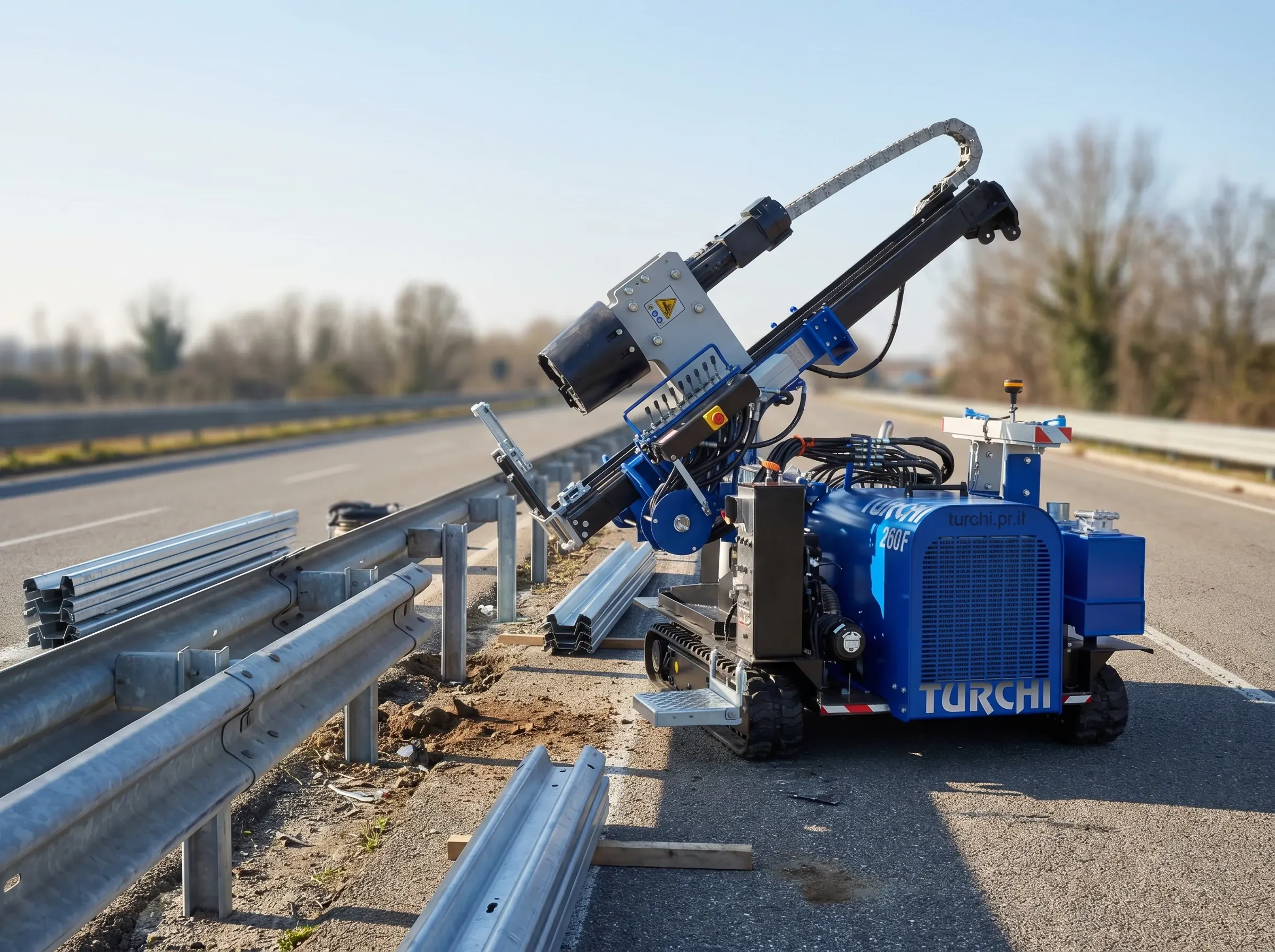
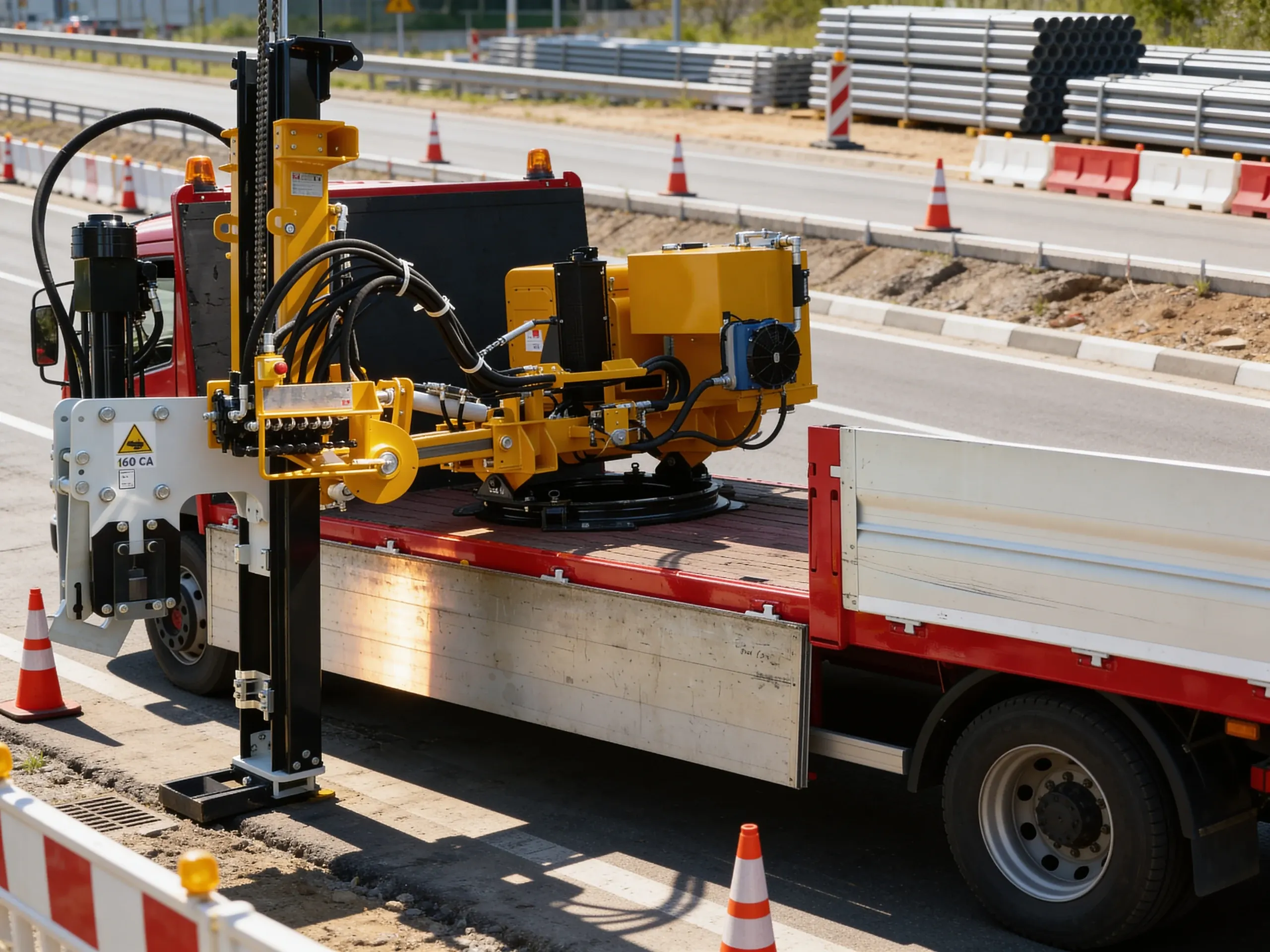
On road sites, the TURCHI 260F installs sigma posts and guardrails in tight urban spaces. Lateral column adjustment up to ±10° helps align the posts. It does not define the slope on which the machine can operate safely: orientation, stability and ground conditions must be checked.
Integration with GNSS and remote monitoring
Semi-automatic GPS places the pile at the correct project point, PVEA maintains alignment, and remote monitoring records GPS/Glonass position and working hours in a mobile-accessible portal.
Together, the systems combine positioning, verticality and traceability in a documentable process for large solar and road projects.
Compatible models and configuration
PVEA assisted verticality is an optional extra on request for TURCHI 260F and 300F. Both models share the tilt range and hydraulic-cylinder architecture.
The 260F is the compact machine weighing 3,500 kg for guardrails and medium-scale solar. The 300F is the model for utility-scale solar and foundations with working height up to 6 m, with an operating weight of 4,400 kg.
Configure PVEA, GPS and monitoring on the suitable model through the 7-step configurator.
Frequently asked questions
Can't find what you're looking for? Browse the full FAQ list. Reach out via a support request or email us at [email protected].
An electronic system that uses angular position sensors to assist vertical alignment of the pile driver column. It detects the angle in real time and gives the operator feedback to correct before and during driving.
The lateral adjustment of the column on the TURCHI 260F and 300F is ±10°. The front −51° is the transport position: it does not indicate the maximum safe slope the machine can work on. PVEA assisted verticality is a separate option from the mechanical adjustment.
An out-of-alignment pile can reduce the load-bearing capacity of the structure, whether it is a solar plant or a guardrail. Maintaining verticality reduces piles to extract and reinstall, misalignments and end-of-job costs.
As an optional extra on request for TURCHI 260F and 300F. It integrates with semi-automatic GPS and remote monitoring.