GNSS on the pile driver: positioning solar piles
A 1 MW ground-mounted solar plant often needs 350-450 foundation piles, but the number depends on the structure: a two-pile project required about 1,000.
Staking every point with a survey crew slows the site and adds cost.
GNSS brings the design coordinates under the pile-driver column and speeds up positioning.
GNSS on the pile driver: positioning solar piles
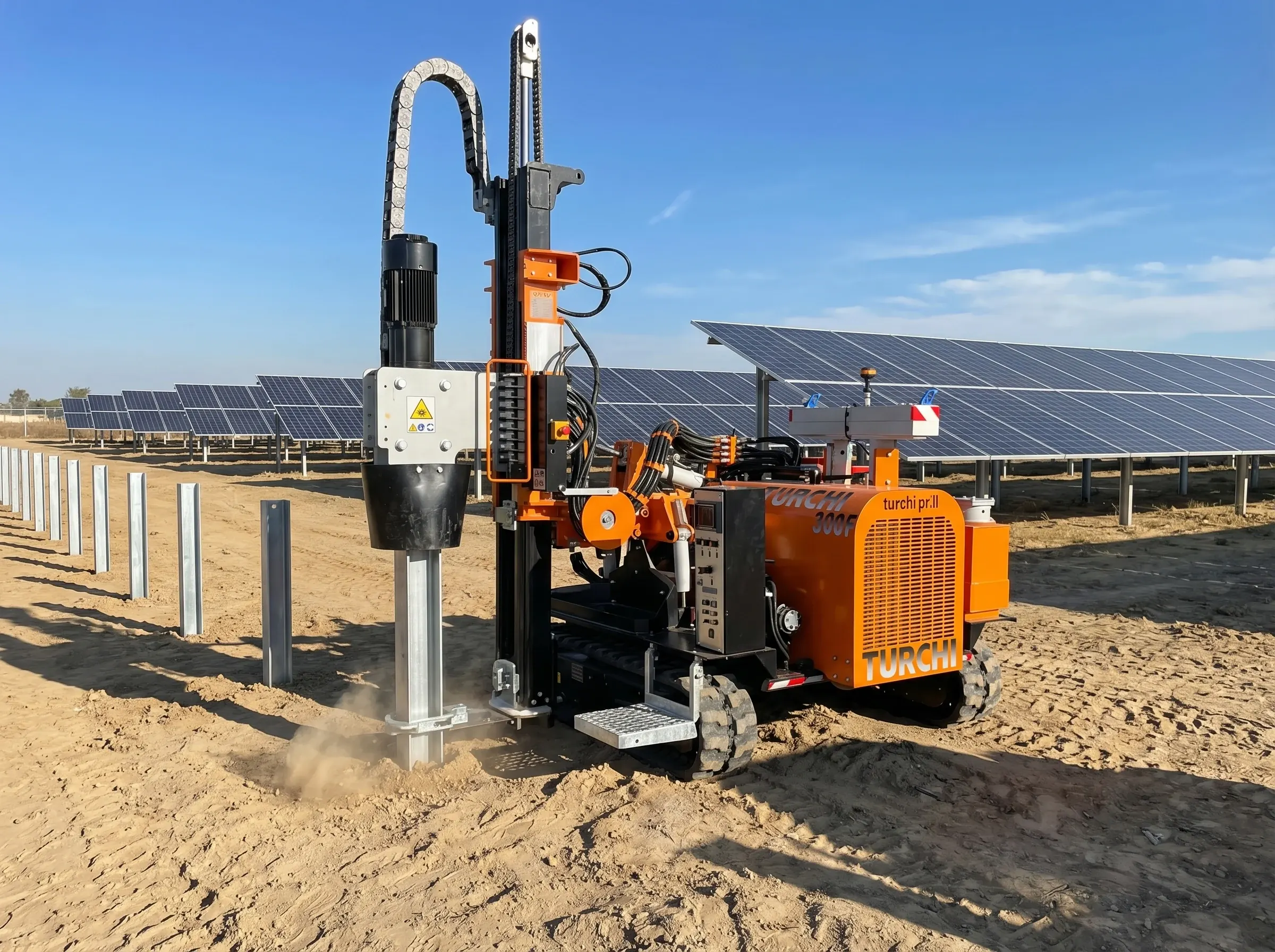
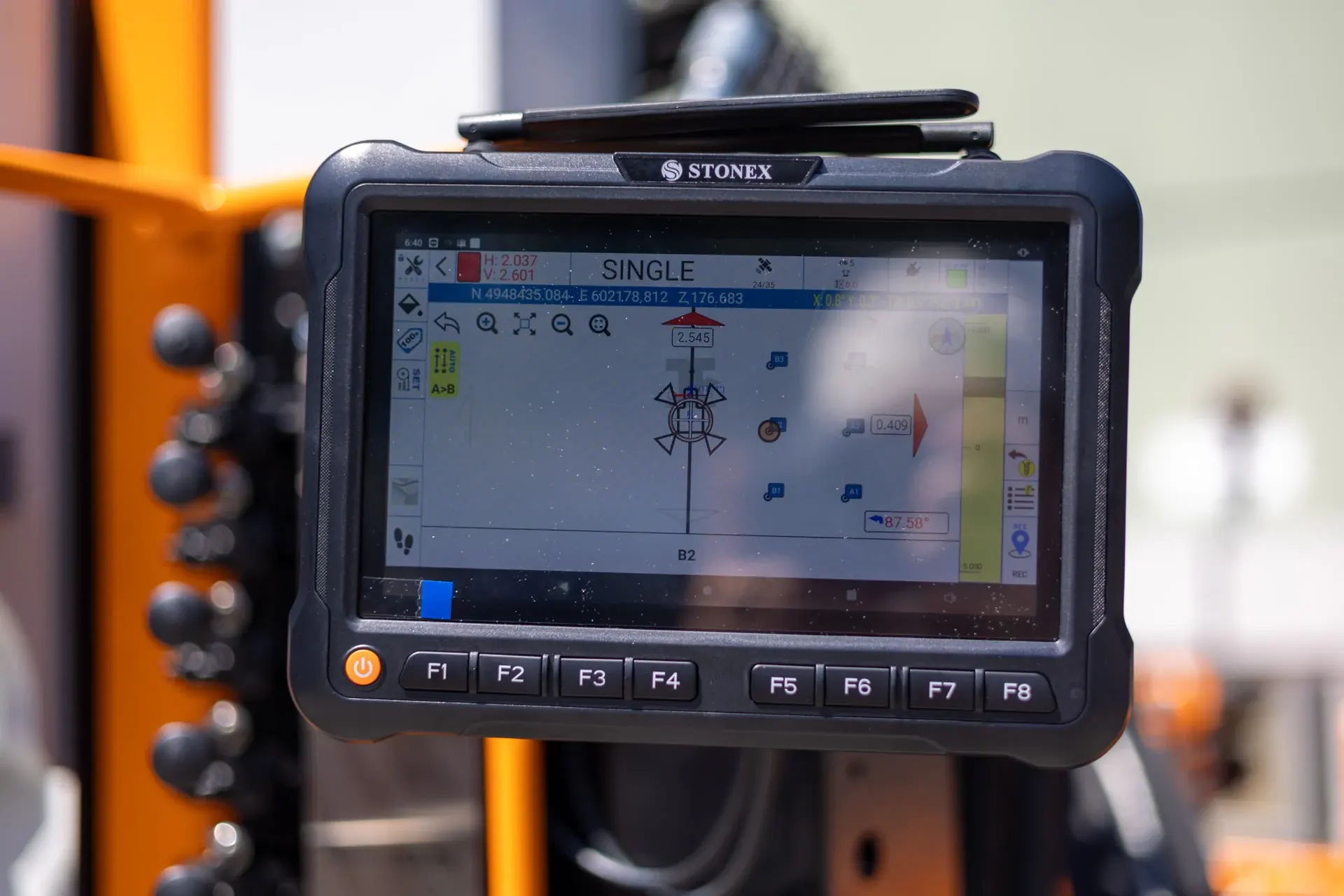
The GNSS system on the TURCHI 300F projects design coordinates directly on site. It guides the operator to the driving point with centimetre precision, without marking every position on the ground. The pile follows the design instead of an approximate stake position.
GNSS benefits on site
On a solar site, GNSS improves three work steps:
- Fewer dedicated surveyors: the on-board system positions the pile instead of a separate staking crew.
- Faster positioning: the receiver guides the operator to the point without searching for ground references.
- Fewer errors: the digital flow from office design to field reduces intermediate transcription and coordinate errors.
On a plant with thousands of piles, these savings accumulate through every shift.
GNSS, PVEA verticality and monitoring
These optional TURCHI systems work together. GNSS places the pile at the correct project point. PVEA assisted verticality keeps the column aligned during driving, while remote monitoring records position and operating hours.
The three systems combine position, verticality and traceable data for large plants where specifications increasingly require precision and documentation.
To configure GNSS, PVEA and monitoring on the 300F, use the 7-step configurator.
Frequently asked questions
Can't find what you're looking for? Browse the full FAQ list. Reach out via a support request or email us at [email protected].
A satellite positioning system that projects design coordinates directly on site and guides the operator to the exact driving point with centimetre precision. It is an option on the TURCHI 300F.
It greatly reduces the need for dedicated survey teams: the pile is positioned using the on-board system instead of manual staking. On plants with thousands of piles, the time saving is substantial.
It is an option on the TURCHI 300F. It integrates with PVEA assisted verticality and remote monitoring.