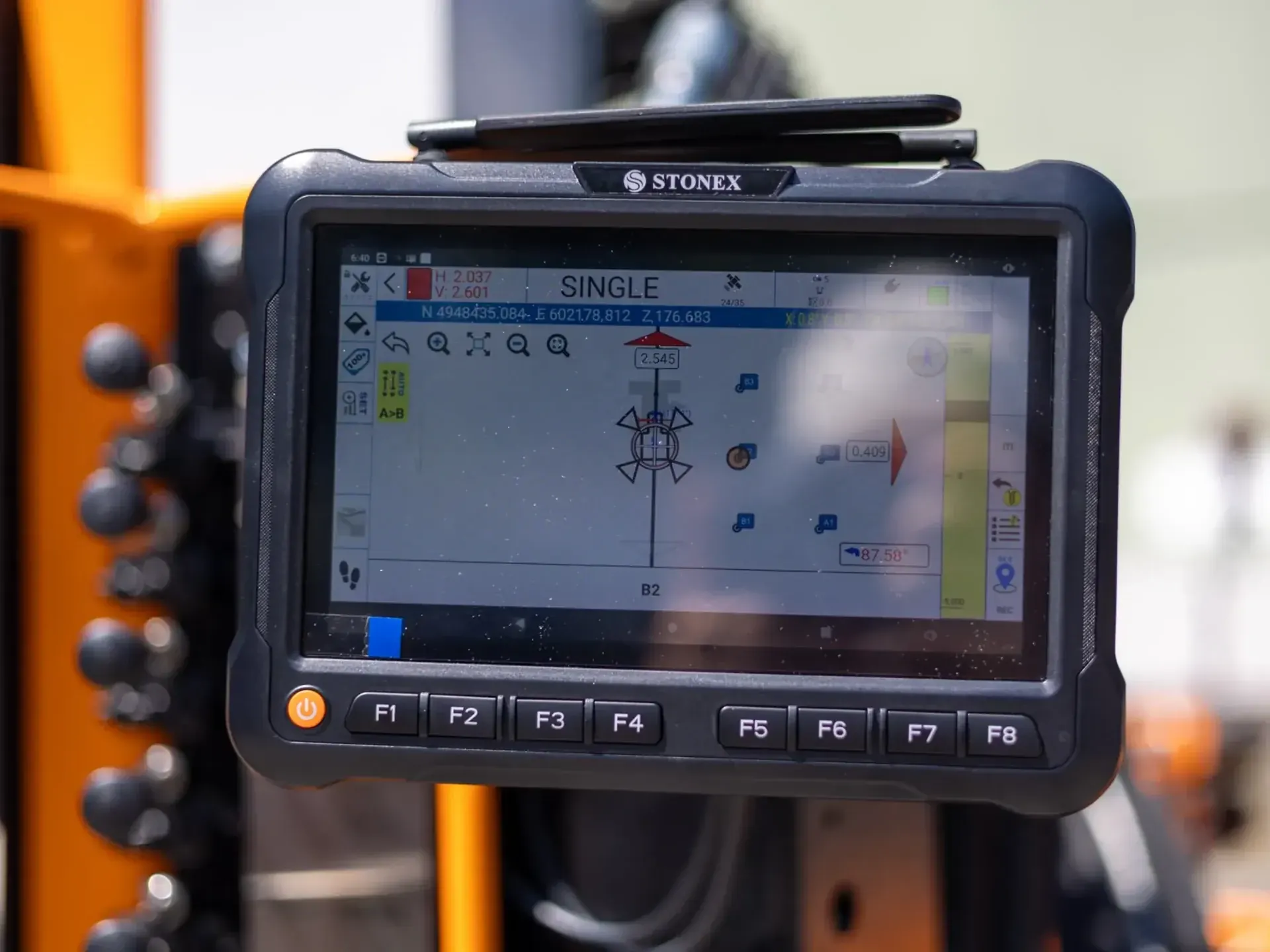
Remote pile driver monitoring: data and alerts
A connected pile driver reports its position, working hours and hammer cycles.
Telemetry also warns about conditions that can cause downtime and turns machine data into site decisions.
How remote pile-driver monitoring works
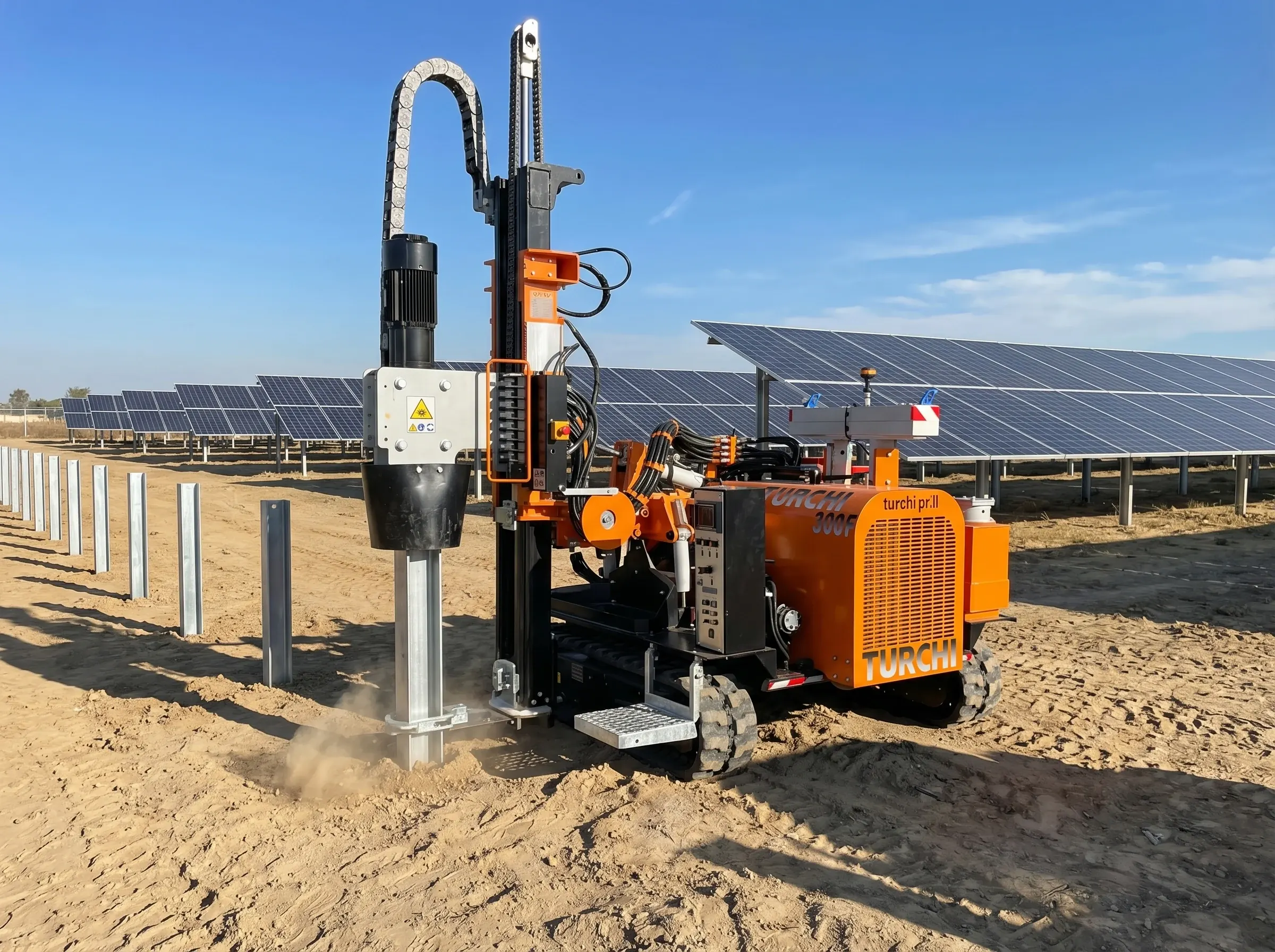
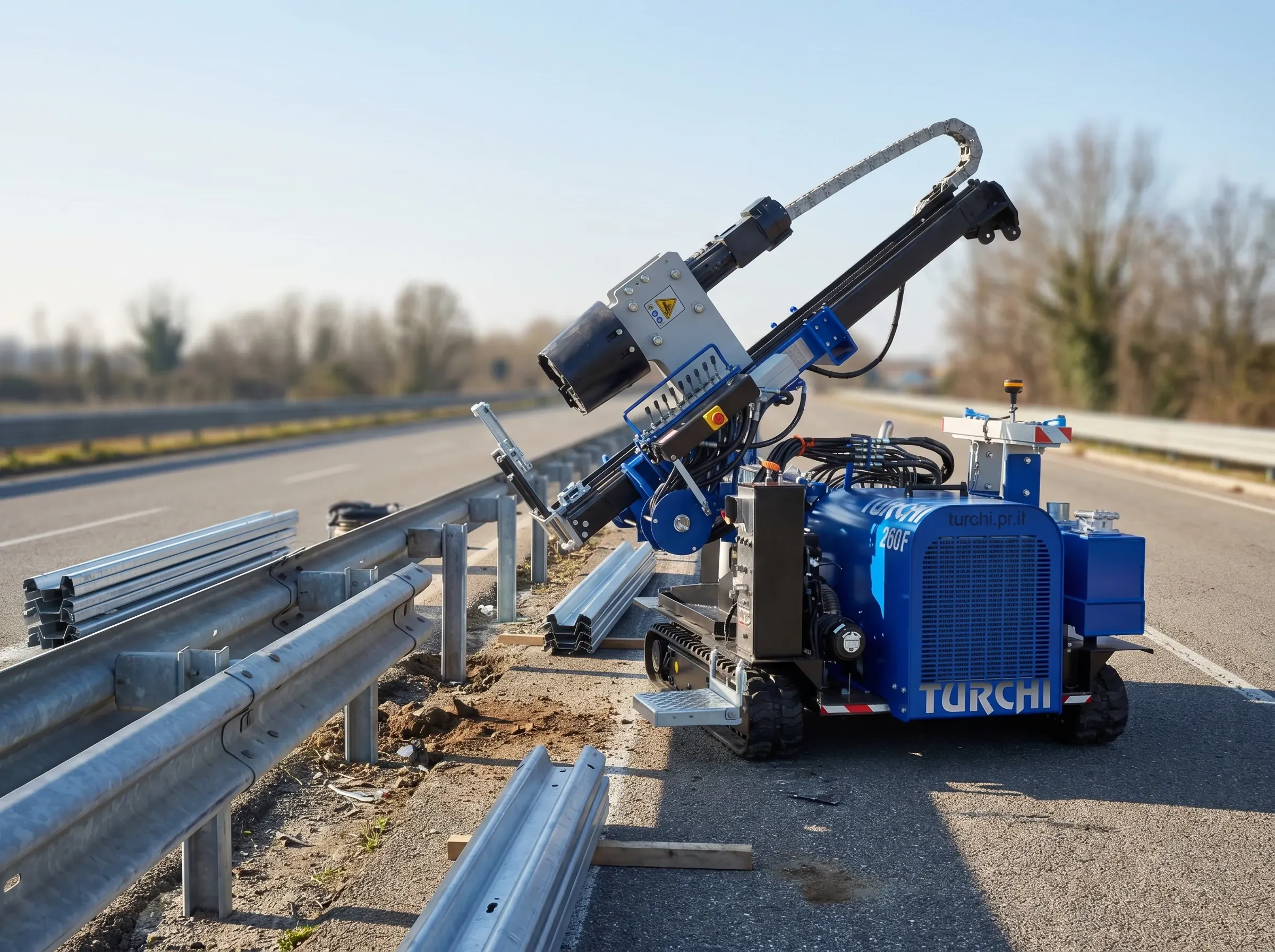
The TURCHI system for the 300F and 260F uses a telematics module connected to the machine CAN BUS. It collects sensor signals and sends them through GSM/GPRS to a web portal for PCs, tablets and smartphones.
Data transmission works through data service or SMS, so it remains available with limited coverage. The system supports OTA firmware updates that TURCHI can deliver without sending a technician to the site.
Data available in real time
The portal updates the main operating parameters:
- GPS/Glonass position: dual constellation, route history and site association.
- Engine hours: continuous diesel-hour count for maintenance planning.
- Hammer cycles: hydraulic-hammer blows used to assess wear.
- Oil temperature: hydraulic-oil control to prevent overheating.
- Operating pressures: hydraulic-circuit checks during driving.
- Fuel consumption: actual use for operating-cost control.
Geofences and work-area control
The portal lets you define virtual work areas, or geofences. Entering or leaving a configured area triggers an automatic alert.
Geofencing checks that each pile driver stays in its assigned zone, tracks travel between sites and reports unauthorised movement. For a fleet, it puts machine control in one platform.
Predictive maintenance and wear alerts
The system analyses operating data and sends a notification before a component reaches its wear limit. Maintenance becomes easier to schedule and unexpected downtime decreases.
The portal records service intervals and component life cycles. It signals when to replace filters, hydraulic oil or wear parts. Uptime improves and costs become more predictable on solar sites with contractual deadlines. Use the pile-driver maintenance checklist alongside the data.
Remote diagnostics without a site visit
When a fault occurs, TURCHI technical support can review diagnostic data remotely, identify the cause and guide the operator without sending a technician to the site. This reduces downtime and travel costs.
The system also detects jamming attempts against the GPS signal.
Fleet management
One dashboard shows each machine’s position, working hours, site and route history. A fleet manager can compare workloads, plan rotations and distribute resources between sites.
Industry 4.0 and the connected pile driver
Remote monitoring makes the pile driver connected and documentable. Together with semi-automatic GPS for centimetre positioning and PVEA assisted verticality for column alignment, it completes the TURCHI precision system.
GPS, PVEA and telemetry combine precision, traceability and control for large solar and road projects where these requirements increasingly appear in specifications.
Remote monitoring is optional on the TURCHI 260F and 300F. Configure it with GPS and PVEA through the 7-step configurator.
Frequently asked questions
Can't find what you're looking for? Browse the full FAQ list. Reach out via a support request or email us at [email protected].
GPS/Glonass position, engine hours, hammer cycles, oil temperature, operating pressures and fuel consumption, all in real time from the web portal.
A telematics module connected to the CAN BUS collects sensor data and sends it over the cellular GSM/GPRS network, in data mode or SMS, so transmission holds up even with limited coverage. It supports OTA firmware updates.
It is an optional extra on TURCHI 260F and TURCHI 300F.
The portal analyses operational data and sends automatic alerts before a component reaches its wear limit, signalling when to replace filters, hydraulic oil or wear parts. Fewer unplanned stops, more predictable costs.