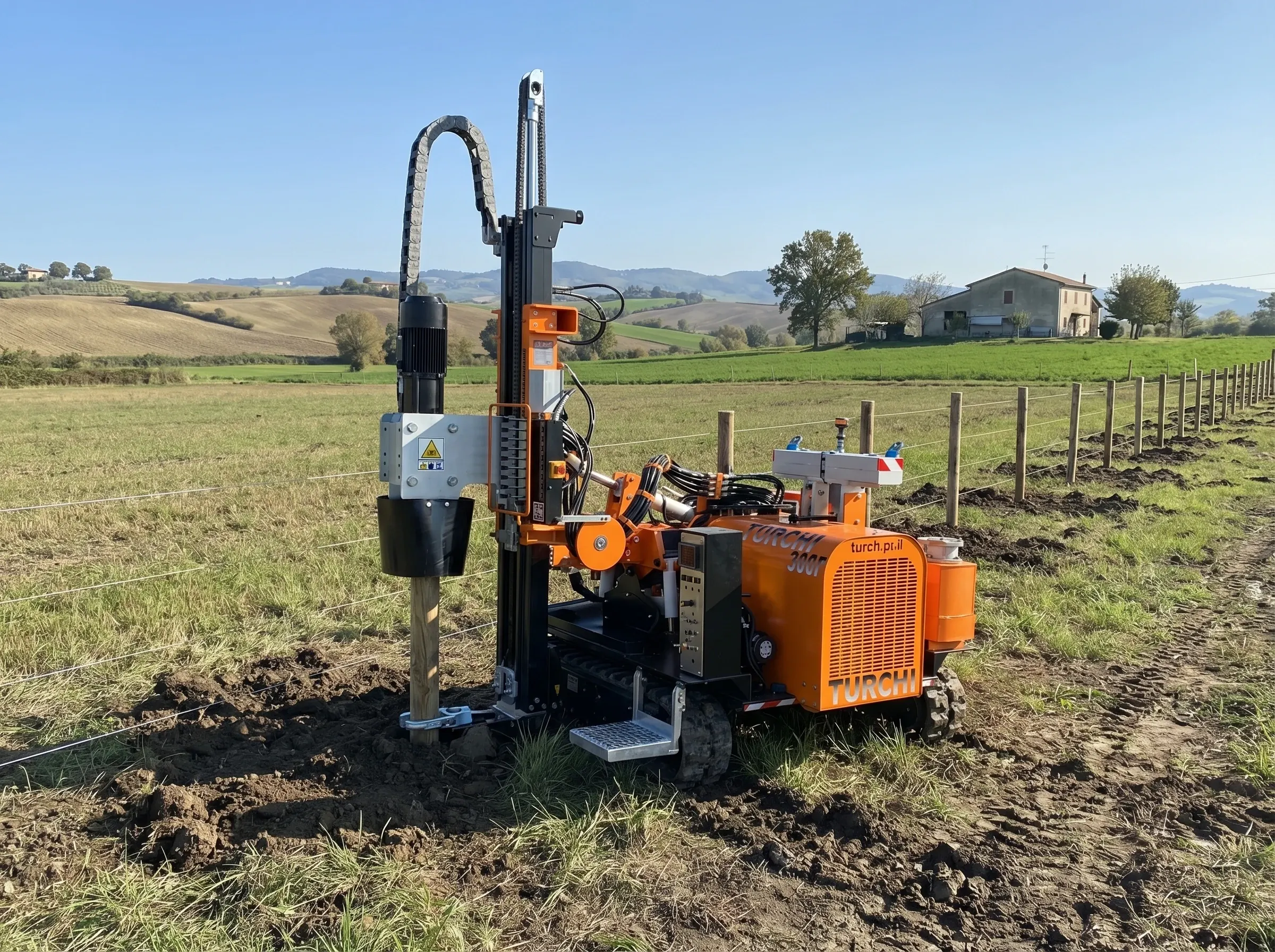
Pneumatic DTH hammer: 4 sizes for rock
On rock, limestone, reinforced concrete or asphalt, direct pile driving can stop at the hard layer.
The pneumatic DTH hammer breaks that layer to create a hole, then standard pile driving continues.
The four sizes, mounting options and typical uses define the right setup for each site.
When the pneumatic DTH hammer is needed
Direct driving is not possible in rocky or limestone ground, through reinforced-concrete layers or below asphalt. The DTH drills through the obstruction so the foundation pile can continue normally.
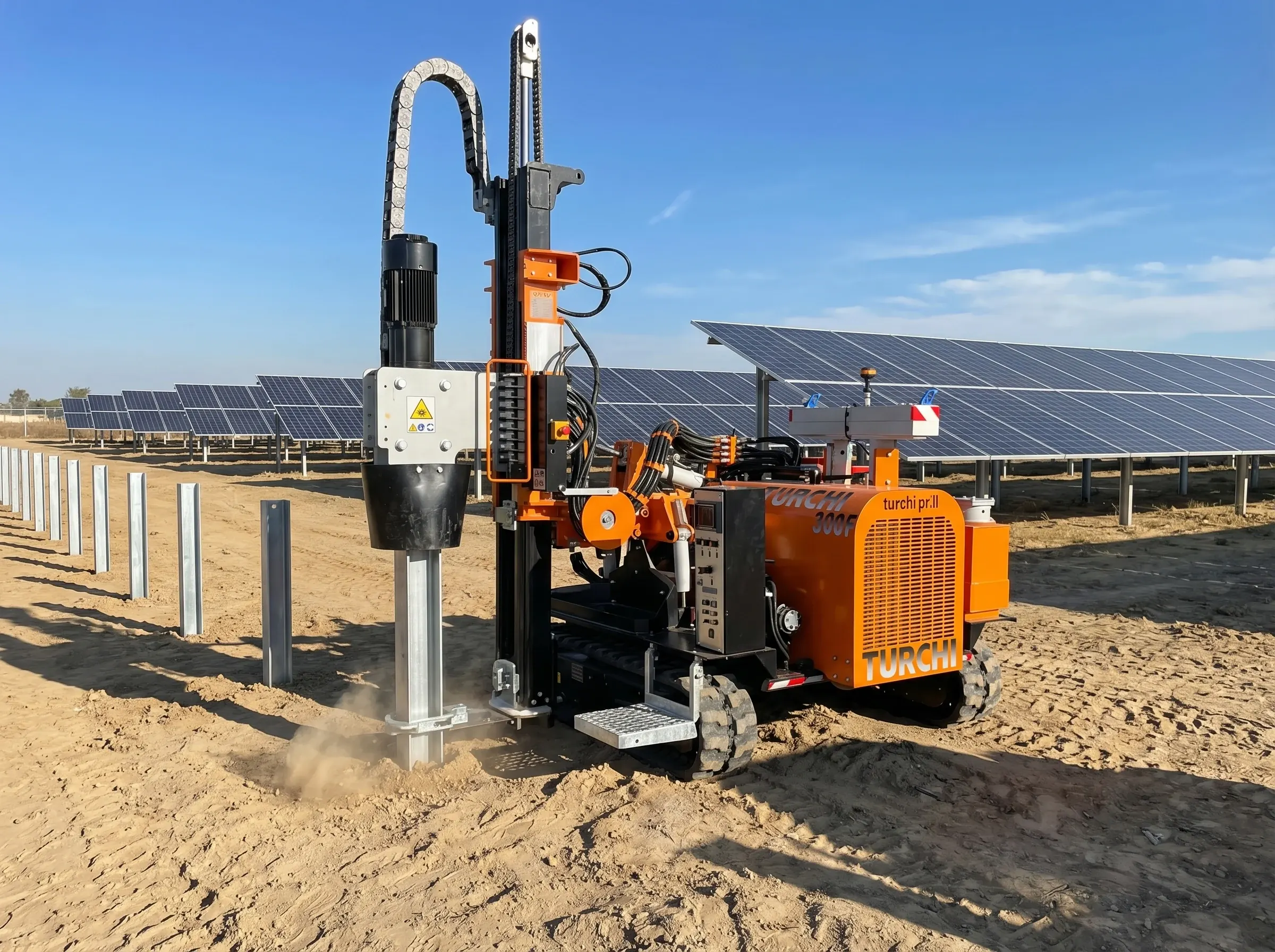
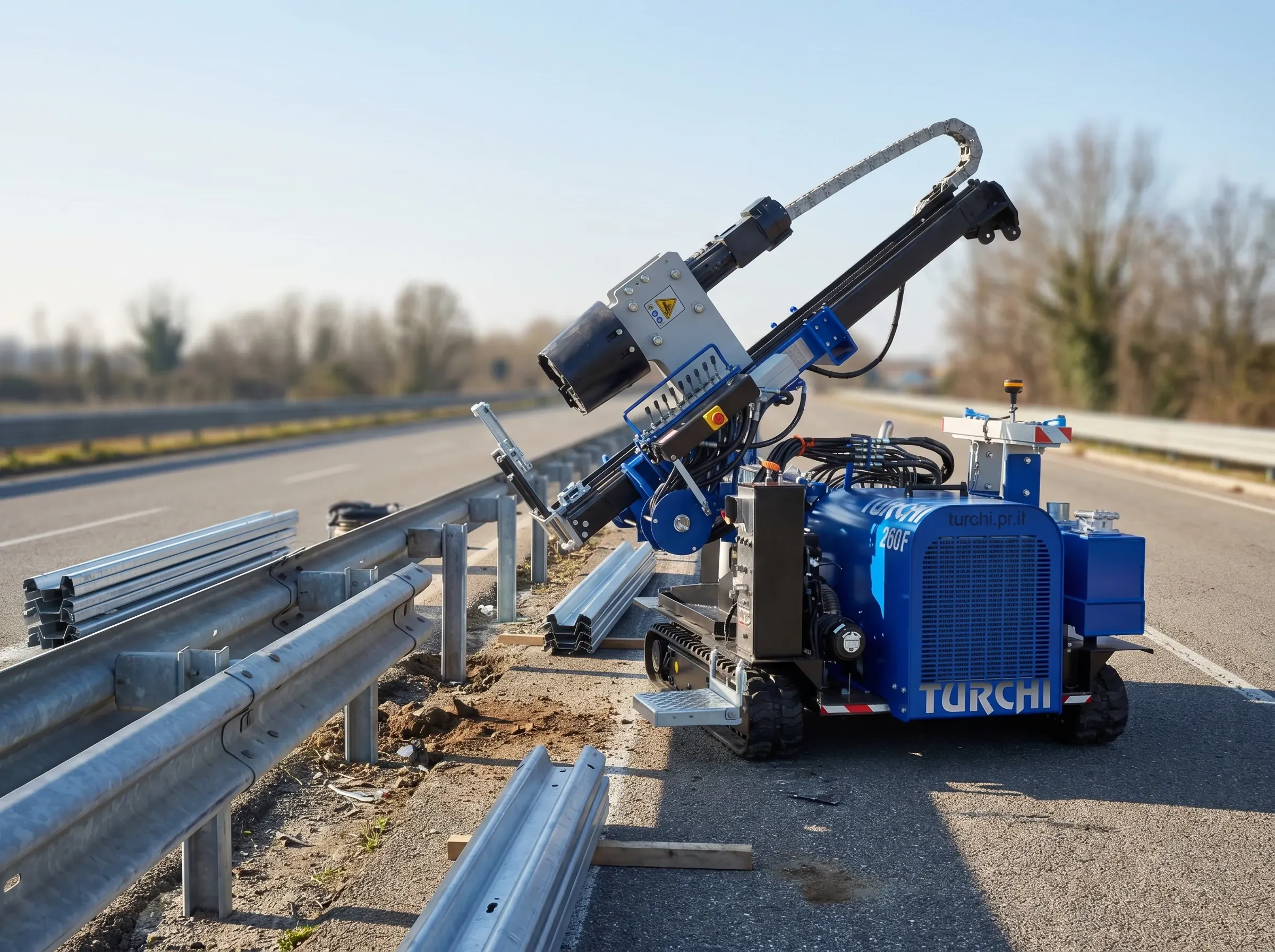
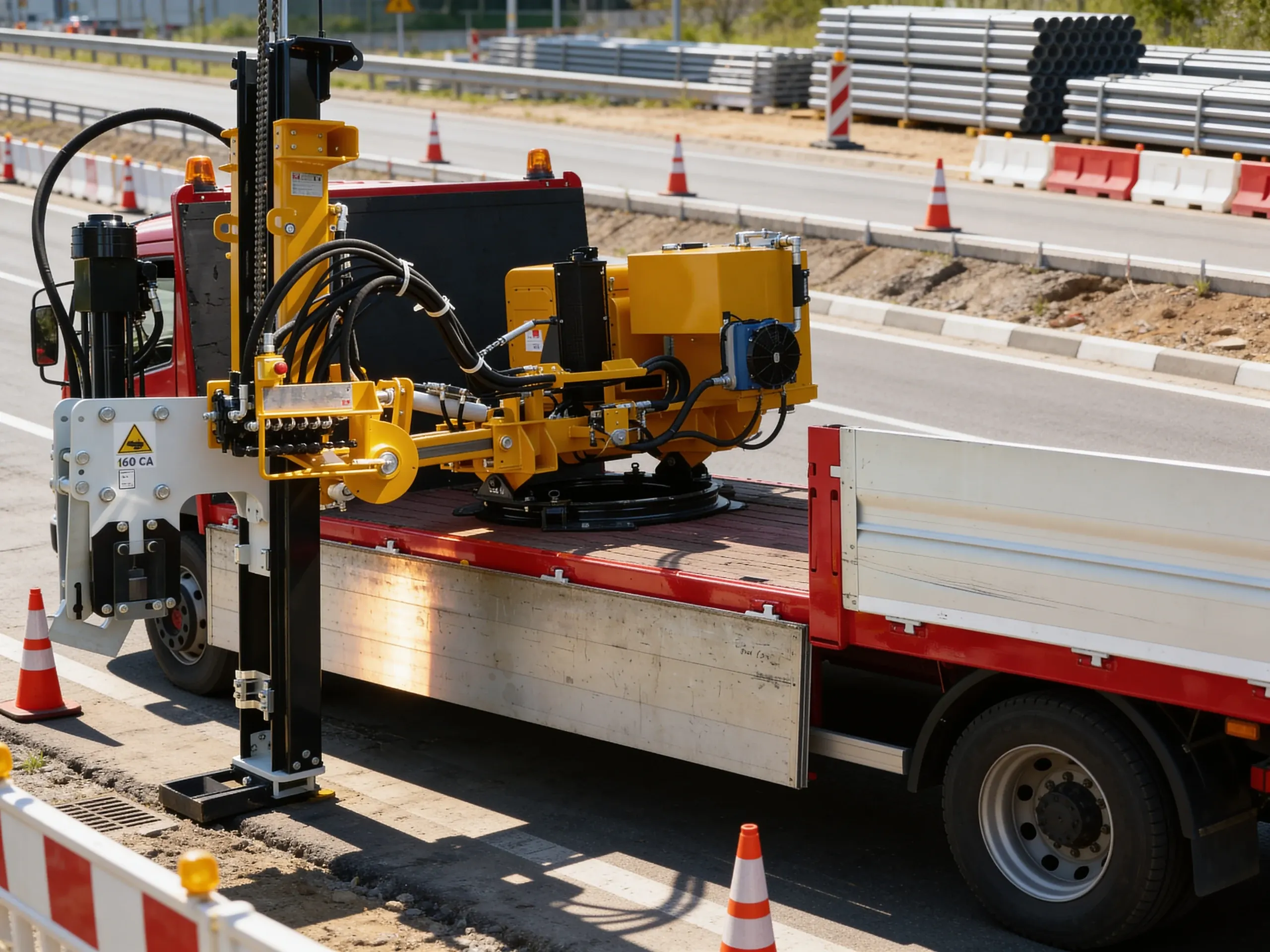
On existing roads, asphalt and sub-base can block guardrail-post driving. On solar sites, rock less than 1.5-2 m below the surface is a frequent geotechnical obstacle. The DTH pre-drills that layer. Use the geotechnical assessment of a solar site when choosing the machine.
Four DTH sizes for different diameters
The TURCHI DTH range has four pneumatic DTH hammers. Together, they cover diameters from Ø 90 to Ø 220 mm for different materials and applications.
| Size | Diameter | Typical use |
|---|---|---|
| DTH 3” | Ø 90-105 mm | Pilot holes, anchors and small-diameter pre-holes |
| DTH 4” | Ø 110-152 mm | Rock, granite, reinforced concrete and asphalt. About 80% of cases |
| DTH 5” | Ø 140-180 mm | Hard rock, granite, basalt and deep foundations |
| DTH 6” | Ø 152-220 mm | Rock formations, micropiles and large diameters |
The DTH 4” is available with 6 bit sizes and is the most requested option. It covers about 80% of rock applications. The 3” is the compact choice for pilot holes and anchors. The 5” and 6” cover hard rock and large diameters, up to 220 mm for micropiles and foundations.
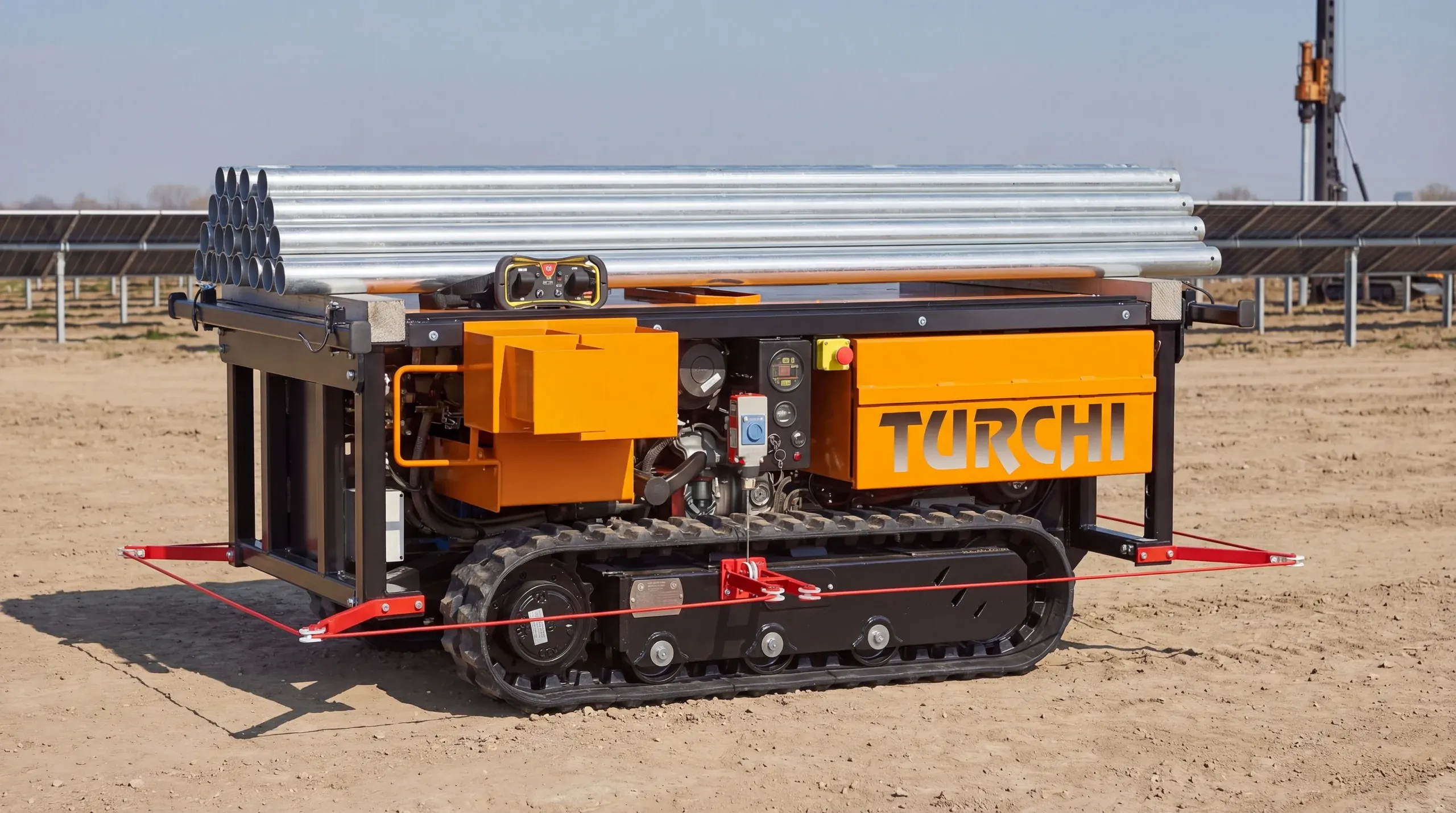
Every hammer uses hydraulic rotation from the pile driver’s power pack and needs an external compressor for compressed air.
Mounting on a lateral or central head
The DTH hammer mounts on one of the rotation heads available for TURCHI 260F and 300F:
- Lateral head: 1 hydraulic motor, augers and DTH up to Ø 200 mm. It drills off the machine axis, which helps beside existing structures or on staggered layouts.
- Central head: 2 independent hydraulic motors and diameters up to Ø 500 mm. It works on axis and provides double torque and stability in very hard ground.
The same head can carry hydraulic augers from Ø 80 to Ø 400 mm for clay or gravel, where direct drilling is more effective than percussive breaking.
Typical DTH applications
- Road guardrails: pre-drilling through asphalt and sub-base for posts on existing roads.
- Solar with shallow rock: drilling the rock layer within 2 m so foundation piles can be driven.
- Micropiles and foundations: holes up to Ø 220 mm in any rock formation.
- Anchors and tie rods: small-diameter pilot holes in existing structures.
Use the 7-step configurator to choose the DTH size and rotation head for the site, then prepare the available geotechnical data.
Frequently asked questions
Can't find what you're looking for? Browse the full FAQ list. Reach out via a support request or email us at [email protected].
When direct pile driving is not possible: rocky or limestone ground, reinforced concrete layers, or guardrail posts under asphalt surfaces. The DTH creates the hole by percussive breaking, then driving continues normally.
The 4" DTH (Ø 110-152 mm) covers roughly 80% of rock applications and is the most requested. For pilot holes there is the 3", for hard rock and large diameters the 5" and 6" (up to Ø 220 mm).
On the rotation heads of TURCHI 260F and 300F: lateral (1 motor, up to Ø 200 mm) for offset holes, or central (2 motors, up to Ø 500 mm) for very hard ground and maximum torque.
Yes. Rotation is hydraulic and powered by the pile driver's power pack, but the DTH hammer requires compressed air from an external compressor.