Utility-scale solar site logistics: less waiting
On a utility-scale solar site, even the fastest machine is not enough if piles arrive at the drive point intermittently.
Logistics can determine how many piles are completed by the end of the day: storage, internal routes, continuous supply and positioning must support the driving cycle.
Utility-scale solar site logistics: operating sequence
Utility-scale site efficiency depends on more than the pile driver. Moving piles from the storage point to the drive point is often the real bottleneck. The pile driver can drive in minutes, but it remains idle if piles do not arrive continuously.
Logistics must be planned before the site opens. The operating sequence starts with three decisions:
- Storage points: position them strategically in relation to the driving areas to reduce handling distances.
- Internal routes: plan them before the site opens so vehicles do not obstruct one another and journeys remain short.
- Continuous pile supply: organise pile availability to prevent waiting between one pile and the next.
On a plant with thousands of piles, accumulated downtime can erode profitability and put the site behind schedule. The solar pile driver buying guide connects this planning with machine choice.
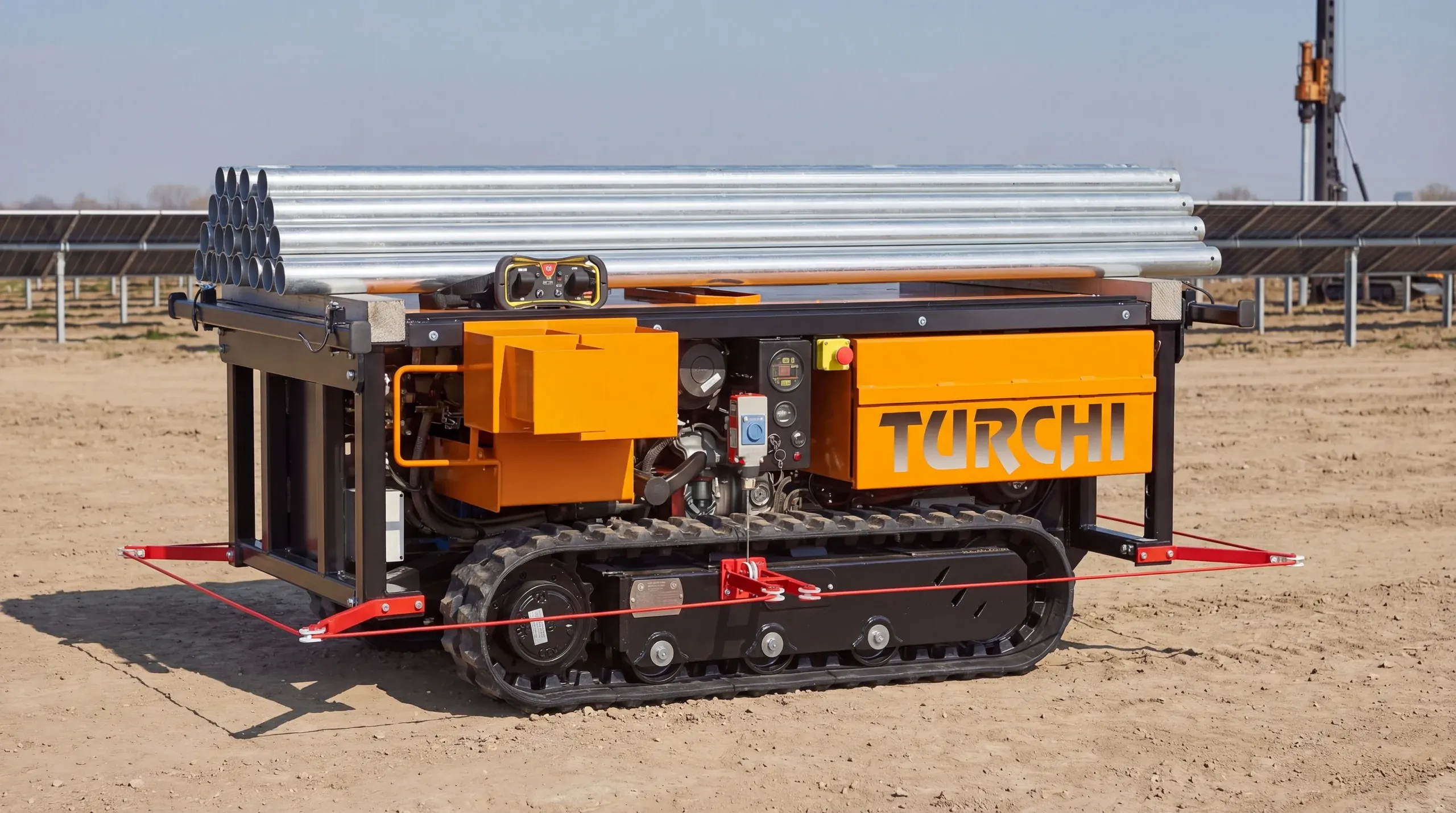
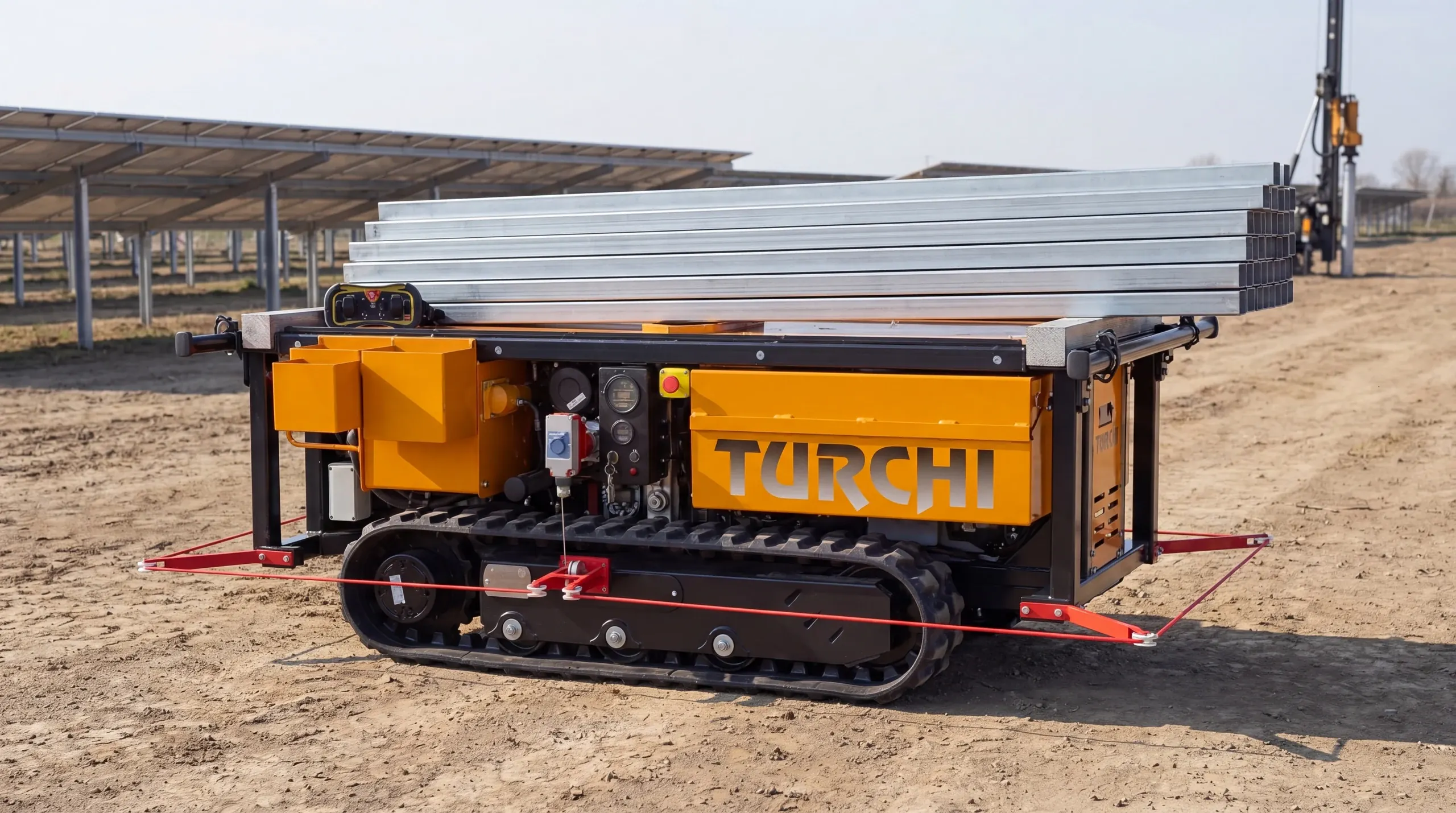
Carretto Portapali tracked cart for the TURCHI 300F
The tracked Carretto Portapali is a TURCHI 300F accessory. It carries piles directly across the field, from the storage point to the drive point.
The cart reduces dependence on external plant, such as telehandlers and on-site trucks, and shortens the driving cycle: the pile is ready when the machine is ready. On utility-scale sites, assigning this transport to a dedicated vehicle supports the pile driver’s rhythm when logistics is the bottleneck.
Semi-automatic GPS and reduced waiting
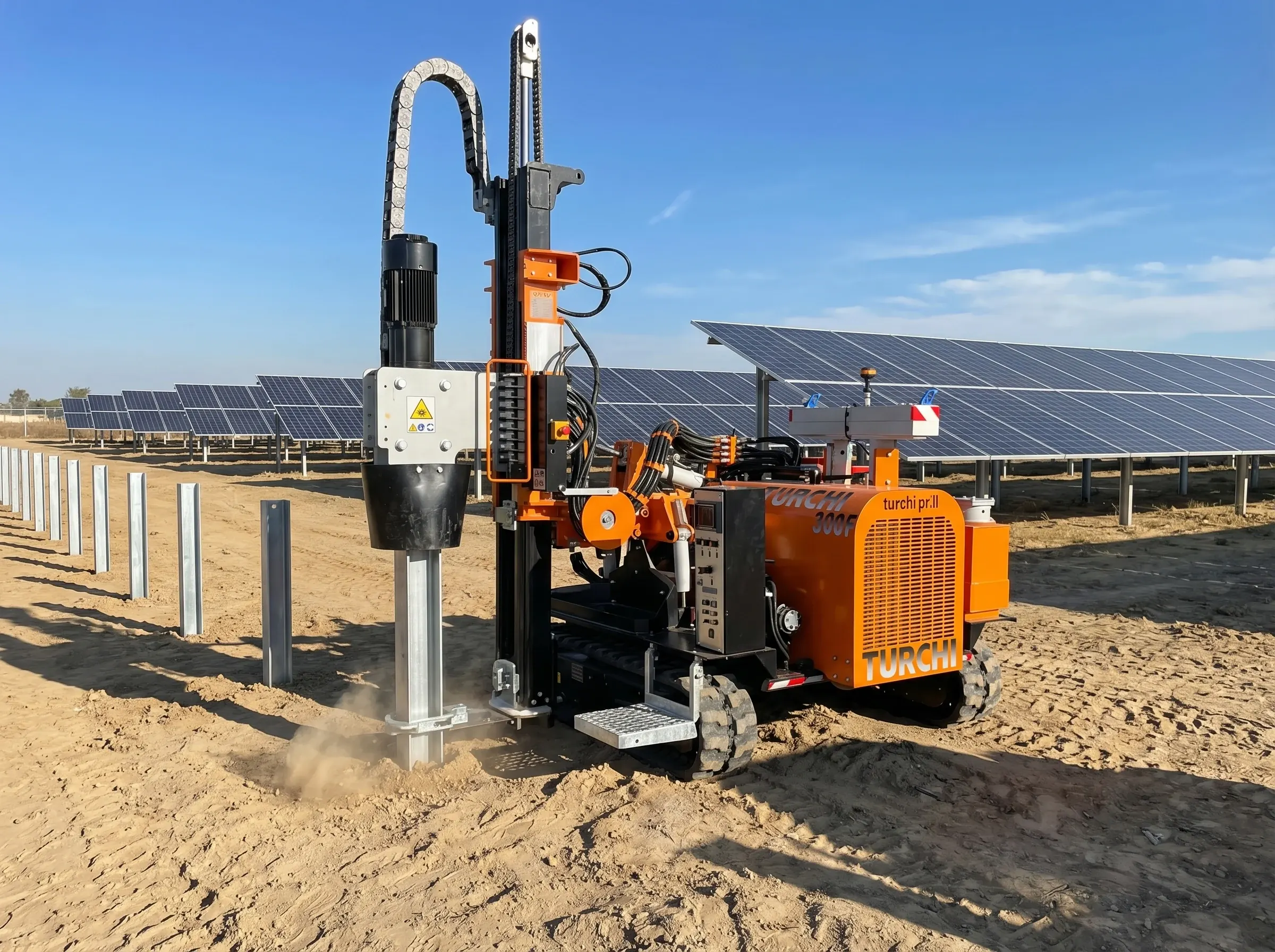
The TURCHI 300F with semi-automatic GPS helps the operator reach the drive point without searching for ground references. Guided positioning keeps the flow between pile availability, positioning and driving continuous.
To size the machine and accessories for your site, start with the 7-step configurator.
Frequently asked questions
Can't find what you're looking for? Browse the full FAQ list. Reach out via a support request or email us at [email protected].
Because driving speed depends on more than the machine. Moving piles from storage to the drive point is often the real bottleneck, and downtime erodes site profitability.
It is a TURCHI 300F accessory that carries piles directly across the field, reduces dependence on external plant and speeds up the driving cycle.
By planning routes, positioning storage points strategically and using accessories such as the tracked pile cart. Semi-automatic GPS on the 300F speeds up the operating flow further.